Three Industry Leaders on Why Energy Independence Has Become a Business Imperative
For European businesses, energy independence has become closely tied to resilience, competitiveness, planning certainty and the transition to a lower-carbon future. To explore how organisations are responding, HORIZON spoke with three leaders from different industries. Their sectors and priorities differ, but their perspectives point to the same conclusion: resilience, competitiveness and sustainability can no longer be treated separately.
Participants
- Gerald Prinzhorn, CEO, Prinzhorn Group
- Thomas Goschau, Head of Raw Materials Supply Chain, Procurement & Energy (Europe), RHI Magnesita
- Tomáš Sepp, Head of Business Development, Baumit Slovakia
From Cost Factor to Strategic Priority
“The past years have shown very clearly that energy is no longer just a cost factor. Energy has become a strategic issue,” says Gerald Prinzhorn. “For an industrial company, reliable and competitive energy supply affects production, investment decisions, location attractiveness and the long-term resilience of the business.”
Prinzhorn sees this as a strategic rather than operational challenge. “If energy is not available, not predictable or structurally too expensive, this is not only an operational problem. It becomes a strategic risk.”
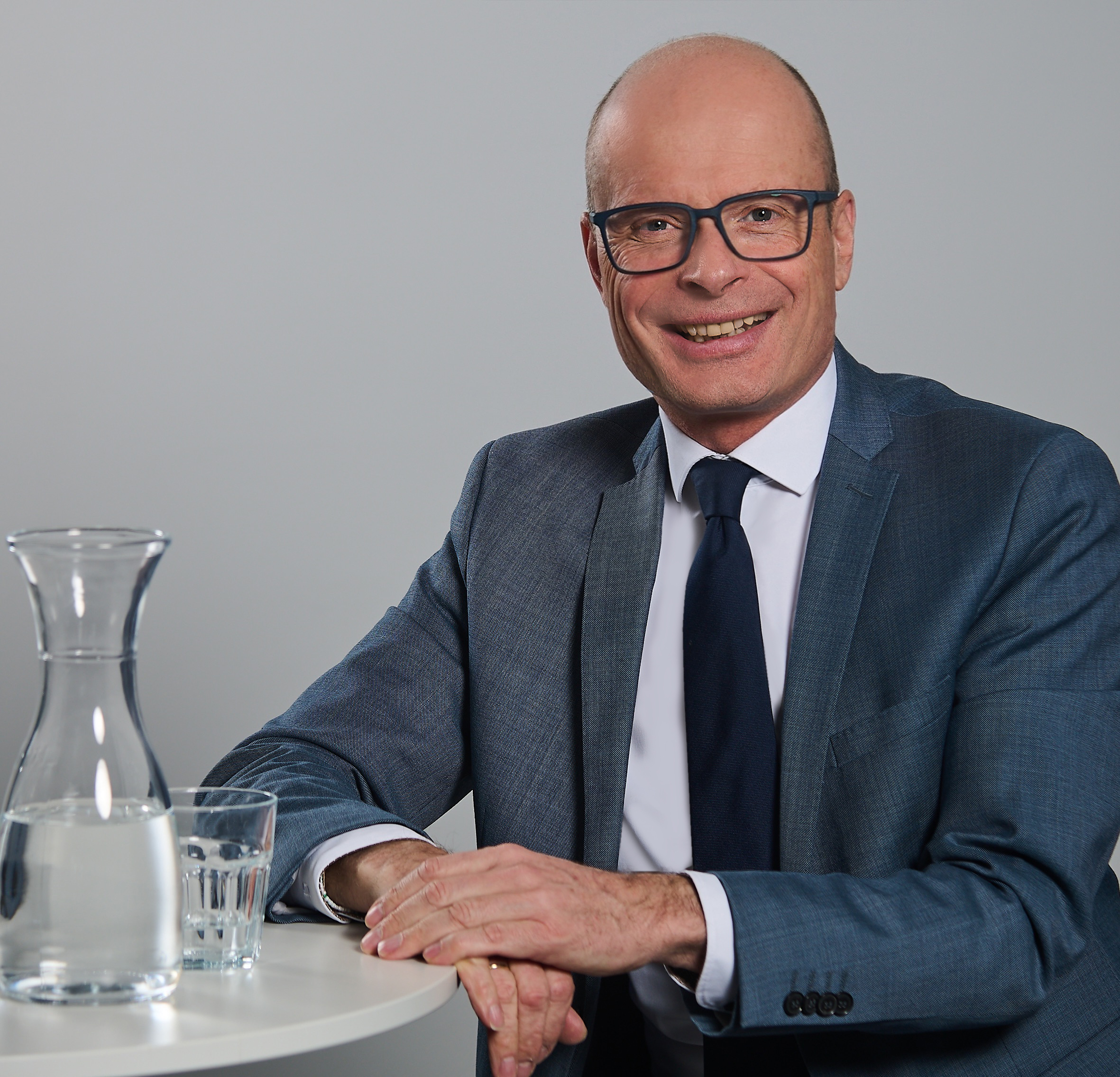
Thomas Goschau’s focus is on what energy means for the future of European industry.
“Energy has clearly become a leadership issue because it directly affects our cost base, pricing, investment decisions and competitive position. Alongside raw materials, energy is one of our largest cost components, and the design of the procurement strategy has a material influence on product economics.”
He adds: “Energy can no longer be managed solely as an operational purchasing topic; it requires coordinated decisions across management, finance, operations, sales and sustainability.”
Tomáš Sepp at Baumit believes energy has moved firmly into the realm of strategic decision-making.
“Today, the topic of sustainability is no longer just a technical or operational issue, but part of the company’s strategic management. Energy efficiency and own energy sources have therefore become part of decision-making at the management level.”
What emerges from the discussion is that energy now influences far more than day-to-day operations. It shapes investment decisions, competitiveness and long-term resilience.
Learning to Lead Through Uncertainty
Uncertainty remains a constant theme throughout the conversation, a reality none of the participants expects to disappear soon.
Goschau describes an environment shaped by multiple external pressures: “Energy markets are being influenced continuously by geopolitical tensions, weather patterns, infrastructure constraints and policy decisions. As a result, energy procurement has become a strategic balancing exercise.”

His focus is on maintaining flexibility while securing predictability. “We need to secure budget certainty through hedging and longer-term arrangements while retaining sufficient flexibility to benefit from favourable spot-market developments. In parallel, our procurement strategy must support the transition towards renewable and lower-carbon energy.”
Prinzhorn points to a broader web of interconnected risks.
“The biggest risk is the combination of high energy prices, limited predictability and dependency on individual energy sources. Industry needs planning security. Capital-intensive investments require a stable framework.”
He also believes companies can no longer manage risks in isolation: “Energy risk, climate risk, geopolitical risk and financial resilience are increasingly connected.”
Sepp believes companies must now treat uncertainty as a permanent operating condition.
“Recent years have shown that uncertainty in energy markets has become the new normal. That is why we try to make decisions with a long-term perspective, often without complete information. Courage in this case means not waiting for ideal conditions, but actively preparing the company for the future.”
He adds: “Strategic consistency is more important to us than short-term market fluctuations.”

Balancing Today’s Pressures with Tomorrow’s Needs
Balancing immediate cost pressures with long-term investments remains one of the toughest leadership challenges. Prinzhorn argues that doing nothing can prove even more costly.
“This is one of the most difficult leadership tasks. Every industrial company is under cost pressure. Investments must be economically sound. We cannot ignore short-term realities. At the same time, we have learned that not investing can become very expensive later.”
He argues that investments in energy efficiency, modernisation, decarbonisation and security of supply “reduce vulnerability, improve flexibility and strengthen the cost position over time.”
Goschau focuses on technologies and investments that combine sustainability goals with commercial viability.
“We assess new technologies and concepts with an open mind, including energy efficiency, electrification, renewable energy, storage, alternative fuels and carbon capture, utilisation and storage. At the same time, sustainability investments must be supported by a credible business case.”
For technologies such as carbon capture, utilisation and storage, he notes that the economics will depend heavily on future CO2 costs, infrastructure, regulation and customers’ willingness to pay more for lower-carbon products.
Sepp also emphasizes the need to weigh short-term pressures against long-term stability.
“When making decisions, we had to balance short-term investment costs with long-term stability and resilience. Not all solutions bring immediate returns, but strategically they make sense from the perspective of the future of production.”
He points to replacing CEM I cement in Baumit formulations with CEM II grade as one practical priority, expected to reduce the related CO2 emissions by up to 20% by 2030.
What Energy Independence Really Means
Despite their different industries, all three leaders make the same distinction: energy independence is not the same as energy self-sufficiency.
“For an industrial company, full energy autonomy is unrealistic. We will always be part of energy markets, infrastructure systems and international value chains. But energy independence does not mean isolation. It means lower vulnerability,” says Prinzhorn.
In practice, that means reducing consumption, improving efficiency, expanding on-site generation where it makes economic sense and broadening the overall energy mix.
“The goal is not complete autonomy. The goal is resilience: the ability to remain capable of acting, producing and investing also under difficult conditions.”
Goschau reaches a similar conclusion, particularly for energy-intensive industry.
“In electricity, we can cover a limited share of our demand through on-site photovoltaic generation and storage. For an energy-intensive consumption profile, however, on-site generation can meet only a fraction of total requirements.”
“Greater autonomy therefore requires a combination of own generation, storage, flexible demand, diversified supply contracts and, where appropriate, long-term renewable power agreements. It also depends on a stronger and more flexible electricity grid.”
Sepp views greater energy independence primarily as a way to strengthen long-term business stability.
“For Baumit, greater energy independence is a clear signal of long-term stability and responsible management. We see it as part of building resilience to market volatility and geopolitical influences. At the same time, it allows us to better plan costs and strengthen competitiveness in the construction industry.”
The Leadership Imperative
As the conversation draws to a close, all three leaders return to a similar theme: transformation requires decisions that extend well beyond the next reporting cycle.
“Business leaders will need adaptability, resilience and long-term thinking,” says Prinzhorn. “Transformation cannot be managed with a quarterly mindset. As a family business, we think in generations. That is an advantage, but also a responsibility.”
Goschau calls for “an integrated energy and carbon strategy, supported by disciplined scenario planning and faster decision-making.” Rather than relying on a single forecast, leaders need a portfolio approach and clear risk limits, supported by close collaboration across procurement, operations, finance, sustainability, sales and government affairs.
For Sepp, the biggest lesson is that “transformation requires a clear vision, consistency and the ability to make decisions even in an uncertain environment.”
“It is important not to see sustainability as a one-off project, but as a long-term strategic direction. Communication and involvement of people across the organisation also play a big role. Successful transformation is always a combination of courage, discipline and a long-term perspective.”
About the participants:
Gerald Prinzhorn is CEO of the Prinzhorn Group, a European leader in packaging, paper and recycling solutions. He has held senior leadership positions across the packaging, insulation and building materials industries. He holds a degree in process engineering and an MBA from INSEAD.
Thomas Goschau heads Raw Materials Supply Chain, Procurement & Energy (Europe) at RHI Magnesita, the global market leader in refractory products, systems and solutions for high-temperature industries. He has more than two decades of procurement experience, including over ten years in energy sourcing for industrial operations.
Tomáš Sepp is Head of Business Development at Baumit Slovakia, part of one of Europe’s leading manufacturers of façade systems, plasters and construction materials. A civil engineer, he has spent more than 30 years with the company, helping drive innovation and sustainable construction solutions.
Martin Tkáč
General Manager
GrECo Slovakia
T +421 948 734 009

Laura Hochegger
Deputy Head of Sustainability & Innovation
GrECo Group
T +43 664 822 18 66

Sabine Bradac
Risk Consultant GrECo Risk Engineering
T +43 50404 896