Many hidden vulnerabilities can be unearthed if you are a bit creative. The key question is: can we live with the outcome? And then you need to give an honest answer.
Dr. Peter Giger brings both his perspective as Group Chief Risk Officer at Zurich Insurance Group and as a member of the Advisory Board of the Global Risks Report, published by the World Economic Forum, to a conversation with GrECo Group CEO Georg Winter about hidden vulnerabilities, critical dependencies, resilience, and why courageous leadership means accepting risks that are painful but not lethal.
When everything works, nobody looks
Winter: The systems that keep modern businesses running are often invisible when they work. If the lights stay on, the networks function, supply chains move and so forth, we rarely stop to think about the dependencies behind them. From your point of view, why do managers, leaders and companies so often recognise their importance only when something goes wrong?
Giger: Some of them are so basic that we take them for granted because they have always been there. Take electricity. We grew up with the experience that when we plugged something in, there was electricity. So there is no notion of electricity being something that could not be there.
That makes life easier, but it creates the risk that we lose awareness of critical dependencies. When blackouts were discussed for the first time in winter two or three years ago, it was amazing to see how unaware people were of what a blackout would really mean. It is much more than the light not turning
Winter: What is the difference between a visible risk and a hidden vulnerability?
Giger: What is visible is usually easier to deal with because there’s recognition and awareness. A risk is something that can happen. The vulnerability is the implication of it. You build a dam; you lower the risk of flooding. You put your things on the first floor; you lower the vulnerability if it floods.
Whatever is hidden means we are not aware of it, and because of that we lose mitigation opportunities. If you are unaware of a risk or vulnerability, the likelihood is that the damage is bigger than it needs to be because nobody thought about mitigation. The good news is not every mitigation costs money. A lot is relatively cost-neutral or cost-efficient if done early.
Beyond the black swan excuse
Winter: When you speak about unawareness, is it that we really don’t know, or that we don’t care, underestimate it or prefer not to see it? Or is it more like the black swan theory, where it is not visible at all?
Giger: I challenge a lot of the excuses around black swans. Most of these risks were already on the radar and within the expected range of outcomes. But it is relatively easy to say the next day, “Oh, this was a black swan, nobody can blame me.”
Knowing but ignoring is the least excusable behaviour. Being genuinely unaware can happen, and then you implicitly tolerate the risk because it does not bother you. Climate change is a classic example. It has topped the long-term risk perspective for ten years, but every year something else at the top of the one- or two-year horizon bumped it down the pecking order and received the attention and the investment instead.
Good leadership tries to take care of the long term as well. You always have two options: do we invest in the long-term sustainability of the company, or do we optimise short-term returns? That is often a trade-off.
Critical infrastructure and uncomfortable dependencies
Winter: Let us come back to dependencies. You highlighted critical infrastructure as one of the world’s most critical and most underestimated risks. Why do you believe it remains so overlooked?
Giger: There are two components. One is that we take it for granted. Roads are there, somebody pays for them, and we do not bother much. The second is financing. Public financing has increasingly been redirected from infrastructure investment to consumption and social transfers. The problem with infrastructure is that it takes a while before the consequences become visible.
Winter: In addition to dependencies, there are also interdependencies and cascading effects. Sometimes you do not even know what sits behind another system. Where can companies still take meaningful action?
Giger: Some dependencies are simply the logical outcome of the scale needed to master certain technologies. The moment you start to share labour and specialise you are dependent on other people. But companies can get better at understanding their third-party providers and value chains. We do not control public infrastructure, but we do control the third-party providers we engage with.
Winter: That is also a leadership topic. How should organisations balance efficiency, short-term results and optimisation on the one hand with the resilience needed to withstand disruption and crisis on the other?
Giger: The tolerance level depends on the company risk profile and should be reflected in how you invest in resilience and mitigation. The key is a conscious decision process: what is an acceptable outcome and what is not? If something happens, can we live with the outcome? If the answer is yes, we do not need to do anything. If the answer is no, we need mitigation or we need to avoid the risk. Honesty in that process is critical.
Zero failure is a very expensive strategy. Failure is part of our economy. What matters is understanding which risks may be painful, but not lethal.
Resilience means asking harder questions
Winter: You have described risk management as a creative profession. What questions should boards and leadership teams be asking today that they are not asking often enough?
Giger: Many hidden vulnerabilities can be unearthed if you are a bit creative. The key question is: can we live with the outcome? And then you need to give an honest answer. It can be inconvenient if you confront yourself with a realistic and extremely painful scenario. But in the end, it is about which risks we are prepared to take, which risks we want to take and which risks we should not have.
Courage, optimism and the human component
Winter: Looking across the global risk landscape, what is the one risk leaders are most dangerously underestimating today?
Giger: Sustainability, but in the very wide sense. Many components of our environment are not sustainable in the long run. As a company, we do not control that, so the question is: are we prepared for these things potentially happening, even if we do not know when or how?
Think about public spending. Either there will be material inflation, or there will be material cuts in public spending. All of these will have negative implications. Maybe the answer is that it is so far out that there is no point worrying today. That is an answer, provided we have looked at the risk, considered it and decided that, for the time being, we can live with it.
Winter: What does courageous leadership look like when the right decision is to invest in a risk that may never become visible?
Giger: Courage to transform in today’s world is a basic leadership trait. If you do not transform, you are likely to become irrelevant relatively quickly. The key is to understand the risks you have to take, because transformation means risk and change means risk. Without accepting risk, without accepting uncertainty, there is no transformation.
Courageous leaders understand that they will make mistakes on the way, and they have the courage to accept that. The key is to take risks that are manageable and absorbable. People should also be more optimistic. The world has never been a better place. Sometimes in risk discussions, that basic optimism is missing.
About Peter Giger
Peter Giger is Group Chief Risk Officer at Zurich Insurance Group. He has broad global experience across the re-/insurance industry, with a background spanning risk, finance, underwriting, regulatory affairs and business transformation. He is also a member of the Advisory Board of the WEF’s Global Risks Report.
About Zurich Insurance Group
Zurich Insurance Group is a leading global multi-line insurer, serving people and businesses in more than 200 countries and territories with property, casualty and life insurance solutions.
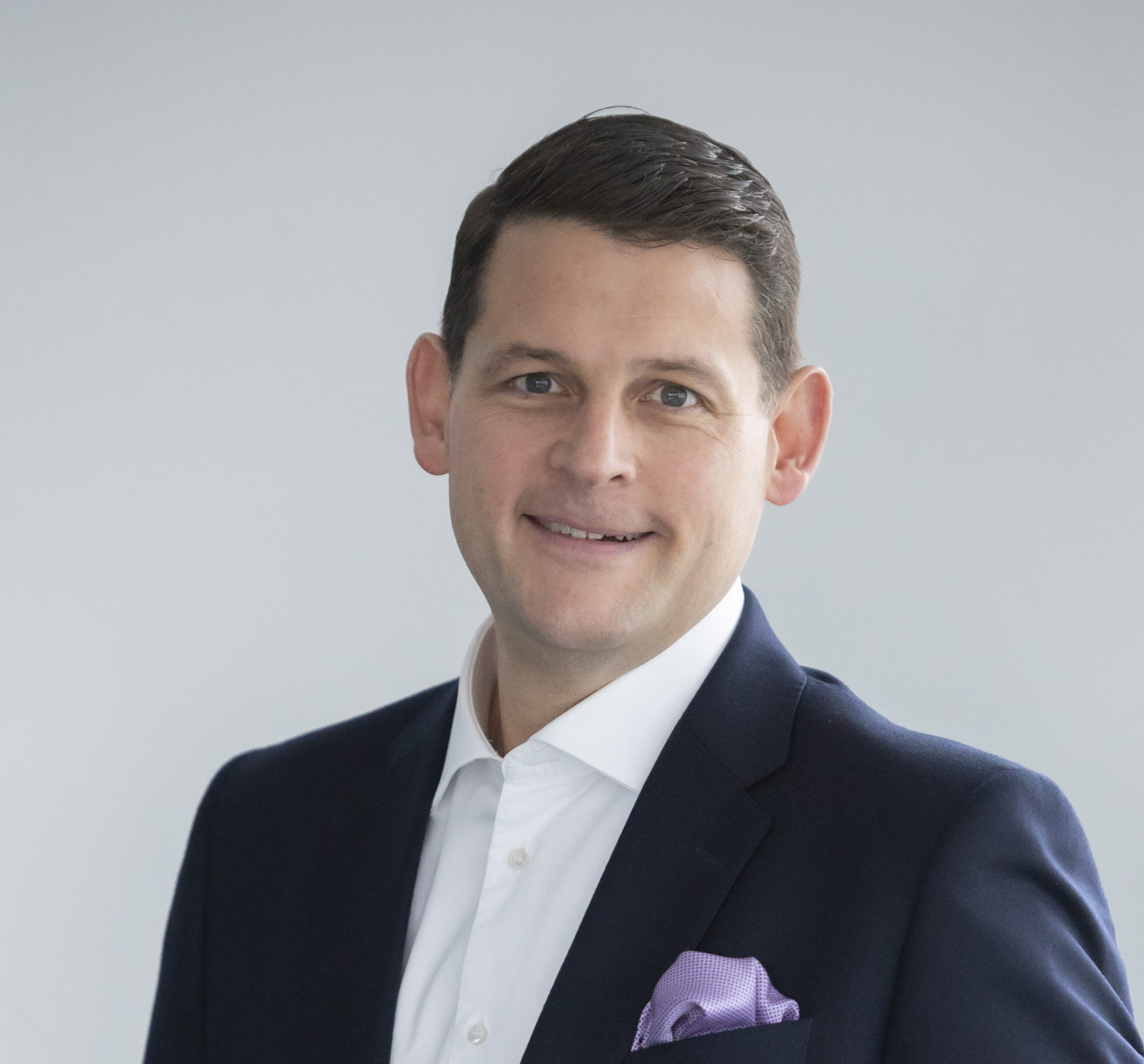
Georg Winter
CEO GrECo Group
T +43 664 962 39 06

Peter Giger
Group Chief Risk Officer
Zurich Insurance Group