
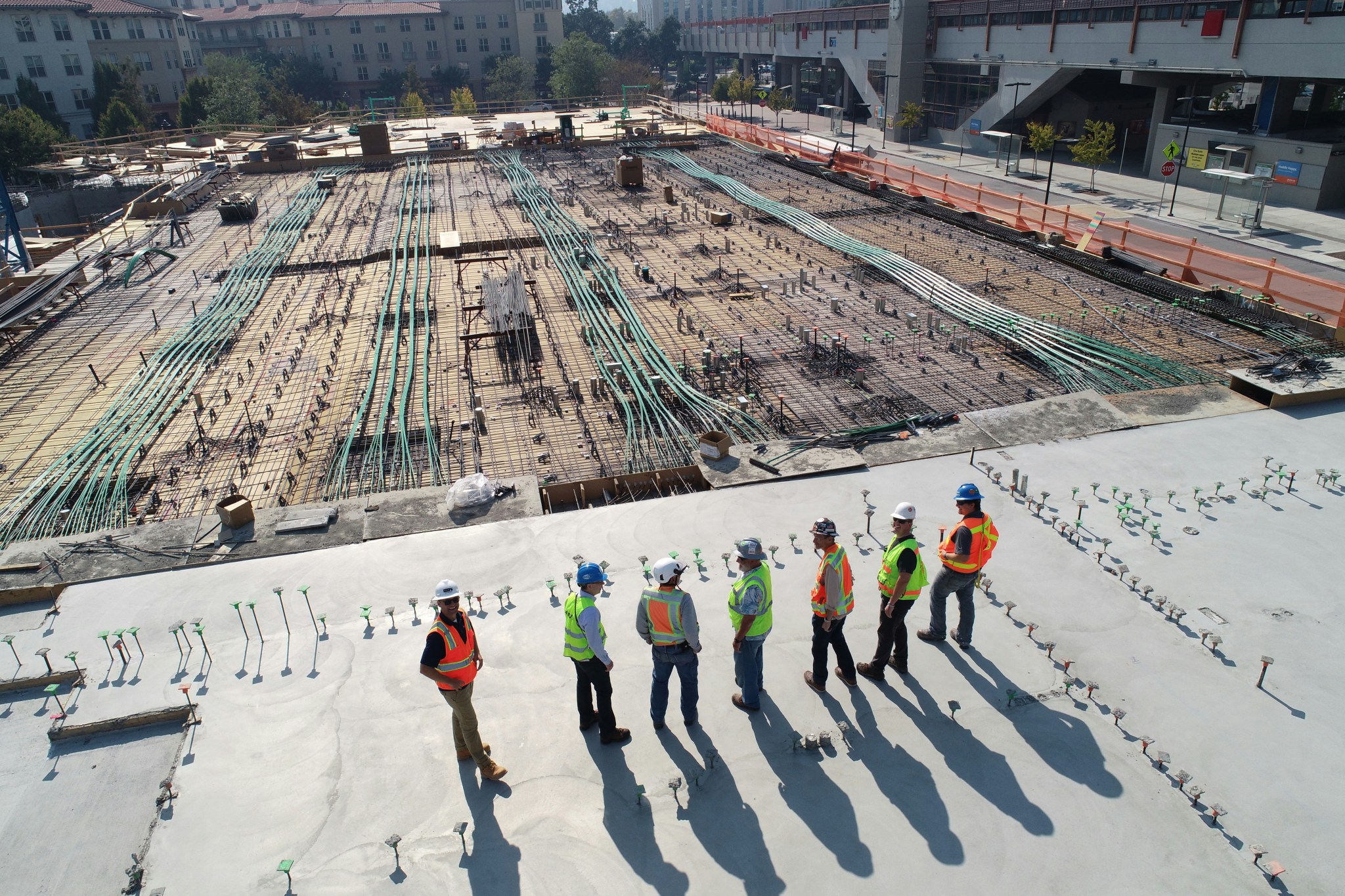
The construction and real estate industry is one of the largest CO2 producers. We therefore invited stakeholders along the value chain to shed light on their strategies, new success models, opportunities and risks in the fight against climate change as part of a mini-series on the topic of sustainable construction.

CEO SORAVIA
As a property developer and investment manager, SORAVIA bears great responsibility towards society and the environment. Consideration of the most significant ESG risks in a company’s day-to-day business is essential for sustainable business success.

CEO Digital Findet Stad
Digitalization can help minimize risk for investors in many ways. Above all, it is about cost transparency in terms of ongoing control and quality assurance. It is becoming increasingly easy to develop, simulate and compare scenarios right from the preliminary design stage.

Executive Assistant Strategy, Sustainability, Innovation GrECo Group
Concrete is one of the most influential building materials of our time. Nevertheless, this building material has one major disadvantage: it is responsible for eight percent of global CO2 emissions.

Head of Group Carrier Relations & Insurance Mediation
In the light of impending annual ESG reporting, the challenges in the dimensions of sustainability cannot be fully met by the existing certificates. The requirements of the EU taxonomy and the growing demand on the real estate market for climate-friendly buildings require uniform assessment criteria and thus indirectly a harmonization of assessment systems.
Related Insights
Fringe Benefits Are Reshaping the Employment Offer
Unlike core benefits such as medical care or pensions, fringe benefits are often the most visible to employees.
The Benefit Everyone Wants, But Nobody Structures the Same Way
For employers wanting to ensure their Health & Benefits strategy delivers real value over time, our Study has made it clear that those who focus on an informed approach that combines market understanding, structural comparison and local relevance will succeed.
We Say Yes to Net Zero
GrECo Austria’s Roland Litzinger sat down with the CEO of delfort. Martin Zahlbruckner, to discuss how a global specialty-paper group is driving emissions reductions.