
Daniel’s message to companies is simple: give people with disabilities the chance to do an apprenticeship, show appreciation, and make work assistance available.
For Daniel Gamweger, work is about more than earning a salary. It is about confidence, independence, recognition, and the chance to contribute. His path at Lebenshilfe Judenburg, from their Day Workshop to self-advocacy and employment in the organisation’s Club Connector project, shows what inclusive work can make possible, but also where the barriers still exist.
Doris Hochegger, a specialist social worker in mobile services at Lebenshilfe Judenburg, sees Daniel’s experience as part of a wider question: what does it take to move from support to self-determination?
“Self-determination does not happen by itself. People need reliable support that gives them room to make decisions, take responsibility, and shape their lives without unnecessary hurdles. At Lebenshilfe, that support runs through different phases of life – from counselling, early intervention and help in kindergarten and school to housing, meaningful employment and guidance towards an independent professional life. The aim is to contribute to a society in which inclusion is not treated as a separate issue but lived as part of everyday life.”
From protected work to the primary labour market
In Daniel’s case, that support became practical through Club Connector. His work was outward-facing: contacting associations, arranging appointments, and presenting the project. Through Club Connector, he also helped create a list where customers could register for club activities such as judo, theatre, and music. Some were then taken on by the clubs; Daniel himself joined the Murtal Bulls, an American football club. The project taught him teamwork and practical administrative skills, including how to submit a tax return.
The experience gave Daniel a clearer picture of what work outside the protected environment of the Lebenshilfe Day Workshop can mean. Employment brings income, insurance, pension rights and access to further training; Daniel used his education cheque to finance an English course. But he is also clear about the trade-offs: tax is deducted from your salary, and the private sector brings a level of time pressure that not every person with disabilities will find manageable.
“In the Day Workshop at Lebenshilfe, you can take your time, but in the private sector, there is time pressure,” he says. “I believe the private sector is not made for every person with disabilities.” Still, he sees the opportunities: “In the private sector, you can work your way up. That is not possible as a customer in the Day Workshop.”
The real challenge is building a better bridge between support, opportunity, and real choice.
Ambition, rejection and persistence
Daniel has clear ideas about the kind of work he would like to do. “Public relations would interest me, as would working as a train attendant, although I have already received a rejection for that,” he says. “I would also be interested in working in a political office, in graphics, or in pathology as a section assistant.”
Despite his dreams, the path to employment is not straightforward. “Small businesses do not employ people with disabilities,” Daniel says. “And writing applications is also a challenge, as until recently I had never done it. But, in this regard, I think my supervisor Doris was the biggest challenge because she said I had to be so precise with the application letters.” He has already received two job application rejections, but he remains pragmatic: “I do not let that get me down. I believe I have to make compromises and cannot always do my dream job.”
His experience also points to the assumptions that still shape access to work. “Companies are often reluctant because they believe we are not up to the pressure of work,” Daniel says. “Many still have an old attitude and think we cannot provide the service, but I believe companies can also learn from people with disabilities.”
That is the business lesson in Daniel’s story. Inclusion is often treated as something companies do for people with disabilities. Daniel turns that around: companies can also learn from lived experience – from accessibility needs to the assumptions built into everyday work.
The business opportunity in inclusive employment
Doris sees clear opportunities for companies that hire people with disabilities: “They can help address shortages of skilled workers for certain activities, while also gaining different perspectives. When companies experience first-hand the barriers and needs people with disabilities face in everyday life, their understanding changes. Services or products can become more inclusive, and new business areas can emerge.”
Lebenshilfe believes inclusion should not stop at the organisation’s own doors. Its work is also about encouraging society to become more open and building inclusive living environments in the spirit of the UN Convention on the Rights of Persons with Disabilities. Companies can play an important role when they recognise potential instead of reducing people with disabilities to their limitations.
In practice, this means asking direct questions. Can someone apply without unnecessary barriers? Can a job be adapted without lowering expectations? Do managers understand that support is not special treatment, but part of designing work well?
That is why cooperation with organisations such as Lebenshilfe matters. Employers do not need to get everything right immediately, but they do need to listen, accept guidance and be honest about where the workplace itself may need to change.
Turning inclusion into everyday practice
In Judenburg that support is translated into practical routes into work. Businesses such as Murkauf, a grocery store; The Bistro, a coffee house; and Marktwirt, a restaurant, give people with disabilities the chance to gain work experience, take responsibility and develop skills in direct contact with customers. The “Step by Step” project builds on this through internships in private-sector companies, helping participants demonstrate their skills while giving employers a direct sense of their motivation and potential. Lebenshilfe also carries out contract work for companies and supports activities in facilities such as old people’s and nursing homes.
What Daniel wants to see change
Daniel’s message to companies is simple: give people with disabilities the chance to do an apprenticeship, show appreciation, and make work assistance available.
He is equally direct about what policymakers should change: stronger financial support for inclusion in the labour market, tax relief for companies that hire people with disabilities, better access to education, work companions or assistance for everyone, salary instead of pocket money in line with the UN Convention, and stronger representation for people with disabilities in institutions such as the Chamber of Labour and parliament.
Daniel’s story is not a neat success story, and that is what makes it useful. It shows confidence, ambition and progress, but also rejection, pressure and the compromises still expected of people with disabilities. Inclusion cannot depend on individual resilience alone.
Doris puts it simply: “inclusion should be lived, not treated as something exceptional”. Daniel’s experience shows how much still needs to change, but also how much is possible when people are given the opportunity, support, and trust to take the next step.
About Lebenshilfe Judenburg
Lebenshilfe Judenburg, is a non-profit social organisation in Austria that supports people with disabilities through a wide range of services, helping them live with dignity, respect, equal participation and as much self-determination as possible. www.lebenshilfe-judenburg.at
About Doris Hochegger
Doris Hochegger has been working as a specialist social worker supporting the disabled at Lebenshilfe Judenburg since 2002. During this time, she has gained 10 years of experience in residential areas and day workshops. She is currently working at Mobile Services as a residential and EAFRD assistant, offering a combination of residential and leisure assistance.
About Daniel Gamweger
Daniel Gamweger has been active at Lebenshilfe Judenberg since 2002. He is a committed and, above all, politically interested person who speaks openly about his experiences with ADHD and a learning disability.

Laura Hochegger
Deputy Head of Sustainability & Innovation
GrECo Group
T +43 664 822 18 66

Doris Hochegger
Specialist social worker Lebenshilfe Judenburg
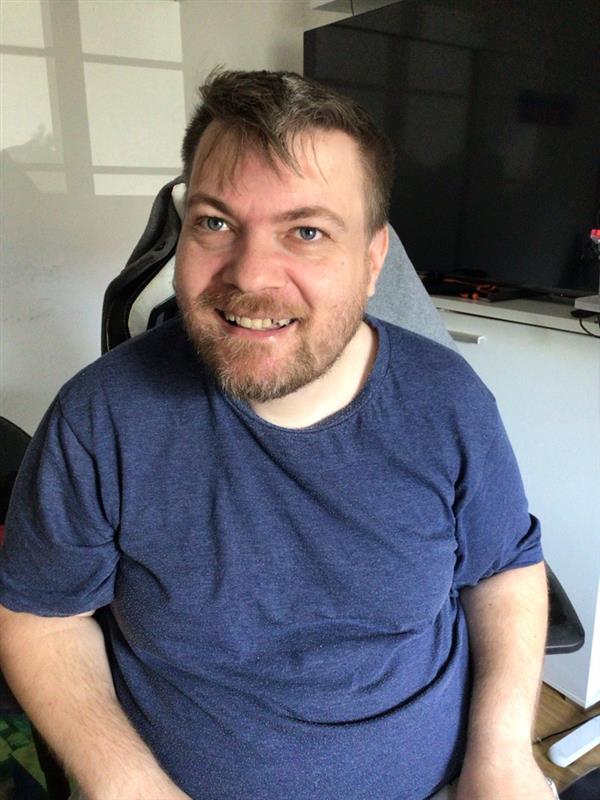
Daniel Gamweger
Lebenshilfe Judenburg