Courage in transformation rarely looks dramatic. It shows in the daily decisions: really listening to what a customer needs instead of what fits our existing process and then having the discipline to decide end-to-end in their favour, even when it’s easier to solve just your own piece of the problem.
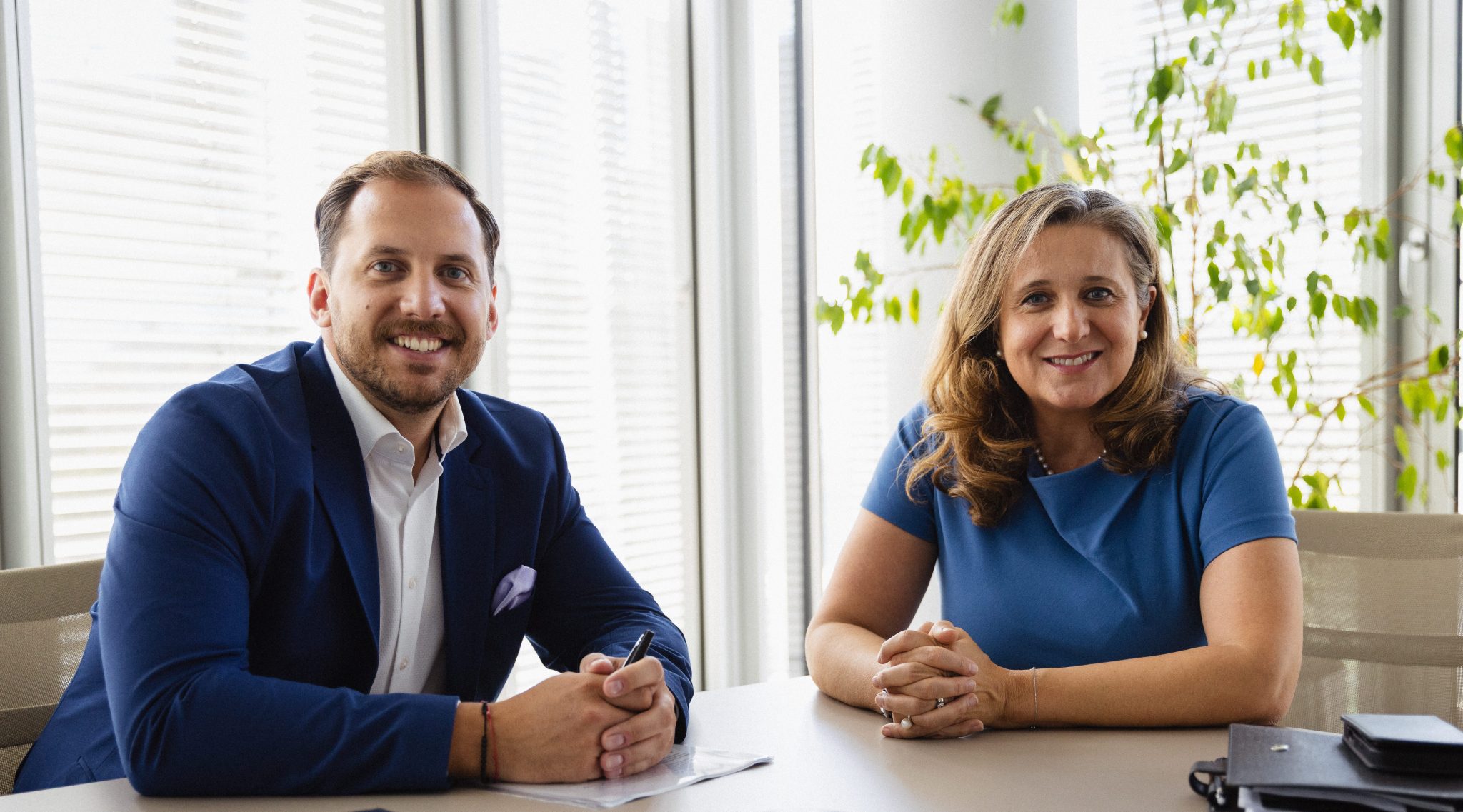
What does it really take for transformation to move from strategy decks into the way a business works every day? Paul Johannes Spittau, Head of Group Carrier Relations & Insurance Mediation at GrECo Group, explores this with Olivera Böhm-Rybak, Chief Corporate Business Officer International and CEO of UNIQA Sustainable Business Solutions.
Spittau: Transformation only becomes real when it changes how an organisation works at the core. From your experience, where do companies most often underestimate what that actually involves?
Böhm-Rybak: I think most companies underestimate transformation because they still see it as something they implement, rather than something they become. They focus on the technology – a new platform, a dashboard, the latest AI tool – but technology is only the enabler. The real work is to change how decisions are made, how talent is developed and how an organisation creates value.
Take AI in underwriting. The interesting shift isn’t the tool itself – it’s whether underwriters use it to sharpen their judgment or get pushed around by it. That’s a retraining question, an incentive question, a trust question – not a procurement question. The same pattern shows up everywhere: real-time data instead of annual renewal cycles, prevention instead of payouts once the damage is done.
Transformation becomes real the day it stops being something we announce and starts being something customers simply feel. Not a new interface. A new experience.
From products to solutions
Spittau: Many organisations talk about becoming solution providers. In practice, where does that shift begin?
Böhm-Rybak: For me, becoming a solution provider starts with changing the question you’re trying to answer. If you’re product-focused, you ask, “What policy can I sell?” If you’re solution-focused, you ask, “What problem is my customer trying to solve?” That’s a fundamentally different conversation.
Also, customers keep changing too – new supply chains, shifting or entirely new risks, a geopolitical backdrop that won’t hold still. The scale of that shift is real: globally, secondary perils like wildfires, severe storms and floods now account for a record 92% of insured natural catastrophe losses with the trend pointing higher, not lower. Insurance is only one part of what’s actually needed. Our role is to help customers become more resilient, using data, technology, expertise and partnerships to prevent losses as much as to insure them.
Spittau: So it is less about adding services around a product, and more about redesigning around customer outcomes. What needs to change inside the organisation for that to become real?
Böhm-Rybak: To make that shift, mindset comes first. Unless leaders and employees genuinely see their job as solving customers’ problems rather than selling products, everything else is cosmetic. Once that mindset changes, the organisation follows: multidisciplinary teams, new partnerships, much closer collaboration between distribution, underwriting, claims, risk engineering and technology.
It’s not about adding services around a product, it’s about redesigning the business around customers’ outcomes – staying indispensable by changing at the same pace as the businesses we serve.
Building capability, not just offerings
Spittau: If transformation has to become part of how the organisation works every day, where do legacy structures most often get in the way of building solution-oriented organisations?
Böhm-Rybak: For us, that means people, not just processes and how closely our teams work with brokers who advise the customer, while we carry the risk and bring resilience-building expertise – that’s why we founded UNIQA Sustainable Business Solutions, for example. Close collaboration with the broker matters to us because it’s how we get to the best solution for the customer, not just the best policy.
Some structure is still necessary – clear roles, clear accountability, regulatory boundaries that exist to protect the customer. The challenge is making sure that our structures serve the customer relationship instead of getting in its way.

Ecosystems and partnerships
Spittau: If solutions are built around customer outcomes, then no organisation can deliver everything alone. What changes when established organisations start working through ecosystems rather than acting on their own?
Böhm-Rybak: For us, the ecosystem isn’t abstract – it’s the broker who advises the customer, us as the insurer who carries the risk, and the customer, whose business we both need to understand. That triangle only works if all three are aligned, not just contractually, but on what “the best solution” actually means for that customer.
Spittau: That makes the partnership very concrete. Where do these ecosystems need to go beyond the traditional insurance model?
Böhm-Rybak: Insurers have to learn to move faster than the classic annual renewal cycle allows. That’s why, through UNIQA Sustainable Business Solutions, we’ve built services that go beyond classical insurance services: Risk Engineering, where our experts assess a customer’s actual exposure on site rather than relying on paperwork alone; a Resilience Service that helps customers prepare for and recover from disruption before it becomes a claim; and a Climate Change Impact Evaluation, which shows customers how their specific risks are shifting as the climate changes. In Austria alone, 2025 was one of the eight warmest years on record, with rainfall around 17% below the long-term average2, with this knowledge they can adapt ahead of time instead of reacting after a loss.
Balancing control, speed and trust starts with being clear about what’s non-negotiable – customer trust, data security, regulatory compliance. Around that, we give the partnership room to move quickly. The strongest ecosystems aren’t held together by contracts, they’re held together by everyone – broker, insurer, customer – agreeing on what success actually looks like for the customer.
Courage in execution
Spittau: A lot of what you describe sounds simple in principle, but difficult in execution. What separates companies that truly evolve from those that remain stuck in pilot mode?
Böhm-Rybak: Courage in transformation rarely looks dramatic. It shows in the daily decisions: really listening to what a customer needs instead of what fits our existing process and then having the discipline to decide end-to-end in their favour, even when it’s easier to solve just your own piece of the problem.
What separates companies that evolve from those stuck in pilot mode isn’t insight – most leadership teams already know what needs to change. It’s whether people are willing to make that same customer-first call consistently, day after day, not just when it’s convenient or when someone’s watching.
Spittau: If you had to distil it into one leadership question, what should companies be asking themselves?
Böhm-Rybak: If I had to put it into one question: a company becomes solution-driven the day it stops asking “how do we innovate without disrupting what works” and starts asking “What decision, right now, actually serves our customers end-to-end?”
About Olivera Böhm-Rybak:
Olivera Böhm-Rybak is CEO of UNIQA Sustainable Business Solutions and Chief Corporate Business Officer International at UNIQA Insurance Group, leading its international corporate insurance business. She has more than 30 years of insurance industry experience, with expertise in risk management, business development, transformation management and underwriting.
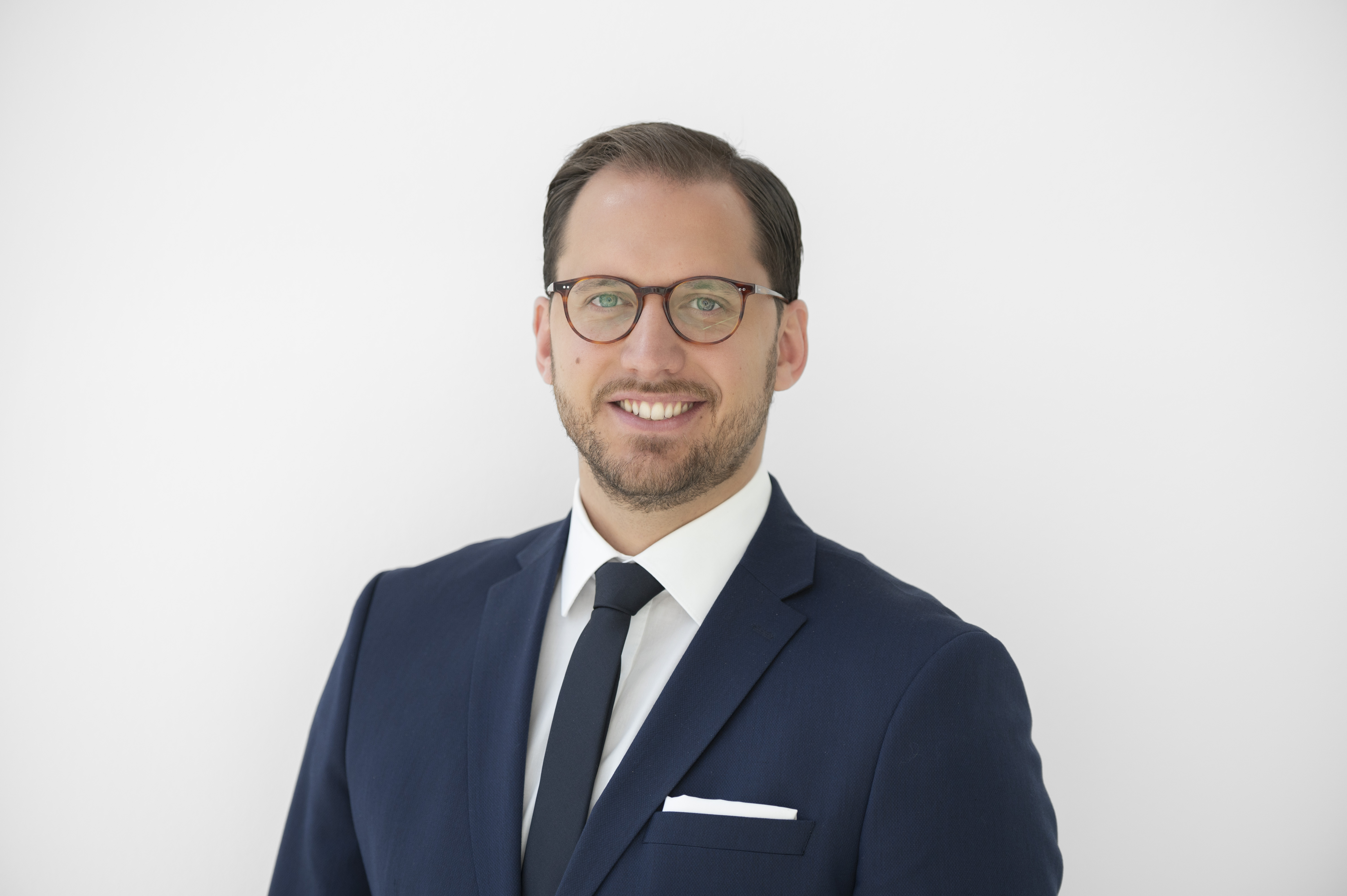
Paul Johannes Spittau
Head of Group Carrier Relations & Insurance Mediation
T +43 664 537 17 42

Olivera Böhm-Rybak
CEO
UNIQA Sustainable Business Solutions