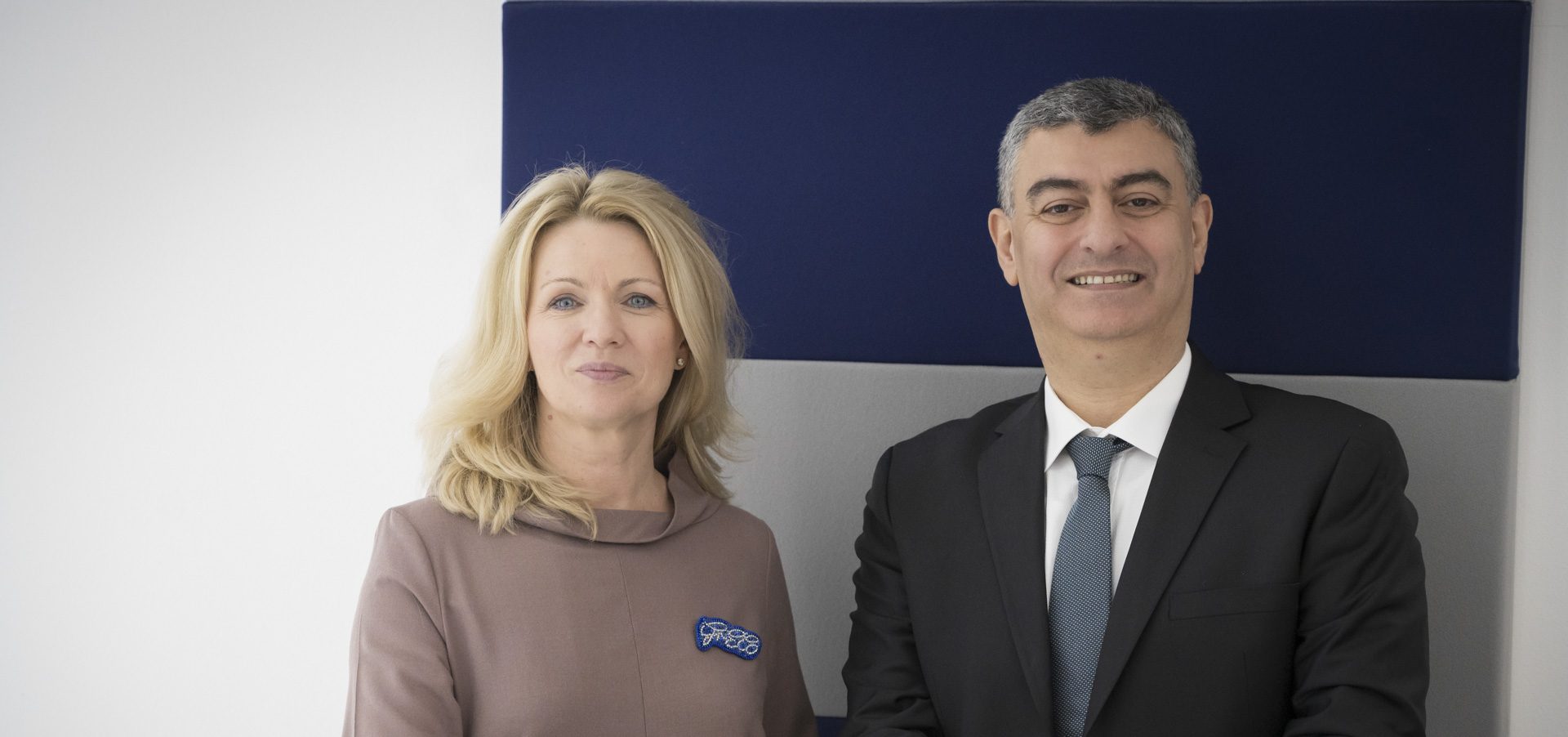
“The benefits can be substantial, but it’s essential to recognise that managing operations across borders in the Middle East presents challenges”. Walid Nehme from Associated Alliance Holdings, our GrECo nova partner in the Middle East, met with Natalia Zaborovska at GrECo Group to discuss the opportunities and challenges of operating in this volatile and unpredictable region.
Zaborovska: How has your business developed and expanded in the Middle East over the years?
Nehme: We have strategically expanded our footprint across the Middle East, combining organic growth with targeted acquisitions to enhance our services and reach in the region. We were founded in 2001 in Lebanon and over a 10-year period we expanded internationally, opening our first foreign operation in 2006 in the United Arab Emirates and expanding further into Saudi Arabia (KSA) and Egypt in 2011. Recently made our first acquisition in Dubai.
We now operate in a total of nine countries within the region, and our client base extends to countries such as Sweden, Netherlands, UK, Turkey, South Africa, Kenya, Ghana, Morocco, Tunisia, Iraq, Afghanistan, Pakistan, Indonesia, Thailand, and Vietnam.
Harnessing opportunities and surmounting challenges: Delicately balancing the nuances of different countries across a region
Zaborovska: Are there any issues you face operating in multiple countries in one region? For example, are there issues with staying consistent across the different countries in the region?
Nehme: Operating in multiple countries within one region presents both opportunities and challenges. Let’s explore some of the issues related to consistency: Firstly, there are legal and regulatory differences to consider. Each country has its own legal framework, regulations, and compliance requirements and navigating these variations can be complex. Ensuring compliance while maintaining consistency across countries is a delicate balance.
Secondly, cultural diversity is a consideration. The Middle East is rich in cultural diversity, with distinct traditions, languages, and social norms. Communication styles, business etiquette, and decision-making processes vary, and adapting to cultural nuances is essential to build strong relationships and conduct business effectively. Misunderstandings due to language differences can also impact consistency and while English is widely used for business communication, local languages play a crucial role. Translation accuracy also matters, especially in legal documents, contracts, and client communications.
Thirdly, one cannot ignore the importance of operational consistency. Maintaining consistent service quality across offices is vital. Standard operating procedures, training programmes, and performance metrics help achieve this. Whilst regular audits and reviews ensure alignment with organisational goals.
Next up is technology and infrastructure which varies greatly across the different countries. IT systems, connectivity, and cybersecurity protocols must be harmonised, and consistent data management and reporting are essential.
And last but by no means least, managing client expectations across diverse contexts is challenging. Clients expect a seamless experience regardless of location and so service delivery, responsiveness, and understanding client needs must remain consistent.
Zaborovska: Does operating in multiple countries in this region also have its benefits? What are they?
Nehme: Surprisingly, geopolitical instability can yield several advantages. Firstly, it serves as a strategic risk mitigation tactic, dispersing operational risks across various locations. This diversification minimises the impact of geopolitical or economic upheavals in any one country.
Moreover, the income diversification resulting from a presence in multiple countries acts as a buffer against economic downturns or political crises in specific markets. The ability to tap into diverse customer bases enhances the overall resilience of the business.
From an operational standpoint, the consolidation of functions like compliance, finance, and IT across borders enables cost optimisation. Economies of scale can be achieved through shared services, centralised management, and standardised processes.
Operating in diverse countries also provides us access to a broader talent pool, allowing the company to benefit from specialised skills or expertise present in different regions. This diversity fosters adaptability and equips the company to handle changes in regulatory environments, economic conditions, or other external factors.
Furthermore, it also offers a deep understanding of local markets, facilitating the customisation of products or services to meet specific regional needs. This local knowledge is instrumental in staying ahead of competitors and navigating complex regulatory landscapes.
In negotiations with regional or multinational clients, a presence in multiple countries can be leveraged for enhanced bargaining power. It demonstrates the company’s ability to provide comprehensive and integrated solutions that span across borders.
The adaptability cultivated through diverse operations also extends to brand resilience. A negative event impacting the brand in one country may have a reduced impact on the overall brand perception if there is a strong presence and positive image in other countries.
While these benefits are substantial, it’s essential to recognise that managing operations across borders presents challenges such as navigating diverse legal frameworks, cultural differences, and logistical complexities which we always strive to overcome.
A region in turmoil: The current impact of geopolitical conflicts on industries in the Middle East
Zaborovska: Geopolitical conflicts continue to play a crucial role in shaping economic policies in the Middle East. What are the potential effects on trade, technological innovation, and economic growth?
Nehme: Geopolitical conflicts wield a substantial influence on economic policies, with potential effects on trade, technological innovation, and economic growth. The outcomes, however, can vary significantly depending on the nature of the conflict and the economic structures of individual countries.
Negative impacts include disrupted trade routes creating uncertainties and leading to increased costs for businesses involved in international trade. Tariffs, sanctions, and heightened security concerns can impede the flow of goods and negatively impact trade relationships. In addition, geopolitical conflicts create an environment of uncertainty, deterring direct foreign investment and causing capital flight. This uncertainty can lead to economic downturns, job losses, and business downsizing, particularly in countries dependent on tourism, like Jordan, Lebanon, and Egypt.
But it’s not all bad news, there can be positive impacts too. In certain scenarios, countries with significant natural resources, such as oil-producing nations like UAE, Qatar, and Saudi Arabia, might benefit from geopolitical tensions. Increased demand for oil during uncertain times can lead to higher prices, thereby positively impacting the economies of these countries.
Zaborovska: How is the insurance industry as a whole adapting to the present situation in the Middle East? What challenges are you as a broker currently facing as a result?
Nehme: The insurance industry in the Middle East is experiencing varied responses to the present situation, with differences in the GCC (Gulf Cooperation Council) countries and others like Egypt, Lebanon, and Jordan. In the GCC countries, the insurance industry is reportedly stable and expanding, benefiting from the overall economic growth in these nations. The ongoing economic expansion contributes to increased demand for insurance products and services. Furthermore, economic growth in the GCC is often accompanied by efforts to diversify the economy. As a result, the insurance industry may be expanding its offerings to cover a broader range of risks associated with diverse sectors, contributing to overall industry growth.
However, in other countries (Egypt, Lebanon, and Jordan, for example), insurers are facing challenges to adapt by shifting the currencies in which insurance policies are paid. This strategic move can be a response to currency devaluation or economic instability in local markets, providing a measure of protection against economic uncertainties. Economic challenges in these countries may lead insurers to downsize their operations. This could involve streamlining staff, reducing overhead costs, and optimising operational efficiency to navigate financial constraints. What is more, to counter the impact of economic challenges, some insurers may be exploring opportunities to expand into new territories. This expansion could involve entering markets with more favourable economic conditions or less exposure to the specific challenges faced in their home countries.
Zaborovska: What about your clients? Are there any industries faring better or worse than others under the current geopolitical pressures?
Nehme: Industries heavily dependent on tourism and physical infrastructure may face more pronounced challenges, while sectors like technology, buoyed by competitive advantages, can thrive despite the geopolitical pressures.
The technology sector is showing resilience and even flourishing in the face of geopolitical pressures. Competitive salaries, driven by economic slowdown and inflation, make the region attractive to multinational companies for recruiting and assigning IT projects. This influx of projects contributes to the growth of the technology sector, creating opportunities for local talent and fostering innovation.
Planning for the future in the face of adversity
Zaborovska: Are you able to, and in what ways can you, plan for the future in the face of such uncertainty and volatility in the region?
Nehme: From the early days, and because we were established in Lebanon, we have established a robust contingency plan which is regularly updated and reviewed by a cross-functional team including the CFO, compliance, IT, and internal audit heads, and then submitted for Board approval. Key elements include risk assessments, scenario planning, financial resilience, and a focus on technology and cybersecurity. The plan emphasises diversification, adaptability, stakeholder communication, legal compliance, employee training, and collaboration with industry peers. By proactively addressing these factors, we aim to navigate geopolitical challenges and ensure the organisation’s resilience in the face of evolving circumstances.
New legislation and its impact on business
Zaborovska: With a raft of new laws in the Middle East at the end of 2023, and more on the way during the first quarter of 2024, regulatory authorities are intensifying their focus on enforcing market regulations. What are the major changes and what impact will they have on insurers and brokers?
Nehme: The regulatory landscape in the Middle East has witnessed significant changes, impacting insurers and brokers. Anticipated new laws in the UAE, particularly the forthcoming brokers’ law in Q1 2024, will likely bring additional compliance requirements.
In Saudi Arabia, the recent regulation mandating brokers to employ Saudis as their salesforce has had a major impact on industry players, particularly those heavily reliant on expatriates. This shift has prompted challenges for brokers with predominantly expatriate salesforces, while companies like ours, which proactively recruited Saudis since 2021, remain less affected.
Additionally, the industry is experiencing a wave of acquisitions that started a couple of years ago, and this trend is expected to intensify. Insurers and brokers in the Middle East must adapt to these evolving regulatory measures, emphasising compliance and strategic workforce planning to navigate these changes effectively.
About Walid Nehme
CEO and member of the board of the Associated Alliance Group, Walid Nehme has unparalleled experience in insurance and reinsurance brokerage, risk management consultancy, and advising on employee benefits in more than 12 countries in the MENA region. He also holds positions as Chairman of Synergy Reinsurance, Managing Director at Associated Insurance Brokers, and Managing Partner at Daman Insurance Brokers KSA.
About Associated Alliance
Founded in 1999, GrECo nova partner Associated Alliance is a holding company that operates across nine countries in the Middle East. Its core services include being insurance and reinsurance brokers, risk management advisers, and employee benefits consultants. It has a strong presence in the region, serving clients with its expertise and solutions.

Walid Nehme
CEO
Associated Alliance Holdings

Natalia Morris
Group Head of International
T +61 44 777 9001
Insured by Algorithms
The insurance industry is undergoing a profound transformation, driven by the rapid adoption of AI and predictive analytics.
Beyond Moving Cargo: Why Employee Well-Being Is the Real Asset in Logistics
In today’s employee-driven market, especially for Gen Z talent, benefits aren’t just perks – they’re strategic tools for attraction and retention
The New Edition of FORWARD Magazine Is Now Available
GrECo is proud to present the latest edition of our client publication, FORWARD Magazine—now live and ready to explore.