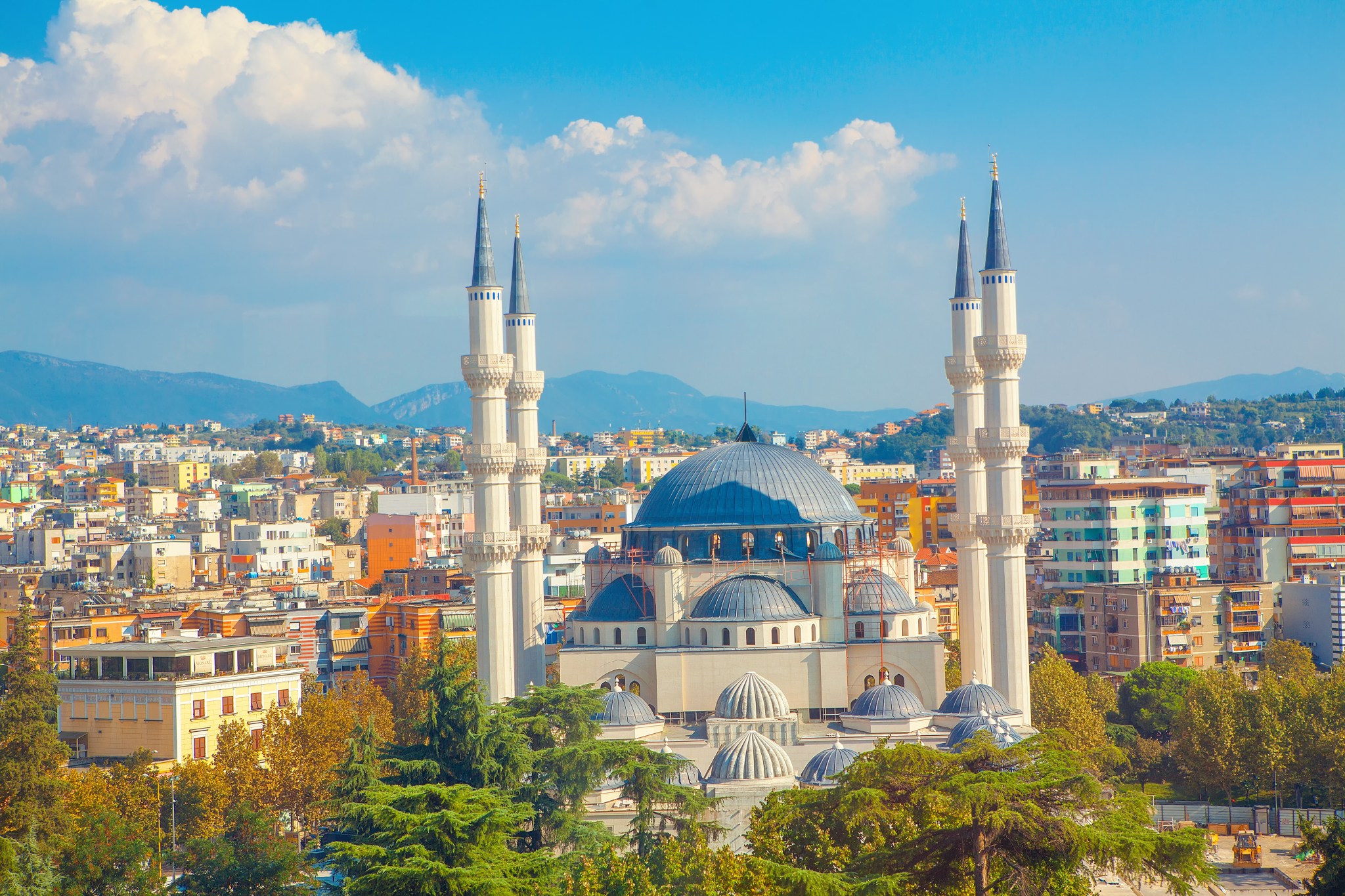
Albania is currently facing many multifaceted challenges and opportunities. From economic growth and poverty reduction to climate change and the evolving educational landscape, Paul Spittau, Head of Group Carrier Relations & Insurance Mediation at GrECo International, discusses Albania’s present and future risk landscape with the General Manager of GrECo Albania, Elnar Gashi.
Albania’s Economic Growth and Workforce Challenges
Spittau: The world is in flux, and we live in a time of global polycrisis. What are the specific developments and challenges facing your clients today and in the next five years?
Gashi: Firstly, economic growth and poverty reduction are crucial. Albania’s economy is projected to grow by 3.3% in 2024 and 3.4% in 2025, driven by private consumption, tourism, and construction. This growth is expected to contribute to further reductions in poverty levels, improve employment, and wages. However, demographic trends pose a significant challenge. The country faces a declining population due to emigration, which is impacting labour force availability and economic productivity. Addressing this issue requires enhancing the quality of the workforce and creating attractive employment opportunities to retain talent.
Climate change and environmental sustainability are also critical. Albania’s reliance on hydropower, meeting 85% of domestic energy demand, makes it vulnerable to climate variability. Strengthening environmental sustainability and diversifying energy sources are essential to mitigate climate risks.
Furthermore, Albania is making strides toward European Union integration by implementing necessary reforms to align with EU standards. Efforts to accelerate EU accession and enhance regional relations, particularly with Serbia and Kosovo, will remain crucial. The government is expected to prioritise reforms in the justice and rule-of-law sectors. Albania’s success will largely depend on demonstrating effective anti-corruption measures and ensuring judicial independence. This presents both opportunities and challenges for our clients and for the nation as a whole.
Skilled Labour Shortage and Education System Reforms
Spittau: You mentioned skilled labour shortage as a challenge. Is Albania’s education system equipped to provide the necessary skills and talents for businesses?
Gashi: It’s moving in the right direction but there’s a long way to go. Albania’s education sector has faced substantial challenges, including low spending, inadequate salaries, and inefficiencies. These outcomes resulted in poor education standards, way below the European Union average.
Higher education is pivotal for equipping the workforce with innovation and productivity. The latest World Bank report highlights Albania’s progress in expanding its higher education access. Despite low rural enrolment in higher education, we have seen an increase in the number of university students in cities. Migration has significantly impacted these figures and contributed to the overcrowding of urban areas. However, only 15% of those enrolled in university are specialising in much needed STEM fields. Therefore, regional partnerships and integration into EU education support are seen as crucial in developing our future workforce.
Spittau: How are the prevailing political, economic, and ecological conditions in your country influencing the corporate risk landscape, and what are the implications of these changes for the insurance industry as a risk carrier for companies?
Gashi: Politically, the country faces forced migration, rising crime, and illegal economic activities. The impact of the War in Ukraine has heightened inflation, disrupted supply chains, and unsettled financial markets.
Economically, growth projections indicate a 3.4% increase in 2025, contingent on global economic recovery and the implementation of structural reforms. Inflation trends show a temporary rise in the first half of 2025, with stabilization anticipated by 2026.
And ecologically, Albania remains highly sensitive to climate-related events such as floods, wildfires, and landslides. Without proactive measures, conservative estimates suggest that economic damages from such events could total to 7% of Albania’s GDP. Strategic investments by the European Commission estimated at $6 billion for the entire Balkan region are essential to mitigate these risks.
These conditions are having significant implications for the insurance industry. There is an increased demand for coverage as companies seek more comprehensive insurance solutions. In response to this, insurers need to improve risk assessment models to account for evolving economic uncertainties and potential losses. Additionally, regulatory compliance and green finance principles are becoming more prominent, promoting investments in renewable energy and sustainable projects.
Future Investment Opportunities and Their Impact on Risk Management
Spittau: Which industries are expected to see more investments in the near future, and how will this impact the risk industry?
Gashi: The tourism, construction, and green energy sectors are likely to receive increased investments in the coming years. Albania’s economic growth is projected to remain strong, with a 3.3% increase expected in 2024 and 3.4% in 2025. The expansion of tourism and construction activities may lead to increased demand for insurance products covering property, liability, and business interruption. However, these sectors are sensitive to risks such as environmental hazards and regulatory changes, necessitating comprehensive risk assessment and management strategies.
Risk Predictions for 2026 and Beyond
Spittau: What risks do you predict will be trending in 2026 and beyond?
Gashi: There are several key risks anticipated for 2026 and beyond. Firstly, climate-related risks are a major concern. Albania is highly susceptible to hazards such as floods, earthquakes, and landslides. Without effective mitigation, economic damages could reach up to 7% of the nation’s GDP.
Secondly, while economic growth is projected at 3.4% in 2025, external vulnerabilities remain significant. Global economic conditions, geopolitical tensions, and supply chain disruptions could negatively impact key sectors like tourism and construction.
Thirdly, fiscal and debt sustainability is crucial. Reducing public debt while maintaining fiscal discipline is essential for long-term stability.
And lastly, social protection and inclusion are critical. Reforming social protection systems, including disability assessments, is necessary to enhance coverage and effectiveness, promoting inclusive growth and reducing vulnerability among marginalised populations.
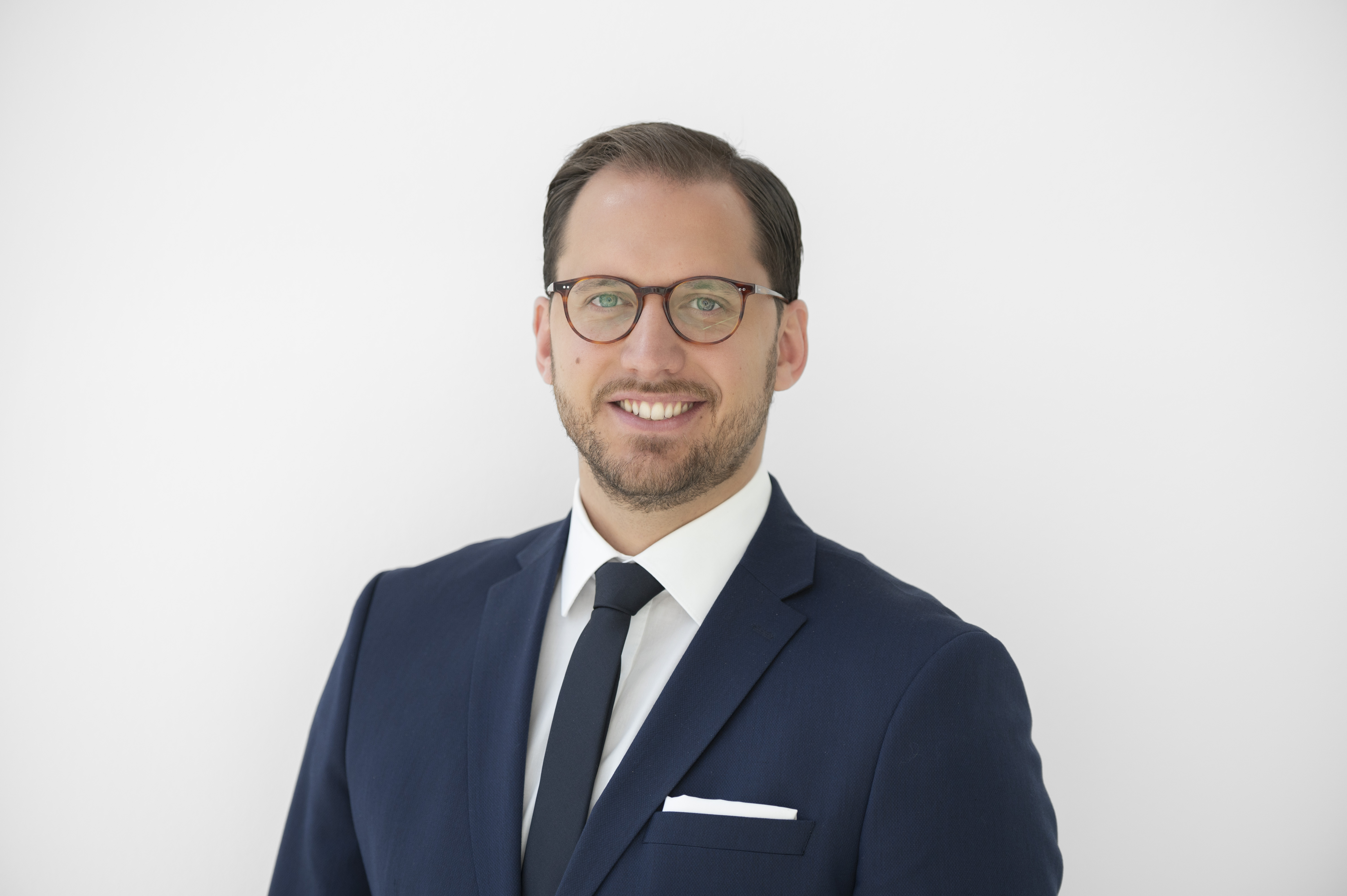
Paul Johannes Spittau
Head of Group Carrier Relations & Insurance Mediation
T +43 664 537 17 42

Elnar Gashi
General Manager GrECo Albania
T +355 684046206