
An air gap is the physical separation between critical systems and public networks theoretically minimising the risk of cyberattacks.
In today’s digital age, the concept of an air gap seems like an impenetrable fortress against cyberattacks. However, even the most secure barriers can be breached not by sophisticated technology, but by the simplest human error. Peter Papp, Account executive from GrECo Slovakia shares his experience of cooperation with IT companies from the recent past.
What is an Air Gap?
An air gap is the physical separation between critical systems and public networks theoretically minimising the risk of cyberattacks. Security measures such as these play a crucial role in protecting sensitive infrastructure systems. However, despite technological safeguards, the most vulnerable element of any system remains the human. Social engineering and human errors can breach even the most complex security barriers.
What is Social Engineering?
Social engineering is a method where attackers manipulate people to gain access to sensitive information or systems. Instead of directly bypassing technical defences, attackers focus on the vulnerability of human behaviour. They rely on trust, lack of awareness, or common mistakes people make when interacting with systems.
Case Study: Stuxnet and Overcoming the Air Gap
One of the most well-known examples of a cyberattack where the human factor played a key role was the Stuxnet malware attack on Iran’s nuclear facility in Natanz. This attack is a perfect demonstration of how even the most sophisticated technical defences can be breached through human error.
Iran’s nuclear plant was protected by an air gap, meaning it was physically separated from the internet and public networks. However, Stuxnet managed to bypass this protection, likely through an infected USB drive used by an unsuspecting employee. In this case, the human became an unwitting tool of the cyberattack.
The Stuxnet malware was designed to manipulate industrial control systems and sabotage the centrifuges at the facility while displaying false information to operators, preventing the problem from being detected in time. This attack significantly slowed Iran’s nuclear programme and had extensive geopolitical consequences.
Human Error in Attacks on Technical Infrastructure
As the Stuxnet case shows, breaching the air gap and launching an attack on critical infrastructure did not require a sophisticated technical breakthrough but simply the exploitation of human negligence or error. In this case, it is believed that employees failed to follow security protocols and connected an infected device to the internal network.
This scenario illustrates how human error can be one of the greatest risks to the security of technical systems. Even the best-designed technologies are only as strong as the people who operate them.
Preventing and Mitigating the Risks of Social Engineering
Organisations that rely on critical infrastructure must understand that technical solutions are only part of the security equation. To minimise the risk of human errors and successful social engineering attacks, it is essential to implement the following measures:
Education is Crucial
The human element in cyberattacks represents one of the most significant vulnerabilities, often capable of circumventing even the most sophisticated technological defenses like the air gap. Social engineering remains a powerful tool for attackers who exploit human weaknesses. Therefore, companies must prioritise employee education and training as part of their ESG and cybersecurity strategies. By fostering a culture of security and awareness, organisations can significantly reduce the risk of human error, thereby strengthening their overall defense against cyber threats.
HORIZON Risk Thought >> Fast Forward
The complexity of today´s risk environment is changing at an accelerating pace, making risk management even more challenging. We have created HORIZON, firstly as a print publication and now as a page for sharing the latest insights about ongoing transformations. Our risk specialists will continue to provide their expertise and knowledge to shine a light on the challenges of the future.
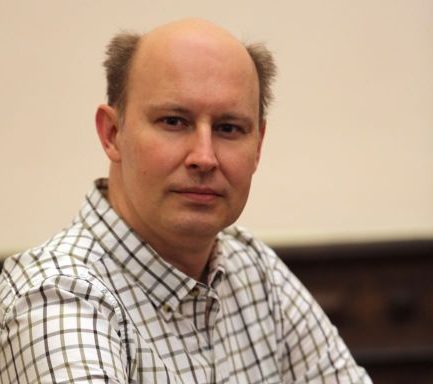
Peter Papp
Account Executive
GrECo Slovakia
T +421 9119 68492