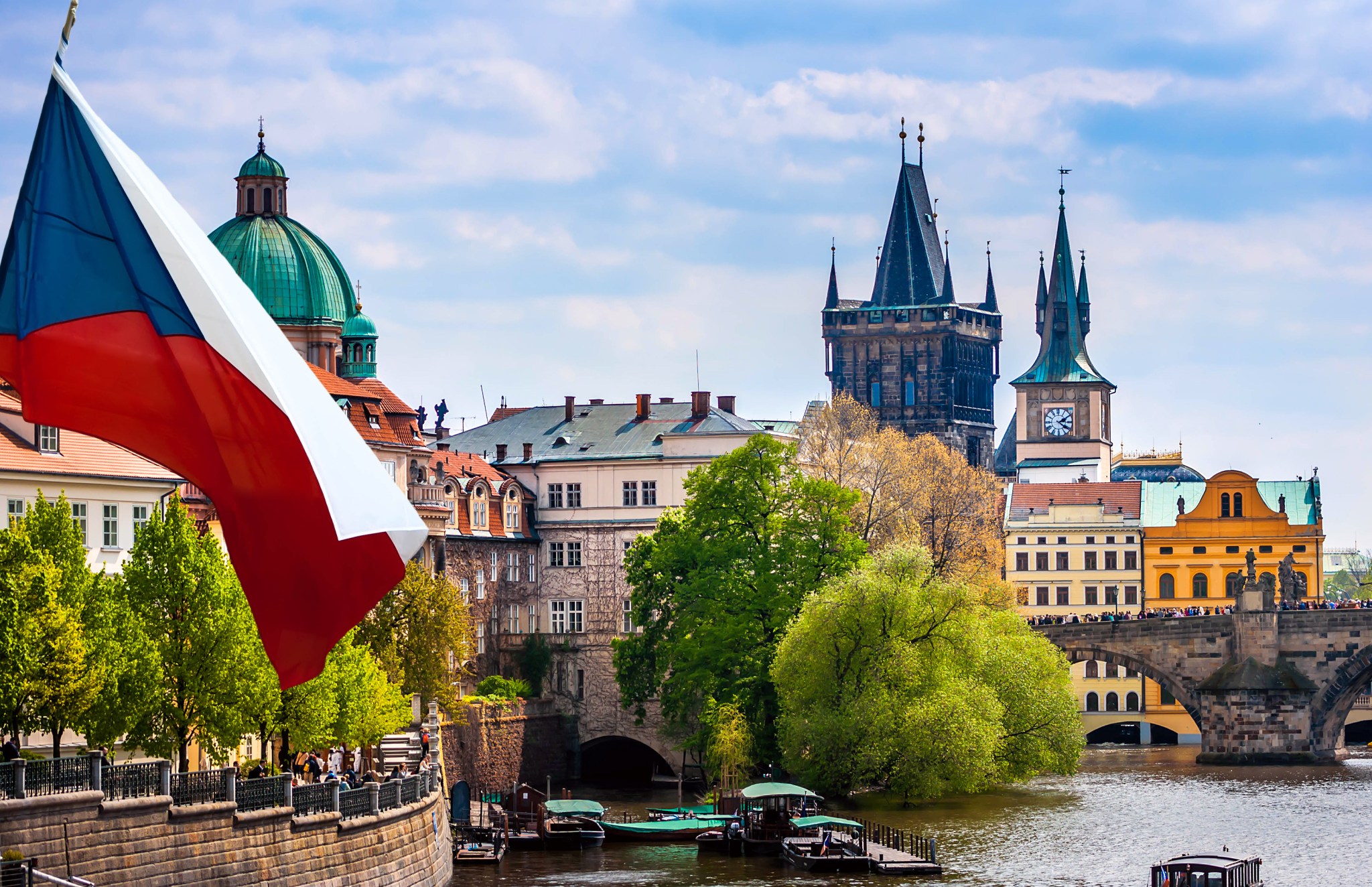
In the rapidly evolving landscape of global economics and technology, understanding the specific challenges and opportunities faced by businesses is paramount. In this interview, Paul Spittau, Head of Group Carrier Relations & Insurance Mediation at GrECo International sits down with Radovan Škultéty, General Manager, and Lubor Kunc, Risk and Insurance Technique Manager from GrECo Czech Republic, to discuss the pressing economic challenges and the technological advances shaping the Czech Republic today.
Current Economic Challenges
Spittau: The world is in flux, and we live in a time of global polycrisis. What are the specific developments and challenges facing your clients today and in the next five years?
Škultéty: The Czech Republic faces significant challenges due to its economic dependence on foreign trade, with 85% of exports and 77% of imports involving the EU. High energy prices, based on the European Energy Exchange in Leipzig, add to this competitive disadvantage.
The shortage of skilled labour remains a significant issue. Conservative labour laws hinder workplace flexibility, leading to a reliance on foreign workers. Developing robust training and development programmes to upskill the workforce will be crucial.
Technological advancements, especially in Internet and AI-based services, are creating new opportunities for private businesses. Czech companies leverage digital platforms for communication, service delivery, and collaboration with partners and employees. This trend is expected to grow and should be integrated into corporations’ risk management plans and policies.
Lessons Learnt Post Natural Disaster
Spittau: Can you provide us with more details of the floods? What has the Czech Republic learnt from this event that could help protect people and the economy from similar flooding in the future? How can risk management help?
Kunc: Sadly, the Czech Republic has been hit relatively regularly by severe flooding over the years – 1997, 2002, 2013 and now 2024. The devastating floods that hit in September last year primarily affected the eastern part of the country. However, this time, increased government investment in modern rescue equipment and emergency services training led to fewer deaths from flooding compared to previous years. Nevertheless, the floods still caused extensive damage to housing and the infrastructure in the affected regions. The estimated financial losses are around 3 billion EUR, with insurance companies expecting to indemnify approximately 1 billion EUR.
For the risk industry, the event emphasized the necessity of improving spatial planning. It is crucial for properties in flood-prone areas that have been repeatedly damaged to be relocated to safer locations. This approach can improve insurability and reduce future risks. Government and local authorities should buy out land in these flood-prone areas and offer new land to the original property owners. Insurance companies need to advocate for these changes to better manage flood risks and enhance their risk mitigation strategies.
Investment Trends
Spittau: Which economic sectors or industries are anticipated to receive increased investments in the coming years, and how will this trend affect the risk industry?
Škultéty: Private investment appetite has greatly diminished. Public investments in energy, infrastructure, public transport, and sectors supported by EU and Czech government subsidies (e.g., technology centres, general manufacturing, strategic product manufacturing, and business support centres) are now taking the lead.
What is more, private investments now primarily occur in conjunction with individual corporate expansion. This investment interest is also being influenced by global economic conflicts, which are likely to encourage the return of manufacturing and storage activities from overseas to Europe.
The relative scarcity of new physical investments will likely prompt the insurance market to promote innovative insurance solutions (such as cyber insurance, parametric insurance, and coverages for financial losses) instead of traditional property damage and business interruption insurance. Although short-term customer interest remains uncertain, this shift could help transform the Czech insurance industry and better prepare it for future risks and trends.
Swamped by Regulations
Spittau: What regulatory challenges are companies facing?
Kunc: The main regulatory challenge is the sheer volume of EU and local regulations. The Czech legal system has over 1.6 million valid laws, regulations, and decrees as of 2010, some dating back to the Austro-Hungarian Empire. Annually, around 70 new acts are introduced, plus hundreds of other documents.
Dynamic Insurance Broker Market
Spittau: How is the insurance broker market evolving?
Kunc: The insurance broker market in the Czech Republic is quite dynamic, with nearly 800 local intermediaries actively competing within the non-life insurance segment. Most companies, including small and medium-sized enterprises (SMEs), rely heavily on the services provided by these intermediaries. Since 2018, when the Insurance Distribution Directive came into effect, the number of brokers has remained relatively stable. It’s important to note that intermediaries are largely excluded from workers’ compensation/employers’ liability insurance, so they only participate in a small portion of the overall Czech insurance market.
Standing Out from the Crowd
Spittau: How does GrECo’s approach in your country differ from local brokers, and what do you focus on when advising clients?
Škultéty: Our approach is different from local brokers. We act as trusted risk management providers, not just insurance suppliers. This approach is particularly pertinent given the absence of professional risk managers in many companies, for which we effectively provide outsourced services. In this role, we help clients identify, analyze, and mitigate risks before placing tailored insurance coverage. During market negotiations, we leverage our market influence and access to foreign insurance markets, offering our clients optimal protection that transcends national borders.
We also handle insurance policy administration and claims, providing professional support during claims issues. GrECo Czech Republic employs insurance brokers, risk engineers, and industry-specific experts to ensure our clients receive comprehensive and specialized services.
Paul Johannes Spittau
Head of Group Carrier Relations & Insurance Mediation
T +43 664 537 17 42

Radovan Škultéty
General Manager
GrECo Czech Republic
T +420 770 141 442

Lubor Kunc
Risk and Insurance Technique Manager
GrECo Czech Republic
T +420 725 565 573