
Excessive reliance on devices is leading to “digital dementia,” a rise in memory lapses, diminished focus, and cognitive fatigue – even among youth and the workforce.
As technology accelerates daily life, it quietly reshapes – and sometimes chips away at – the very mental skills it was meant to enhance. Excessive reliance on devices is leading to “digital dementia,” a rise in memory lapses, diminished focus, and cognitive fatigue – even among youth and the workforce. Although this is not a clinical form of dementia, it imposes a quiet strain on our ability to focus and make sound decisions. Central and Eastern Europe’s rapid digital transformation reveals an uneven landscape. Innovation is surging, yet so are the risks of burnout and declining mental resilience, especially as digital divides persist. From operational errors to cybersecurity gaps, businesses now face real threats unless they recognise that the greatest risk lies not only within their systems, but also in the minds that keep them running. Addressing these challenges is essential for unlocking healthier, more resilient performance.
The Cognitive Cost of Convenience
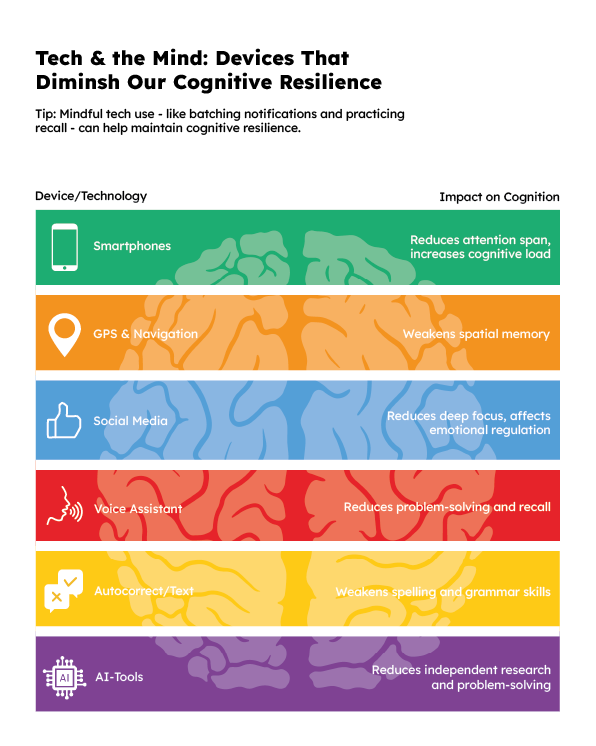
Today, the sheer number of digital tools in daily life means nearly everyone relies on multiple technologies – smartphones, GPS, voice assistants, digital calendars, and to-do apps – to manage everyday tasks. While these tools offer convenience, they have led to widespread cognitive offloading and reduced mental engagement.
Screen time among youth now exceeds six hours per day, and symptoms once associated with aging such as memory lapses, reduced focus, and emotional instability are increasingly seen in adolescents.
Research confirms these trends: relying on devices for memory, navigation, and scheduling can weaken our ability to recall information or learn new routes unaided. Even the mere presence of a smartphone can reduce cognitive capacity. Frequent notifications and multitasking fragment attention, leading to mental fatigue and slower decision-making. In high-performance environments, these subtle shifts can have significant consequences, making digital dementia a silent but real workplace risk.
A Region in Flux
CEE presents a unique landscape for digital transformation. Countries like Poland, Romania, and Hungary are modernising rapidly, positioning themselves as digital challengers. But this progress is uneven. Unlike Western Europe, where age-specific dementia rates are declining, CEE nations are seeing an increase driven by socioeconomic factors, cardiovascular risks, and limited access to healthcare.
The digital divide – between generations, and between urban and rural populations – is further complicating the picture. Many organisations, particularly SMEs, face mounting pressure to comply with emerging digital regulations while managing employee wellbeing. As the global population ages, the number of people living with dementia is projected to rise sharply by 2050, with CEE expected to see proportionally greater increases than Western Europe. For businesses, this means balancing innovation with chronic risk factors and prioritising cognitive health and resilience on a scale.
Risk Implications for Businesses
As businesses accelerate their digital transformation, the risks extend beyond infrastructure and data to the people who manage them. Hybrid work, rapid technology adoption, and uneven digital literacy are amplifying these challenges.
Operationally, fragmented attention and cognitive overload are leading to more frequent errors and slower decision-making, particularly in high-stakes environments. Cybersecurity is also at risk, as fatigued and distracted employees become more vulnerable to phishing, social engineering, and poor password practices; problems made worse by notification overload and reliance on autofill. At the same time, digital fatigue undermines responsiveness and deep listening, eroding service quality and trust. These risks are not abstract; they directly impact organisational resilience, reputation, and long-term competitiveness. Addressing them is essential for sustainable performance in the digital age.
Building Digital Fitness
To thrive in today’s environment, organisations must go beyond simply deploying technology and focus on building digital fitness to cultivate a workforce that is both tech-savvy and cognitively resilient. This requires embedding learning and wellbeing into the flow of work through microlearning, just-in-time training, and flexible formats like podcasts or short videos, so employees can adapt without feeling overwhelmed. Internal champions and AI-driven platforms can further personalise development and reduce administrative burden.
Mindful technology use is essential: encouraging screen breaks, limiting multitasking, and promoting digital boundaries should become part of everyday routines. These are not just wellness strategies, but critical enablers of performance.
Leadership in the Age of Cognitive Strain
Leaders can make a difference by taming notifications, designing work for deeper focus, and encouraging strategic cognitive offloading – using digital memory for reminders while keeping core skills active. Rethinking navigation habits, investing in microlearning and peer support, and tracking attention health alongside traditional KPIs all help reduce complexity and support sustainable performance. Ultimately, building digital fitness is about enabling people to thrive amid constant digital demands, ensuring both resilience and competitiveness in the digital age.
At GrECo, experience shows that tools alone do not deliver transformation; it is the combination of capability, cognitive health, and mindful attention integrated into daily work that drives real change.
Reconciling the paradox
So, is “digital dementia” real? As a diagnosis: no. As a workplace experience: often. And as a long‑term brain outcome: the best current evidence suggests that engaged, purposeful technology use in later life is linked to better cognitive trajectories, likely by combining stimulation, connection, and compensation (technological reserve, i.e. the brain’s ability to adapt and stay resilient through purposeful technology use). Our task as leaders is to design environments where people can reap those benefits without paying the daily attention tax.
The future belongs to leaders who innovate responsibly. By prioritising cognitive health, simplifying complexity, and investing in digital fitness, businesses can enhance performance and demonstrate true leadership in the age of digital transition.
HORIZON Risk Thought >> Fast Forward
The complexity of today´s risk environment is changing at an accelerating pace, making risk management even more challenging. We have created HORIZON, firstly as a print publication and now as a page for sharing the latest insights about ongoing transformations. Our risk specialists will continue to provide their expertise and knowledge to shine a light on the challenges of the future.

Gabriele Andratschke
Head of Group Human Resources
T +43 664 962 39 18