
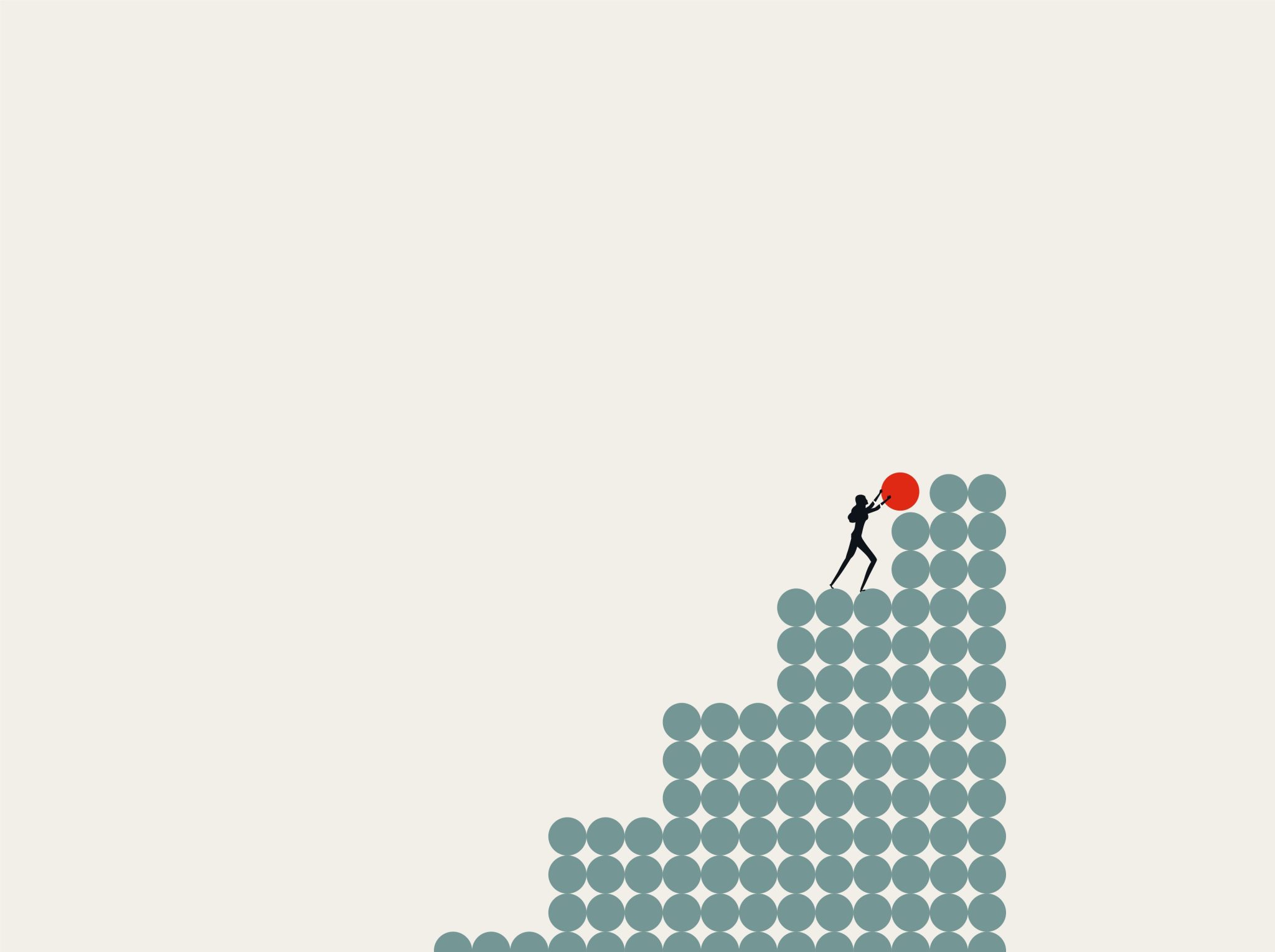
AI can generate information for us, but we still need the intelligence and judgement to understand and interpret it for a particular client.
From policy wordings to quote comparisons, artificial intelligence can process insurance information in seconds, and clients can increasingly conduct their own research before they ever speak to an advisor. So where does that leave professional advice?
For Georg Winter, CEO of GrECo Group, and Love Redin, Co-Founder and CEO of Vantel, the answer lies not in replacing human expertise, but in elevating it. When information becomes abundant, the human ability to interpret it becomes more valuable.
The work gets elevated
Winter: Everybody talks about AI. We hear the headlines every day. But when it comes to really connecting the worlds of insurance and AI, the overlap is still surprisingly limited. Why do you believe human judgement becomes more valuable, not less, in an AI-powered world?
Redin: I think it helps to take a step back. AI is a big step forward, but it’s also the continuation of a technological development that has been going on for decades.
What we’ve typically seen is that the work the human does gets elevated. When Microsoft Excel arrived, accountants weren’t replaced. Their role became more strategic. When you automate the lowest-level work, you create space for more sophisticated parts of the job.
I think the same thing will happen here. AI frees people up to spend more time on relationships, strategy and proactive risk management.
Information is not the hard part
Winter: AI can generate information for us, but we still need the intelligence and judgement to understand and interpret it for a particular client. If AI can answer almost any question, what remains uniquely human?
Redin: The hard part was never copying information from one place to another.
The hard part is knowing what questions should be asked and understanding what the answers actually mean for a particular client.
Every client is unique. An exclusion that could put one business at risk might be irrelevant to another. The broker becomes the translation layer. Not the copy-paster, but the interpreter of what the information means.
And some risks you only discover by being there physically. Walking a factory floor and noticing something that stands out. AI can’t really do that.
Winter: So, in many ways the challenge shifts from finding information to interpreting it.
Redin: Exactly. There will always be objective data. The difficult part is knowing what to do with it. That’s where experience, context and judgement come in.
Clients are increasingly arriving with AI-generated analysis of their own.
Staying ahead of the client
Redin: I recently spoke with a broker in Germany whose clients had started analysing quotations and policy documents themselves using ChatGPT. They weren’t insurance experts, but they were turning up with more detailed questions than before.
That changes the role of the broker. It becomes even more about explanation and interpretation.
At the same time, it raises the bar. Brokers need to be a step ahead of the client and offer increasingly sophisticated risk solutions, looking beyond price and towards questions like total cost of risk and programme optimisation.
Winter: I like that phrase, being a step ahead of the client. I once heard a good dancer is always one beat ahead of the music. I often tell our colleagues that the same applies to risk advisory. We need to anticipate where the risk landscape is going and be there with advice before the client asks for it.
Data is the new gold. But somebody still has to mine it.
Redin: Across the insurance market, AI adoption remains at an early stage. Most firms are still experimenting. There are pilots, proofs of concept and initial rollouts, but relatively few organisations have fully integrated AI into business-critical processes.
For brokers, however, the opportunity may be significant.
Brokers sit in the middle between clients and carriers. They see all the data. If they can make good use of it, they can create better outcomes for their clients.
Winter: That’s exactly how I see it. Everybody says data is the new gold, and brokers are sitting on a gold mine. The challenge is figuring out how to mine it.
Different countries, different systems, different formats, different levels of digitalisation. Some markets are already fully digital. Others still exchange documents on paper. We’re still in the experimentation phase of figuring out how to turn all of that into something usable.
Trust cannot be automated
Winter: If information becomes abundant, what creates value? The answer keeps returning to one word: trust. AI can generate answers. But can it generate trust?
Redin: I don’t think so. Maybe an AI system becomes more useful as it learns your preferences. But it’s still not a person.
Trust isn’t built by someone simply agreeing with you. Clients want somebody who can challenge them, keep them honest and help them arrive at the best outcome.
At the core of it, trust comes from delivering good work and having confidence in the person delivering it. As long as the decision-maker on the client side is human, I think it will be difficult to build that trust without a human on the advisory side too.
For routine, lower-stakes decisions, automation will continue to expand. But when the consequences become significant, people still want another person involved.
If the stakes are high enough that a wrong decision could seriously affect the business, those decisions are too important to leave entirely to AI. People will want somebody on the other side who helps build confidence in the outcome.
More information doesn’t remove the need for judgement
Winter: More information does not automatically lead to better decisions. Decision makers can quickly become overwhelmed, so judgement becomes the ability to identify the signal, filter out the noise and distil everything into what matters most. How should leaders respond when AI recommendations conflict with their instincts?
Redin: At the end of the day, you have to trust your own judgement. Nobody has as much context as the person responsible for making the decision. If something feels wrong, then it’s probably worth digging deeper. AI can be an excellent discussion partner, but leaders still need to form their own view.
The risk of losing critical thinking
Winter: Are we in danger of creating professionals who know how to prompt but no longer know how to think critically?
Redin: Yes, definitely. I think that’s one of the biggest risks.
Historically, much of professional development happened through manual work. It wasn’t designed that way. It was simply a by-product of how people learned.
As that work disappears, organisations need to become much more deliberate about training. The opportunity is to build something better, but it won’t happen automatically.
Why does human judgement still matter?
Winter: For risk advisors, uncertainty is unavoidable. AI may be good at probability, but emerging and systemic risks, the black swans and grey rhinos, are not so easy to predict. As our clients’ risk landscapes transform, we still need people who can adapt their thinking and form a view. So why does human judgement still matter?
Redin: Because humans are still making the decisions. As long as the client is a human, I believe they’ll want a human broker as well.
—
About Love Redin
Love Redin is Co-Founder and CEO of Vantel, where he is helping shape how artificial intelligence is applied in commercial insurance. Drawing on a background spanning insurance, data science and AI, he works with brokers across Europe and globally to turn complex insurance information into clearer, more actionable insight
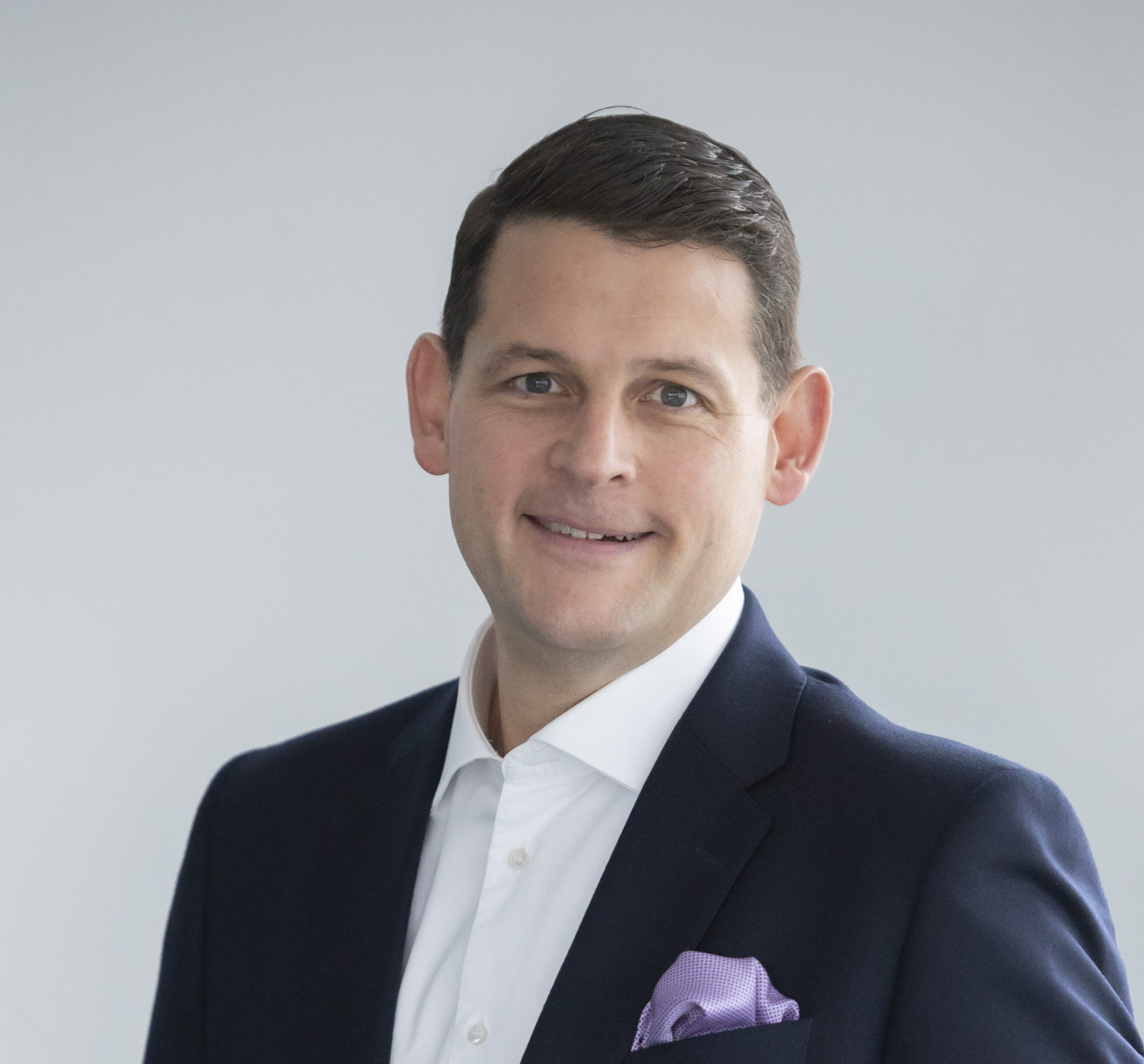
Georg Winter
CEO GrECo Group
T +43 664 962 39 06

Love Redin
Co-Founder/CEO
Vantel