Georg Winter, CEO of the risk and insurance adviser GrECo, on the new challenges for Austria’s SMEs and why risk management today means recognising opportunities at an early stage. This interview was originally published on trend.
Trend: Mr. Winter, what risks are Austria’s small and medium-sized enterprises currently facing the most?
Winter: The biggest issue is that abstract risks suddenly become concrete. Geopolitical tensions, energy prices, inflation – all of this directly affects SMEs. In the past, cheap energy imports from Russia, for example, were considered a competitive advantage. Today, we are paying a high price for these dependencies. Energy, intermediate products and wages are becoming massively more expensive, and many companies are under pressure. This development affects the whole of Europe, but is especially pronounced in Austria.
Trend: You speak of a change in the risk landscape. What new dangers are gaining in importance?
Winter: Climate risks have long since ceased to be a question of the future. Storms, droughts, and floods lead to billions in losses and many companies reach the limits of their insurability. At the same time, it is becoming more difficult for the public sector to compensate for damage through the disaster fund. Cyber risks have also risen sharply: well over 60,000 cases were reported in Austria in 2024. SMEs in particular underestimate the fact that they are part of networked supply chains – if one partner fails, their own business often comes to a standstill.
Trend: How can SMEs conduct professional risk management despite limited resources?
Winter: It is important not to see risk management as a bureaucratic exercise, but as part of strategic corporate management. I like to talk about agile risk management: risks and opportunities belong together. Those who recognise the signals on the horizon early can react faster than the competition. That’s a real competitive advantage. In a VUCA world – characterised by volatility, uncertainty, complexity and ambiguity – it is important to remain flexible, think scenarios and learn continuously.
Trend: What role does GrECo play in this?
Winter: Our task is to support companies in recording their risks in a structured way and deriving options for action – from avoidance and mitigation to transfer via insurance. We help SMEs to build prevention and resilience, because not everything is insurable any more. We contribute industry knowledge, and compare and challenge business models: Will what works today still be sustainable in five years? Many of tomorrow’s risks – such as energy supply, a shortage of skilled workers or technological upheavals – can be anticipated today.
Trend: When does risk management itself become a competitive advantage?
Winter: For example, when it comes to workers. Anyone who recognises today that many skilled workers will soon retire can already invest in training and employer branding. Or, in energy efficiency: Those who focus on decarbonisation at an early stage reduce costs and become more independent. Artificial intelligence is another such case – those who use it in a targeted manner compensate for a lack of capacity and gain time for innovation. Risk management does not mean being afraid, but being prepared.
Trend: How do you manage the balancing act between innovation and security?
Winter: I like to compare it to football: You have to be defensively stable in order to take advantage of opportunities offensively. This means creating financial resilience, remaining agile and allowing room for experimentation. The multiple crises of recent years show that we no longer live in a predictable, linear world. Companies must accept VUCA as the new normal. Those who do this no longer only react to crises, but actively help shape the future.
Trend: In the conversation, you emphasised that trends are often not linear. What does this mean for companies?
Winter: Humans usually think linearly – if something grows slowly, we believe it will stay that way. However, many developments are exponential: they are flat at first, then suddenly rise steeply. This applies to technological innovations as well as to climate risks or social upheavals. Those who understand such dynamics can make better use of them. Some risks then turn into opportunities – for example, if green technologies suddenly become suitable for the masses.
Trend: What advice do you have for entrepreneurs to prepare for the next big crisis?Winter: Firstly, allow abstract thinking. Many “black swans” are in fact white – they just weren’t taken seriously. Secondly, build strategic resilience. This includes a solid equity base, flexible structures, and an awareness of what one’s own company can bear in the event of a crisis. And thirdly: think long-term. Owner-managed businesses in particular, which plan in generations instead of quarterly figures, have a clear advantage here.
Trend: And where is the risk management of the future headed?
Winter: Away from pure hazard management and towards active opportunity management. Risk management is becoming part of the corporate strategy. It is about understanding risks, putting them in relation to opportunities and gaining the ability to act from them. Those who manage to do this are not driven by change, but shapers – even in a non-linear, volatile world.
HORIZON Risk Thought >> Fast Forward
The complexity of today´s risk environment is changing at an accelerating pace, making risk management even more challenging. We have created HORIZON, firstly as a print publication and now as a page for sharing the latest insights about ongoing transformations. Our risk specialists will continue to provide their expertise and knowledge to shine a light on the challenges of the future.
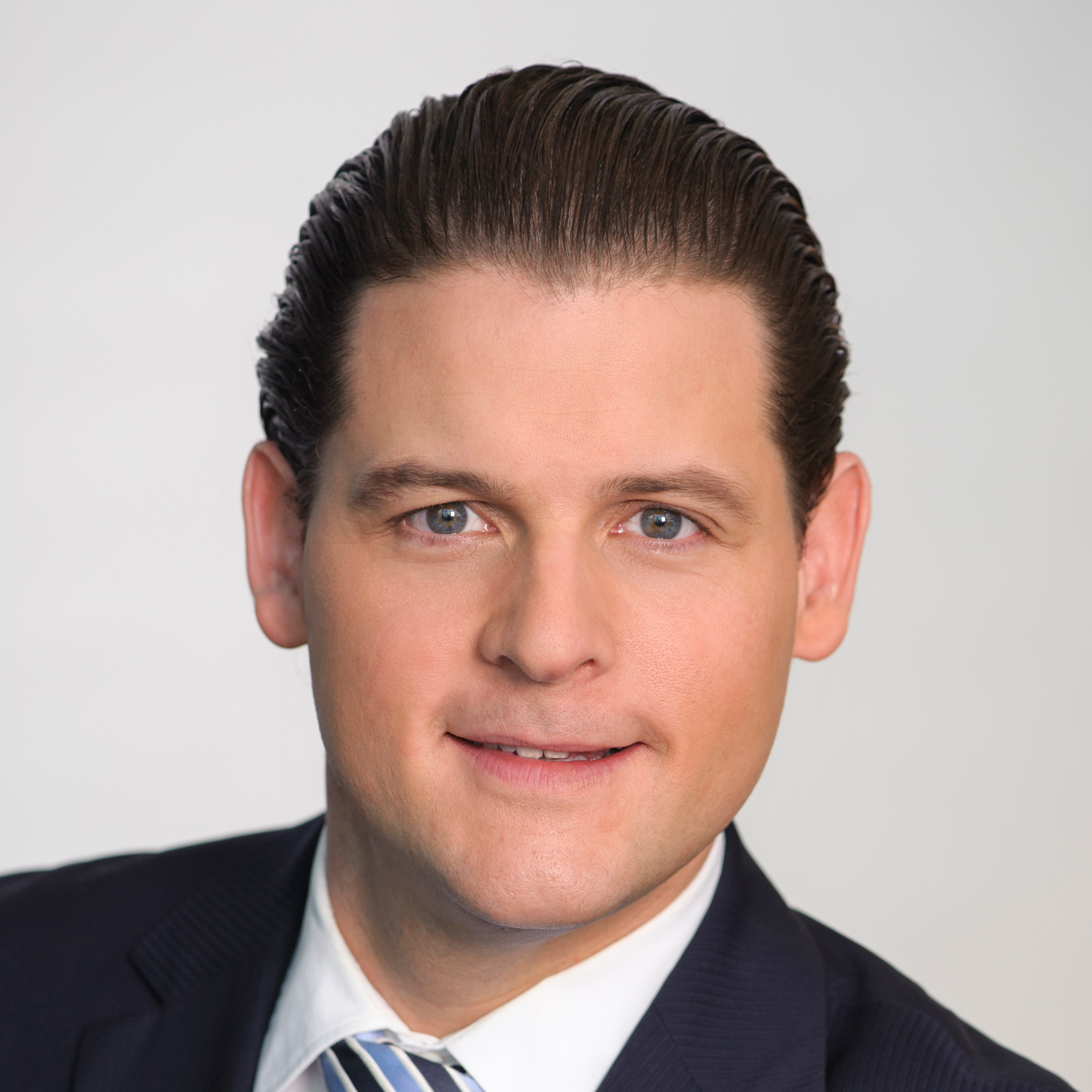
Georg Winter
CEO GrECo Group
T +43 664 962 39 06