Birgit Schalk, Sustainability & Decarbonisation Manager at Stoelzle tells Lisbeth Lorenz at GrECo Group how the company is leading the charge in meeting environmental targets and educating and inspiring local communities in all of its locations globally.
Glass is a sustainable packaging material which consists of 100% natural raw materials and is endlessly recyclable. It is ideal for packaging food, spirits, pharmaceutical products, cosmetics, perfumes and more. The Stoelzle Glass Group has been manufacturing packaging glass for over 200 years. Birgit Schalk, Sustainability & Decarbonisation Manager at Stoelzle tells Lisbeth Lorenz at GrECo Group how the company is leading the charge in meeting environmental targets and educating and inspiring local communities in all of its locations globally.
Making glass greener
Lorenz: Stoelzle has been taking social and environmental targets seriously for some time now. How are you making your glass production more environmentally friendly and what impact is it having on employees, suppliers and wider society?
Schalk: We are committed to making our glass even “greener” with science-based decarbonisation targets validated by the Science Based Targets initiative (SBTi). By 2030, we aim to reduce direct and indirect greenhouse gas emissions from glass manufacturing and purchased electricity by 50% compared to 2019 levels, and reduce emissions from the value chain by 15%, achieving net zero by 2050. This makes Stoelzle one of the few European glass manufacturers with SBTi-recognised climate targets.
The company’s holistic sustainability strategy doesn’t only focus on its own environmental targets, but also includes social issues and monitoring its supply chain. By actively promoting eco-friendly practices, monitoring the ecological impacts of our supply chain, educating our employees, and hosting community outreach programmes we aspire to make our suppliers, employees, and wider society more environmentally responsible.
Lorenz: How are you going to achieve your climate targets?
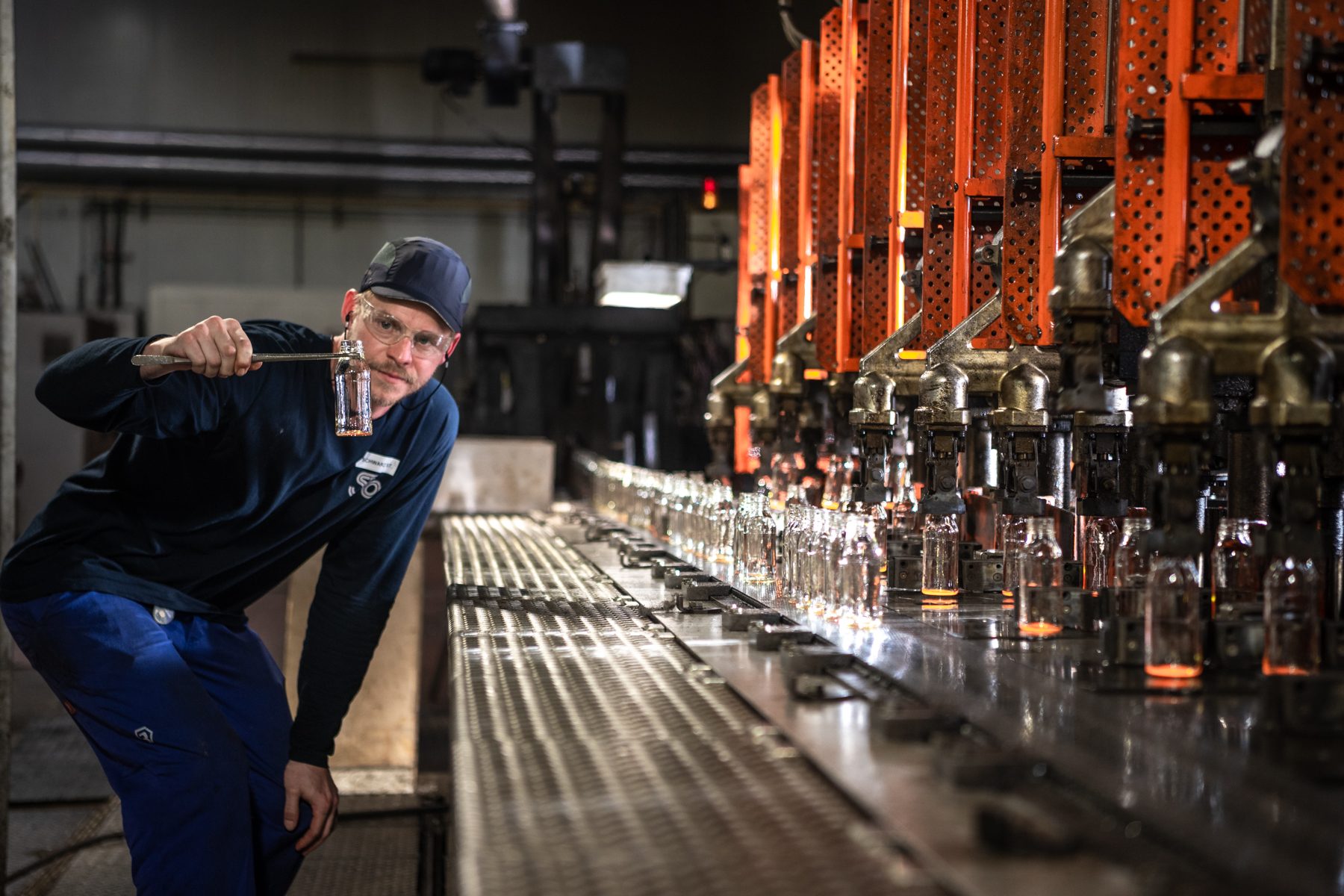
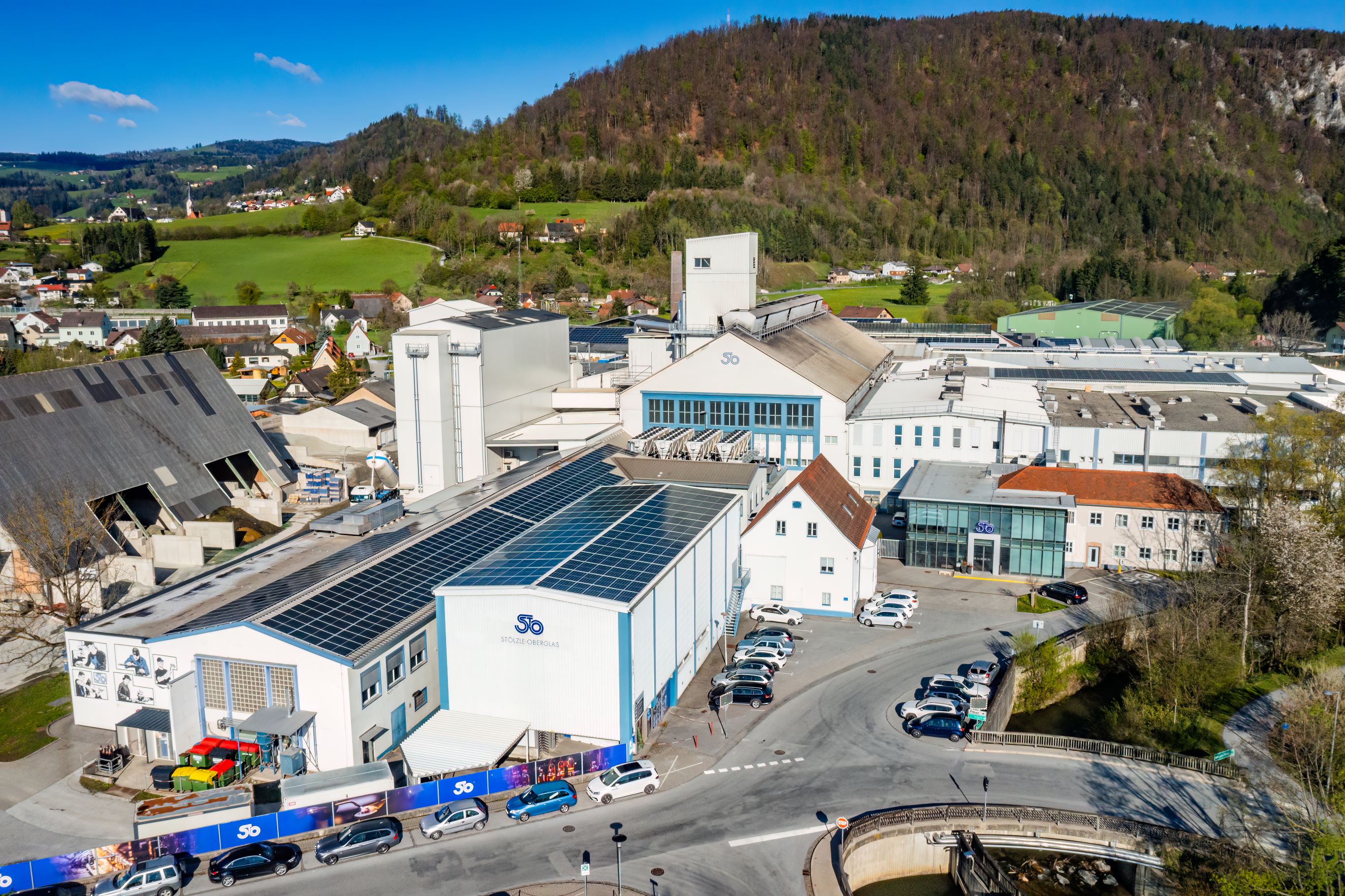
Schalk: We are focusing on electrification and transitioning from gas to renewable energy. Our sustainability strategy aims to save energy and gradually switch to renewable forms of energy, to use resource-efficient processes, and to produce lightweight glass with maximum recycled content. We have already implemented numerous projects, including a process and energy management system at all sites, which will improve energy efficiency by 3-5% and has already reduced municipal water consumption by 50% at our Austrian plant. Since 2020, our rooftop photovoltaic systems have produced around 3,610 MWh of green electricity annually. Additionally, we are researching alternatives to CO2-emitting raw materials and using cullet to minimise primary raw materials and reduce our carbon footprint.
Our “Prestige Recycled Glass” has been recognised for its quality and sustainability, producing brilliant flint glass with a post-consumer cullet content of at least 35%.
Further innovation includes the introduction of a batch preheater at the Köflach site in April 2023 which utilises the waste from our glass furnace to preheat the batch. This has reduced energy consumption by over 8% and is saving 4,000 MWh annually. We also feed residual heat into the local district heating network via a heat exchanger to supply heat to around 1,800 households. And, in collaboration with IPGR (International Partners in Glass Research), we, along with a number of other companies, are developing an energy-efficient “furnace of the future” powered by hydrogen and electricity.
Igniting a passion for industry and science: Education is crucial
Lorenz: When it comes to sustainability and environmental issues, the social aspects must not be forgotten. Earlier, you mentioned educating employees, can you tell us a bit more about what programmes you have in place?
Schalk: Stoelzle has implemented numerous training and information measures for its employees, among other things. The Stoelzle Online Academy was launched in 2020, and its first webinar series with external lecturers on the topic of “Green Knowledge – Climate Change – Myths, Risks and Opportunities” inspired more than 100 participants from all of the glass group’s European locations. Renowned experts gave talks on environmental topics to sensitise the Glass Group’s employees to sustainability and climate awareness.
Lorenz: I know your passion to educate doesn’t stop with your employees and isn’t just about being more environmentally friendly. What educational impact is Stoelzle having on a local level?
Schalk: We are committed to supporting schoolchildren and young people at all of the Group’s sites, whether through sports clubs, educational institutions, or charitable initiatives. We aim to inspire young people, both boys and girls, to pursue careers in industry and science. We strive to ignite a passion for these fields by participating in various initiatives and programmes that promote the education and training of future generations including the “Long Night of Research” and “Girl’s Day”, an Austria-wide initiative that gives young women a taste of technical professions and the potential of jobs in the STEM sector. Every year, we invite numerous schoolgirls to visit our production plant and experience glass production and the work in the individual technical departments first hand.
Lorenz: what about at a higher education level?
Schalk: Stoelzle is also in close contact with technical colleges and universities and offers students the opportunity to familiarise themselves with the glass industry and gain practical experience as part of internships or workshops. For several years now, the “Dr. Grupp Scholarship” has been awarded annually to students of various technical disciplines who are passionate about their studies and show a high level of commitment to their subject area. In addition, we offer programmes and facilities for students and researchers to work together on innovative projects to stimulate interest in the glass industry.
Firing up the community: Family days and events
Lorenz: How does your company contribute to social transformation within the local community and enhance employee engagement?
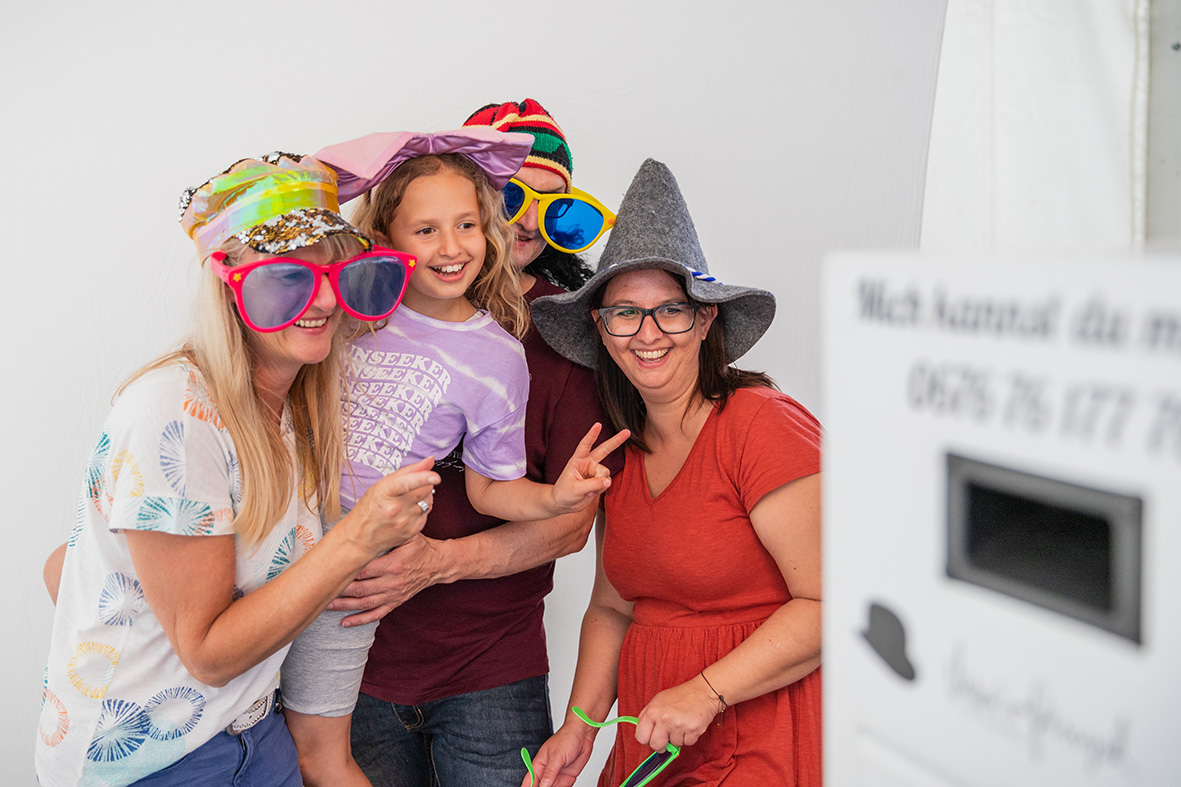
Schalk: Stoelzle production sites regularly organise family events and open days. These events serve to introduce our production sites to employee family members and to the local population. They are very popular. After all, experiencing glass production up close is not an everyday occurrence! At these events, Stoelzle always offers a wide range of exciting activities such as climbing, horse riding, children’s entertainment, and performances by the company fire brigade.
We also have family ski days, and the Stoelzle team runs events and St Nicholas parties for the children of our employees, all of which helps to boost our employee engagement.
About Stoelzle
The Stoelzle Glass Group has been manufacturing packaging glass for the pharmaceutical & medical, spirits, perfumery & cosmetics, food and beverage sectors for over 200 years. It employs over 3,000 people worldwide and comprises five production plants in Europe and, since 2021, a production site in the USA. Over 3.2 billion bottles roll off the production line every year. The Group’s main plant is located in Köflach, Styria, and employs around 550 people.
HORIZON Risk Thought >> Fast Forward
The complexity of today´s risk environment is changing at an accelerating pace, making risk management even more challenging. We have created HORIZON, firstly as a print publication and now as a page for sharing the latest insights about ongoing transformations. Our risk specialists will continue to provide their expertise and knowledge to shine a light on the challenges of the future.

Birgit Schalk
Sustainability & Decarbonisation Manager Stoelzle

Lisbeth Lorenz
Practice Leader Credit & Political Risk
GrECo Austria
T +43 664 883 805 12