

Finding the right speed and assessing the market correctly is the biggest challenge. Transformation must take place, but at what speed?
Georg Winter, CEO at GrECo Group, and Dr Patrick Fiedler, Chairman of the Board of the German Association for Risk and Insurance Management – GVNW, discuss how risk managers can become more strategic, why risk intelligence depends on connected data, and where insurance reaches its limits.
From compliance task to boardroom issue
Winter: We are living in a volatile, dynamic world. What role does the risk manager play today and what skills does the modern risk manager need?
Fiedler: This crazy world with more and more risks is, in principle, good news for risk managers. The more risks there are, the more important the role becomes. Right now, there is a huge opportunity to advance risk management professionally.
Winter: That’s also my perception. I have worked in risk consulting for more than 20 years and have often seen risk management treated as mandatory, not strategic. How do we make it more relevant for boards and management?
Fiedler: I would describe it as a journey that has become more professional in recent years. Companies have had to look further ahead, report more and link processes more closely internally. But I still do not see risk management being used strongly enough as a strategic tool in industry.
Beyond the insurance policy
Fiedler: From the point of view of an insurance department, I see three development steps. The first is pure insurance purchasing – still important, but no longer the most interesting strategic topic.
The second is to work professionally with self-retention models: smart retentions, virtual captives, alternative risk transfer or classic captives. When you speak the language of total cost of risk, you move closer to the strategic table.
The third is the move from insurance thinking to risk financing thinking, as part of holistic risk management. I see companies trying to think further ahead, but I am still looking for the point where we can say: yes, this is really there.
Winter: I often describe that as the move from insurance cover or risk manager to strategic resilience and transformation manager. But there are still very few companies in Germany, or elsewhere, ready for that.
Georg Winter, CEO at GrECo Group, and Dr Patrick Fiedler, Chairman of the Board of the German Association for Risk and Insurance Management – GVNW, discuss how risk managers can become more strategic, why risk intelligence depends on connected data, and where insurance reaches its limits.
Data is only powerful when it connects
Winter: We use “risk intelligence” for this move from risk transfer to a broader, more data-driven understanding of risk. What do you personally associate with the term?
Fiedler: I associate it with data, predictions, predictive maintenance, modern tools, data analysis and AI: understanding risk better and making its realisation even less likely.
Winter: Data is at the centre of that. Are companies already building their risk data and using AI-supported systems?
Still thinking in silos
Fiedler: I cannot imagine any company is not dealing with this intensively. For me, the question is not whether companies are dealing with it, but how efficiently. Risk management rests on different shoulders.
One business unit may use excellent supply chain tools, but that insight may not reach another unit, or the insurance department. I do not think companies are there yet.
Winter: That matches my experience. I once published a HORIZON article called “Out of the silo”, and that is exactly the challenge. The larger the company, the harder it becomes: there is a lot of risk management going on, but one department often does not know what the other is doing.
We had a client with almost 400 locations worldwide. We carried out a climate risk study, only to find out that the ESG team had done almost the same thing. ESG, insurance, operations, supply chain, maintenance – the activity was there, but not the connection.
When disruption becomes business as usual
Winter: When we talk about tools, scenario analysis is important. We know it from PML and EML studies in property risk, but do you see it being used more in areas such as supply chain?
Fiedler: Supply chain is probably one of the biggest challenges for most companies right now. But then the question is: who does it? Insurance, logistics, or the business unit? And where is the link between them? We are back to the same topic.
Winter: From Fukushima to Covid and today’s geopolitical shocks, supply chain disruption has moved from exceptional events to standard business risk. You cannot simply call this a black swan anymore. Somewhere, something will happen.
Logistics colleagues know the topic well, but from a management perspective it has changed too. Business continuity used to mean make a plan, put it in a drawer and that is it. Today, business continuity and crisis management are standard management tasks.
Fiedler: Exactly. In insurance, this is mainly contingent business interruption and related topics. The exciting question is how far it is linked together: the analysis that might sit in insurance and the real challenges in logistics. Could efficiencies be increased there? I think they could.
Where insurance reaches its limits
Winter: Supply chain is also linked to systemic risks and geopolitics, which brings us to insurability. With climate change, there is physical risk – floods, storms or droughts – but also transformation risk. Which risks should companies prepare for most?
Fiedler: The biggest transformation risk, from my point of view, is that you do too much or too little. If I go fully into electromobility and no one buys electric cars, it was wrong. If I do too little and everyone buys electric cars, it was wrong too.
Finding the right speed and assessing the market correctly is the biggest challenge. Transformation must take place, but at what speed? Companies need flexibility.
The classic insurance topics are more about the effects of climate change: low water, more storms, damage and so on. Through the lens of insurability, we clearly see a trend towards decreasing insurability.
Better data is essential, but I think we will also have to build public-private partnerships around this: as much private sector as possible and as much state involvement as necessary.
Winter: I agree – as much private as possible, but there must be a reasonable model. As brokers, our core business melts away if we only concentrate on risk transfer. We have to help clients absorb shrinking insurability through prevention, self-retention, alternative risk transfer, captives and perhaps public-private models.
Smarter structures, better data
Winter: Captives are often discussed financially: becoming more independent of the market, smoothing fluctuations and optimising total cost of risk. But can they also bridge risks that are difficult to insure, including innovation and transformation risks?
Fiedler: I see the captive primarily as a necessary solution because corporate financing has more freedom within a group than insurance topics do. If I want group-wide risk transfer, I need a captive or a similar model.
Once you have one, it has many other possibilities: data collection, design options, market solutions and hybrid roles beyond classic risk transfer.
Winter: GVNW has launched Open Risk Data Association (ORDA), an initiative around data exchange with the insurance market: less bureaucracy, simpler exchange, better data quality and perhaps improved insurability. What is the motive behind it?
Fiedler: It is no longer up to date to send huge Excel lists by e-mail to many parties. It is smarter, simpler and more secure to provide access via interfaces. But then you need a definition of what the data should look like. That helps with AI and analysis tools and ultimately helps insurers assess risk better and customers place it better.
Our idea is to make this first small but essential step neutral and cost-based, with clients, brokers and insurers at the table.
Winter: And then there is AI. In risk management and industrial insurance, where do you see the real opportunities?
Fiedler: It is super difficult to assess. Whatever you expect, you are either thinking too slowly or too fast. A use case that fails today may work two weeks later. That is scary, because companies do not think at that speed.
In industrial insurance, AI could help with practical pain points such as insurance values, data structuring and allocation in large programmes. But it is a tool, not a solution. You still need experienced people to judge the result.
Winter: If you were to give a CEO one message about the risk management of the future, what would it be?
Fiedler: There is a football quote: attack wins the game, defence wins the season. That is my message: understand risk management as a strategic tool. In sporting terms, risk management is defence; but there is much more value in it than many companies realise.
About Patrick Fiedler
Dr Patrick Fiedler is Chairman of the Board of the German Association for Risk and Insurance Management GVNW, representing the interests of industrial insurance buyers and corporate risk managers. He also serves as Senior Vice President Corporate Insurance at BASF and is CEO of BASF’s captive insurers Lucura Versicherungs AG in Germany and Lumerica Insurance Company in the US.
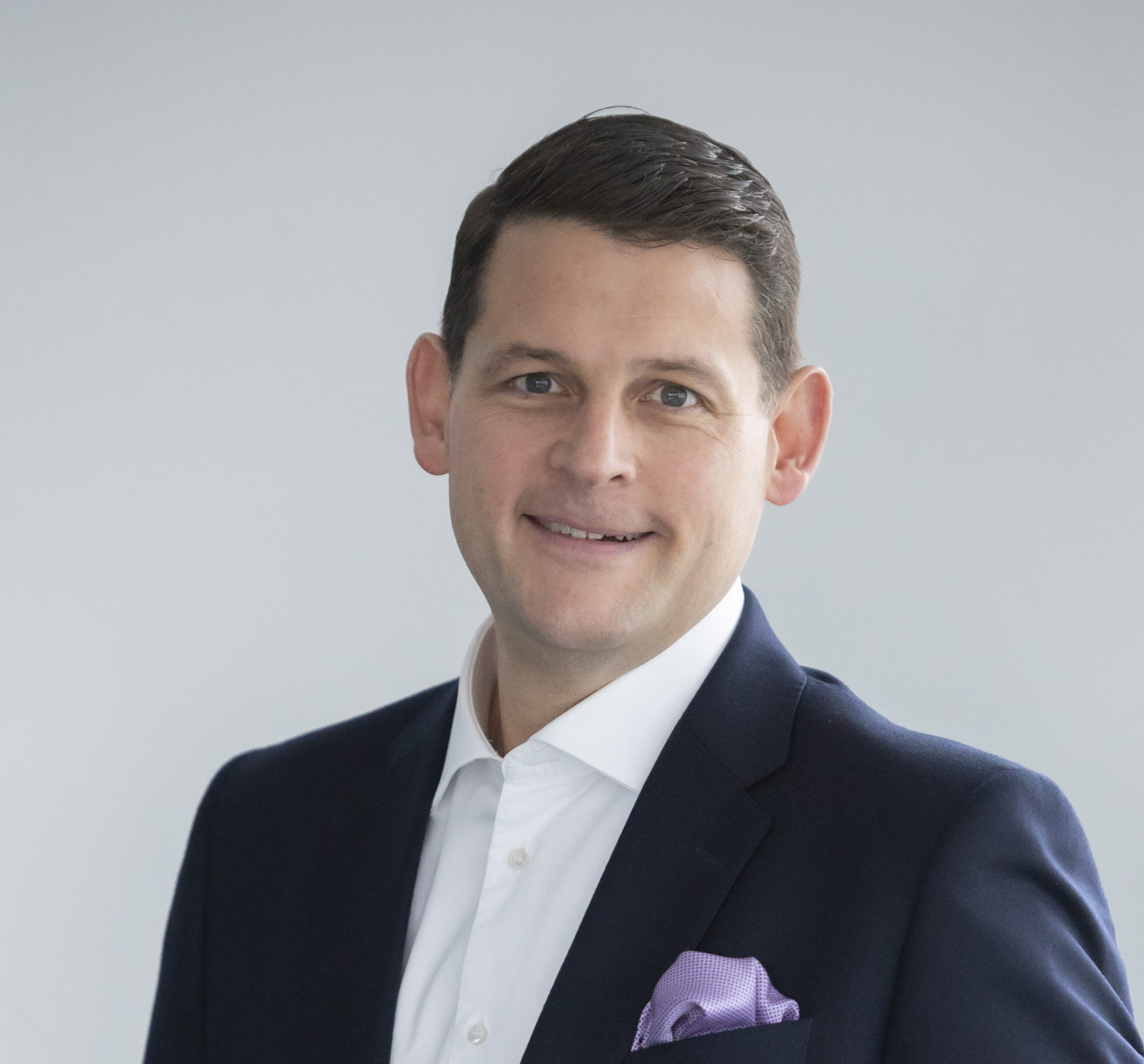
Georg Winter
CEO GrECo Group
T +43 664 962 39 06

Patrick Fiedler
Board Chairman
German Association for Risk and Insurance Management GVNW