With our client survey on the various environmental, social and governance topics, we wanted to find out where companies currently stand on ESG.
The EU Green Deal, the EU Taxonomy Regulation, the new comprehensive reporting requirements of the CSRD (Corporate Sustainability Reporting Directive) and, finally, the need to take responsibility for one’s own supply chain (CSDDD) – the topics surrounding ESG could not be more diverse and are a major concern for companies in all sectors. This is also because sustainable business practices have become equally important for regulators, employees, customers, and potential investors. However, this also means that non-compliance with ESG standards can have a cascading effect on a company’s financial performance, reputation, and long-term sustainability. These risks must therefore be analysed and assessed accurately and competently.
Survey on relevant sustainability topics at companies
With our client survey on the various environmental, social and governance topics, we wanted to find out where companies currently stand on ESG.
We realise that our clients are prepared to deal with the environmental and social consequences of their actions. However, they often lack concrete plans to comply with ESG standards
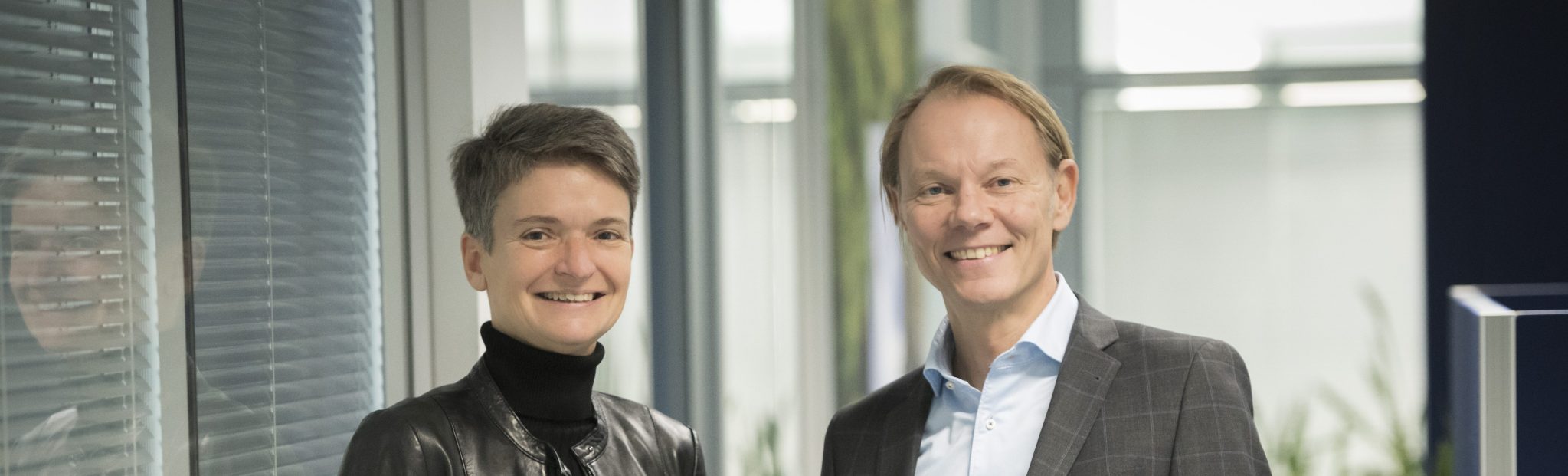
Harald Ketzer and Sabine Bradac
Authors of the study and GrECo Risk & ESG Consultants
Need to catch up on sustainability strategies and reporting obligations
The results show a mixed picture: While over 90% of participants state that environmental protection and sustainability are a high priority for their company, only one in two currently has a written sustainability strategy. And although CEOs in particular prioritise ESG issues, the study shows that there are still many questions to be answered regarding corporate social responsibility and its disclosure, particularly in the context of CSRD.
According to the study, just under 11% of all respondents do not know whether they are affected by reporting obligations. Of these, the level of uncertainty among companies with more than 250 employees is surprisingly high at almost a third – as they may be subject to reporting obligations under CSRD. In this cohort, one in five companies (20%) also state that they are not aware of ESG risks in the supply chain and do not assess aspects such as the corruption index or respect for human rights.
Focus on investments in renewable energy sources
Two thirds of the companies surveyed, regardless of their sector, consider the transition from fossil fuels to renewable energy sources to be a particularly strong influencing factor on their activities over the next five to ten years. However, when looking specifically at companies’ transformation strategies, the necessary adjustments to business models have not yet been incorporated into strategic processes for two thirds of the survey participants. The majority (78%) would like measures to be worthwhile and for insurance companies to recognise steps to improve risk when calculating premiums
Climate protection awareness is picking up speed
Just under a third of respondents (32%) believe that climate change factors, such as extreme weather events or rising temperatures, will be a major concern for them in the next five to ten years. There is particularly strong agreement among larger companies with over 500 employees (45%), as well as in the construction, property (38%) and energy sectors (21%). This assessment is also reflected in the question of which topics companies will have to devote the most resources to in the next five to ten years. Here, the category “Measures to reduce carbon dioxide emissions” (66%) is only just ahead of adaptation measures to climate change such as increased temperatures, heavy rainfall events, water shortages, etc. (61%).
Social issues in the shadow of the environment
Compliance with minimum social protection measures both within the company and in the supply chain only came in fifth place (39%) behind environmental aspects when it came to the question of long-term resource expenditure. On closer inspection, anti-discrimination and the violation of human rights are only considered a challenge by 1% and 4% of respondents respectively. However, this assessment is likely to change in the future due to changes in the legal framework such as the EU Supply Chain Act.
Time to act
As a risk specialist and link between companies and the insurance markets, we at GrECo are familiar with the current challenges in the risk landscape. The associated opportunities arising from European initiatives such as the Green Deal as well as global UN programmes pose challenges and raise questions for many companies – especially with regard to requirements and obligations.
In times when courage and foresight are increasingly lost in public discourse, while society stumbles from one crisis to the next, it is essential for companies to be proactive and keep an eye on their long-term goals. A paradigm shift away from focussing on short-term results towards building strategic resilience is urgently needed.
Georg Winter
CEO GrECo Group
ESG has become an integral part of risk management and is becoming a high priority for future-oriented companies. The challenge is to provide companies with the best possible support in the process of risk transformation in order to anticipate and manage substantial future risks. The survey has once again shown that many companies feel insecure and have not yet developed concrete strategies for their ESG transformation. In order to become fit for the future, these companies need the right partner at their side to guide and accompany the transformation.
Fact Box:
CSRD
The Corporate Sustainability Reporting Directive changes the scope and nature of sustainability reporting for companies. The Directive aims to increase transparency about the environmental and social aspects of companies in the EU. In particular, CSRD concerns information on environmental, social and employees’ concerns as well as respect for human rights and the fight against corruption and bribery.
EU taxonomy
The rules of the taxonomy stipulate that economic activities are only green if they contribute to the achievement of environmental goals. The aim of the regulation is to steer capital flows towards sustainable investments and thus realise a climate-neutral EU by 2050.
CSDDD
The Corporate Sustainability Due Diligence Directive is a draft directive on corporate due diligence obligations. The implementation is planned in stages from the first quarter of 2026 and it obliges companies to respect human rights and the environment in global value chains.
GrECo ESG Survey
The GrECo online client survey provides information on expectations and requirements in connection with ESG risks. The survey results were collected during June and August 2023. A total of 171 company representatives from Austria took part in the survey.
You can download the survey in German language here https://greco.services/greco-esg-studie-2023/ .

Sabine Bradac
Risk & ESG Consultant
T +43 664 962 39 57

Harald Ketzer
Risk & ESG Consultant
T +43 664 888 44 707
Related articles
GrECo Croatia Strengthens Regional Presence With New Risk Solutions
The team brings strong technical credentials through Tomislav Sič, Director and certified risk engineer with two decades of experience, and Martina Toskić, Risk Engineer.
Sustainability as Strategy and the Courage to Transform
What sets leading companies apart is not a broader sustainability agenda, but a more strategic one.
Overpaying for Clothes That Don’t Fit: Why Insurance Needs Be Honest About Risk
This isn’t just about buying more coverage. It’s time to admit the industry has been doing this wrong – and having an honest conversation about what protection we actually need.