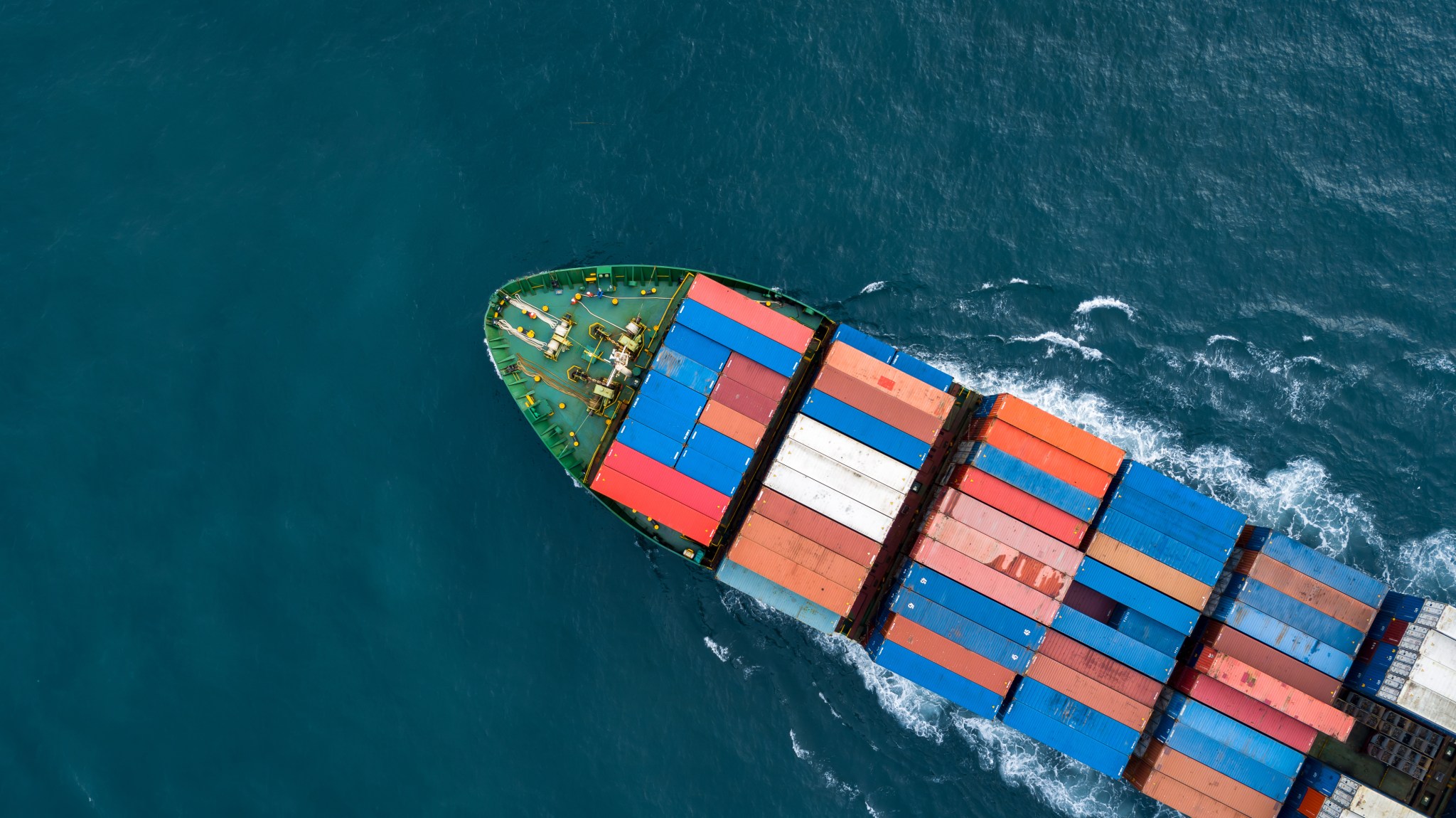
Taken together, the Iran war and the shutdown of Hormuz add another chapter to a broader story: the shift from “just‑in‑time” to “just‑in‑case” globalisation.
Read the full introduction to our series of articles on the Middle East conflict .
When US and Israeli forces launched coordinated airstrikes against Iranian political, military and nuclear targets on 28 February 2026, the immediate focus was on missiles and air‑defence systems. Within days, however, it became clear that the real shockwaves would travel along shipping lanes, energy markets and financial channels rather than frontlines alone. The Iran war has turned the Strait of Hormuz from a strategic map feature into the most important transmission belt between a regional conflict and the global economy.
Global policy makers, corporates and investors now face a dual challenge. They must manage a short‑term supply and price shock, and at the same time rethink how much economic risk is concentrated in a handful of maritime chokepoints – and in the political trajectory of a single, sanctions‑hit country with 90‑million inhabitants
Strait of Hormuz: From Vulnerability to Bottleneck
The Strait of Hormuz connects the Persian Gulf with the Gulf of Oman and the Indian Ocean. It is one of the world’s narrowest yet economically most critical waterways. S&P Global Market Intelligence data shows that in the days before the escalation, daily bilateral transits through the Strait typically included 70–80 tankers and 50–70 dry‑cargo and passenger ships. In the first days after the airstrikes, tanker transits collapsed to low single digits, while most other traffic also fell sharply.
Several mechanisms drove this abrupt stop:
- Iran threatened to close the Strait and has been linked to missile and drone incidents in the Persian Gulf and Gulf of Oman, raising perceived risk for commercial shipping.
- Military strikes and near‑misses in the wider region have increased the probability of collateral damage to vessels and port infrastructure in Gulf states.
- Shipowners and charterers started to reroute vessels away from the area or ordered them to wait at anchor pending clarity on security and insurance conditions.
The result is a bottleneck that affects far more than crude oil. The Hormuz corridor carries substantial volumes of liquefied natural gas (LNG), refined products, fertilisers and petrochemicals that feed industrial value chains from Europe to Asia. Closing or severely constraining this route even temporarily forces global trade into longer, more expensive detours and amplifies stress in already stretched logistics networks.
Global Trade and Supply Chains Under Stress
Even before the Iran war, global shipping patterns had been distorted by attacks on merchant vessels in the Red Sea, which pushed major container lines to reroute around the Cape of Good Hope. The escalation with Iran adds a second shock: instead of one troubled corridor, carriers now face simultaneous disruptions around both the Red Sea and the Gulf.
S&P Global data illustrates how quickly this translates into operational dislocation. Within a week of the first strikes, tanker traffic through Hormuz had effectively seized up, with only a handful of vessels transiting per day compared with normal volumes. Many ships are now either idling near the Gulf or taking much longer routes that add 10–14 days to Asia–Europe or Asia–US voyages
The economic consequences are threefold:
- Higher transport costs: Longer routes and higher fuel consumption increase freight rates across tanker and container markets, adding cost pressure for importers and exporters.
- Schedule disruption and congestion: Port rotations and hinterland logistics become harder to plan; delays at one chokepoint ripple through container schedules globally.
- Inventory and working‑capital stress: Firms relying on just‑in‑time deliveries must either accept more frequent disruptions or hold higher inventories, tying up capital and warehousing capacity.
For sectors such as chemicals, automotive and machinery – where inputs from the Gulf or Asia are critical – this raises the risk of temporary production cuts and delayed deliveries further down the value chain.
Energy Markets, Inflation and Regional Growth
Unsurprisingly, the first visible macro effects appeared in energy markets. In the days after the strikes, Brent crude prices climbed sharply, while European gas benchmarks moved higher on fears of curtailed LNG flows from Qatar and other Gulf producers. The move reflects less a physical shortage today than a sudden increase in the geopolitical risk premium priced into energy contracts.
S&P Global’s conflict scenarios suggest that, under a high‑intensity but time‑limited war, global real GDP in the second quarter of 2026 could temporarily fall several percentage points below baseline in the Middle East and North Africa, with smaller but noticeable deviations in Europe and Asia‑Pacific. For the full year 2026, world growth would slow, but not collapse, assuming the conflict remains geographically contained and key energy infrastructure is not destroyed.
The regional pattern is uneven:
- MENA: Faces the largest immediate output losses, reflecting direct conflict, disrupted trade flows and strained fiscal positions in some oil importers.
- Europe: Is hit via higher energy and freight costs, which could add several tenths of a percentage point to inflation and shave growth in an economy that was already fragile after previous shocks.
- Asia‑Pacific: Is particularly exposed through energy imports; S&P data show that in 2025, Middle Eastern suppliers accounted for a very high share of crude and LNG imports for major Asian economies. This raises vulnerability to prolonged disruptions or extreme price spikes.
For oil‑exporting states and some shipping and energy companies, higher prices and day rates may provide a temporary windfall. But even for these apparent winners, the long‑term calculus is complicated by demand destruction risks and the potential acceleration of energy diversification strategies in importing regions.
Financial Markets and Risk Sentiment
Financial markets have reacted in ways consistent with previous geopolitical shocks, but with some notable nuances. S&P Global’s analysis of asset prices in the days around the escalation highlights three patterns.
First, there has been a rotation into perceived safe‑haven assets. Major reserve currencies and high‑grade government bonds benefitted from risk‑off flows, while currencies of some emerging markets more exposed to energy imports or regional instability depreciated against the US dollar.
Second, credit spreads for corporates with significant exposure to shipping, aviation or Gulf energy assets have widened, reflecting expectations of higher costs and potential revenue volatility. Equity markets initially sold off in sectors most sensitive to energy and transport costs, such as airlines, logistics and energy‑intensive manufacturing.
Third, inflation expectations moved higher at the margin in several advanced economies as investors priced in the possibility of a renewed energy‑price shock, even as central banks had only recently started to declare victory over the post‑pandemic inflation surge. This complicates monetary‑policy decisions: tighten prematurely and risk recession or tolerate somewhat higher inflation to avoid choking off growth.
Insurance and Reinsurance: A Key Transmission Channel
Insurance does not determine the war’s outcome, but it plays a central role in shaping its economic impact. S&P Global and Business Insurance reports show how quickly marine war cover around Hormuz became scarce or prohibitively expensive.
For vessels trading into the Persian Gulf – even without passing through the Strait – hull war premiums jumped from around 0.25% to up to 1% of ship value for a seven‑day period, according to market participants. At the same time, all 12 members of the International Group of P&I Clubs issued 72‑hour cancellation notices for certain non‑poolable war risks in the Gulf, with the option to reinstate cover on new terms. This effectively aligned the P&I war market with the much tighter hull war market and increased the hurdle for shipowners to continue operations in exposed waters.
From a macro perspective, the key point is that trade can be disrupted even without extensive physical damage. It is enough that risk becomes uninsurable at commercially viable prices, or that lenders and charterers insist on cover that markets are unwilling to provide. Insurance, in this sense, operates as enabling infrastructure for globalisation: when it is withdrawn or radically repriced, the economic map shifts.
For global (re)insurers, the Iran war is one event among several that will shape 2026 results. S&P Global Ratings expects elevated claims and earnings pressure in specialty lines – marine, aviation, energy, political risk and trade credit – but judges sector capitalisation to be strong enough to absorb losses under plausible scenarios. The more important longer‑term question for the industry is how to price and aggregate geopolitical risk in a world where chokepoint disruptions appear more frequent.
Iran’s Economic Potential and the European Dimension
While the current war raises costs and risks, recent research also underscores the scale of potential upside should Iran’s political trajectory fundamentally change. A new study by the Vienna Institute for International Economic Studies (wiiw) and the Austrian Institute of Economic Research (WIFO) analyses a scenario in which a regime change in Tehran leads to improved governance, reforms and a lifting of EU sanctions.
The findings are striking:
- Iran’s real GDP could increase by more than 80% in the long term if sanctions were lifted and the country reintegrated into global trade and investment flows under a reform‑oriented government.
- EU GDP could be up to 0.7% higher than baseline in the most favourable scenario, with particular gains for export‑oriented economies such as Austria that are well placed in machinery, vehicles and industrial equipment.
- Over time, Iran could converge towards the income levels of middle‑income peers like Turkey, and in a very optimistic scenario even towards the per‑capita levels of South Korea, provided deep structural reforms materialise.
Towards a More Resilient Globalisation
Taken together, the Iran war and the shutdown of Hormuz add another chapter to a broader story: the shift from “just‑in‑time” to “just‑in‑case” globalisation. S&P Global’s modelling suggests that, if the conflict remains limited in time and geography, global output losses will be substantial but short‑lived, with baseline growth resuming once shipping and energy flows normalise. However, the cumulative effect of repeated shocks – pandemics, energy crises, regional wars – is to change how firms and governments think about risk.
Several structural responses are already visible:
- Diversification of energy imports and accelerated investment in renewables and efficiency, particularly in Europe and parts of Asia, to reduce exposure to any single region or chokepoint.
- Re‑engineering of supply chains to limit dependence on routes like the Red Sea and Hormuz, even at the cost of higher operating expenses.
- A greater focus on geopolitical risk analysis and scenario planning at board level, integrating insights from economics, security studies and insurance markets.
In this environment, the Strait of Hormuz is more than a point on a map. It is a test of how robust the current model of globalisation really is, and how quickly companies, insurers and governments can adapt when one narrow stretch of water becomes the focal point of the world economy.

Paul Johannes Spittau
Head of Group Carrier Relations & Insurance Mediation
T +43 664 537 17 42