To explore how coaching can reshape team dynamics and support continuous improvement, Preslava Gencheva, Central Sales Manager at GrECo Specialty, sat down with Daniela Nazim, a leading Learning and Development Professional at global software development company Endava.
In today’s rapidly evolving corporate landscape, organisations are increasingly focused not only on boosting performance but also on driving meaningful social transformation within their teams. One tool gaining prominence in this regard is coaching. To explore how coaching can reshape team dynamics and support continuous improvement, Preslava Gencheva, Central Sales Manager at GrECo Specialty, sat down with Daniela Nazim, a leading Learning and Development Professional at global software development company Endava. Their conversation delves into the distinct roles of training, mentoring, and coaching, the unique benefits of coaching, and how it can enhance efficiency and effectiveness within organisations.
The nuances of training, mentoring and coaching
Gencheva: In today’s workplace, terms like training, mentoring, and coaching are frequently used, often interchangeably. However, each of these approaches plays a distinct role in employee development and organisational growth. So, what exactly is the difference between them and how can they add value in the workplace?
Nazim: All three are learning interventions that add value in a different way. Training usually refers to “classroom” sessions either live, hybrid or online where a particular topic is shared with the participants. Normally, we would call this a workshop because the training has a lot of practical exercises and actively engages the audience. This learning approach is good in bringing mid-size learning groups together – the golden rule is no more than 12 people per group.
Mentoring is usually individual and stems from a senior professional transferring knowledge and know-how to a new person on the team or to a more junior professional. The added value here is around the individual approach and the personal relationship that can continue after the mentoring programme has ended.
Coaching is often used in the business context as a synonym of any shape of support that may look like training, mentoring or even a conversation to understand the root cause of a problem. However, professional coaching as defined by the International Coaching Federation is partnering with clients in a thought-provoking and creative process that inspires them to maximise their personal and professional potential. A good coach is first of all a great listener who has mastered powerful question techniques and consciously stays away from providing advice.
The power of coaching
Gencheva: From your perspective what unique benefits does coaching bring to an organisation?
Nazim: Coaching is a very powerful tool in the areas of personal development, team dynamics, change management and whenever people feel unable to make progress. Coaching provides a safe space for the coached to reflect, align with their values, challenge their limiting beliefs, assess different perspectives, and move forward with confidence.
In organisations coaching may enhance the organisational culture of bringing our whole selves to work and provide a support framework in challenging periods when people struggle with change, conflicting priorities, cultural differences and much more.
Gencheva: It would be interesting to hear how you see coaching being used to help people be more efficient and effective in their jobs?
Nazim: No matter the industry or professional area, a lot of the struggles people have at work are related to their mindset. Nowadays change is constant, and it is quite challenging to be adaptable to new perspectives and ways of working while bringing your competence and best practices to the table. Coaching enables us to pause, reflect on our mind maps and come back energized to tackle issues that bring us down.
The role of managers vs. independent coaches
Gencheva: Who should oversee coaching within an organisation? Should it be someone independent or can managers be coaches?
Nazim: As they face more complex problems and environments in which they need to operate, seasoned professionals are increasingly deciding to pursue a coaching qualification. Technical knowledge is very important to becoming an expert in a field. However, excellent people management, strategic vision and raising customer service skills to a level of customer delight, takes much more. In the end, it is all about people – peers, reports, end-users, and customers – and along this path surprises are inevitable. Managers can definitely be coaches. They are already leaders worth following and can consistently apply the foundational principles of coaching when managing their teams.
Effective coaching techniques
Gencheva: A common occurrence is that many leaders assume they are coaching when, in fact, they are simply providing direction. What useful advice can you give to senior role models to ensure they are coaching their teams effectively?
Nazim: I see a lot of teams having issues with lack of clear direction so providing it is no bad thing and is definitely valuable. Offering well-defined answers to questions like “why,” “what,” and “how” can be especially beneficial during significant changes, such as new roles, organisational restructuring, layoffs, or mergers for example; times when team members may feel uncertain.
However, a high-performing and healthy team that has moved past the “storming” phase requires less direction over time. Managers should recognise the need for team autonomy and be willing to take calculated risks, allowing room for mistakes and creativity. Breakthroughs often occur in teams built on mutual trust. I’ve observed numerous ways to solve problems and varied approaches to organising days, schedules, and priorities. As long as we follow through on our commitments and we require less direction, it’s a sign that we are on the right track.
Gencheva: How do you keep the performance/trust balance in the team?
Nazim: People management is a little bit like parenting! I once read a piece of advice on how to hold a baby that summarises my philosophy – tender but firm. It is not about being human-centric or business-centric, managers can accommodate both.
Business objectives need to have a clear “why” and KPIs. In a new team I like to have discussions asking questions like: How do we know we got the job done? What is the desired quality and what is “good enough”? What does success look like? How realistic are our goals? What can block us on the way and how can we get best prepared?
Another important aspect is that people may not buy into the vision and may face difficulties in achieving the goals for a variety of different reasons. This is where managers need to make sure they create a safe space during team meetings and 1:1s. They should practice active listening, seek to understand, and provide the support needed. Sometimes a phrase like “I have faith you will do well, and I will be there to take responsibility in case things don’t turn out great” can do wonders.
Creating a high-performance team
Gencheva: You use exciting and innovative tools to motivate your team at Endava (Team’s charter/radar). Please can you tell us a bit more about how coaching works there? What is your strategy for creating a high-performance team?
Nazim: I think self-awareness should come first for all professionals and this is why I encourage everyone, and especially people early in their careers, to chase every opportunity to receive feedback. We have to understand our tendencies on communication and decision making and how our behaviours affect the team. The questions “how do I do a great job?” and “how do we do a great job?” are completely different. As a personal example, I tend to be very achievement-focused, outspoken, future-oriented and navigate better based on processes. Working on different teams during the years I have realised this is not always a success strategy, and this applies to everyone’s tendencies. We need to give space for people to share concerns, raise questions, provide alternative solutions, and complain because all of this is human. Utilising humour and silence have served me a lot in creating a safe and fun atmosphere within the team.
At Endava we have a line manager and a career coach for every person. The first focuses on the present – their success in the project, administration, and current team collaboration. The second, the career coach, is a senior professional that the person can consult about their future development goals and ask for learning resources and introductions in and outside the organisation. Both roles are supported by an internal community of certified coaches offering individual sessions.
What is Positive Intelligence?
Gencheva: That sounds like a fantastic set-up geared up to enable employees to achieve their very best. What role can Positive Intelligence play? What is it and how do you apply it?
Nazim: Positive Intelligence is based on two foundational principles that really resonate with me:The first is that all negative emotions are self-generated, and the second is that every circumstance can be turned into a gift or an opportunity.
It is about taking radical ownership of how we feel about a situation, practicing mindfulness techniques on a daily basis until we reach a state where we can notice the trigger. Our “natural” reaction is to blame ourselves, another person, or the circumstances. Positive Intelligence means we consciously choose to pause and take a different action – one that serves us as individuals and/or our team best.
The author Shirzad Shamine often uses the hot stove metaphor – if we touch a hot stove, our instinct will kick in and we will remove our hand. In the same way, Positive Intelligence is teaching the same whenever we feel a negative emotion. Personally, during my certification in 2023, I started practising Positive Intelligence mental fitness. This switches on a different part of the brain associated with creativity, compassion, and solution-oriented mindset whenever one faces a challenge triggering negativity. I apply the techniques both at work and at home – it’s definitely served me a lot at work and in parenting!
One piece of invaluable advice
Gencheva: What’s the one piece of advice you would give to any organisation thinking about introducing coaching into their learning and development programme?
Nazim: Don’t be afraid to experiment, tailor it to your needs and actively seek feedback! This will always be my advice, no matter if we’re talking about coaching or any other tool or framework to improve what we have already achieved. Coaching is not about “fixing” people, mindsets, or results. It is about creating a safe space for people to reflect, brainstorm solutions and choose their own action forward. In business teams it is essential to keep our drive for excellence and openness to try out different approaches.
Gencheva: Thank you, Daniela, for this insightful discussion. Your experiences at Endava, particularly the innovative use of coaching tools and Positive Intelligence, highlight how a tailored approach to coaching can significantly impact organisational culture and individual growth. As organisations consider integrating coaching into their development programmes, it’s clear that a thoughtful, adaptable approach can lead to meaningful, lasting improvements.
About Daniela Nazim
Daniela is a passionate Learning and Development professional who has worked in the IT industry for the last 15 years. She embraced her first leadership role in 2013 including people management for remote team members. She is a visionary leader who focuses on people retention, leadership capabilities, culture and building highly effective and healthy teams. In 2023 she was certified as a Positive Intelligence coach and currently tailors leadership training offerings for Endava’s EMEA offices as Senior Learning and Organisational Development Lead.
About Endava
Endava is a publicly listed global software development service company founded in 2000 in London. Present in more than 25 countries, Endavans are harnessing technology to drive meaningful change. Combining world-class engineering, industry expertise and a people-centric mindset, they consult and partner with their customers to create technological solutions that drive innovation and transform businesses.
HORIZON Risk Thought >> Fast Forward
The complexity of today´s risk environment is changing at an accelerating pace, making risk management even more challenging. We have created HORIZON, firstly as a print publication and now as a page for sharing the latest insights about ongoing transformations. Our risk specialists will continue to provide their expertise and knowledge to shine a light on the challenges of the future.

Daniela Nazim
Learning and Development Professional
Endava
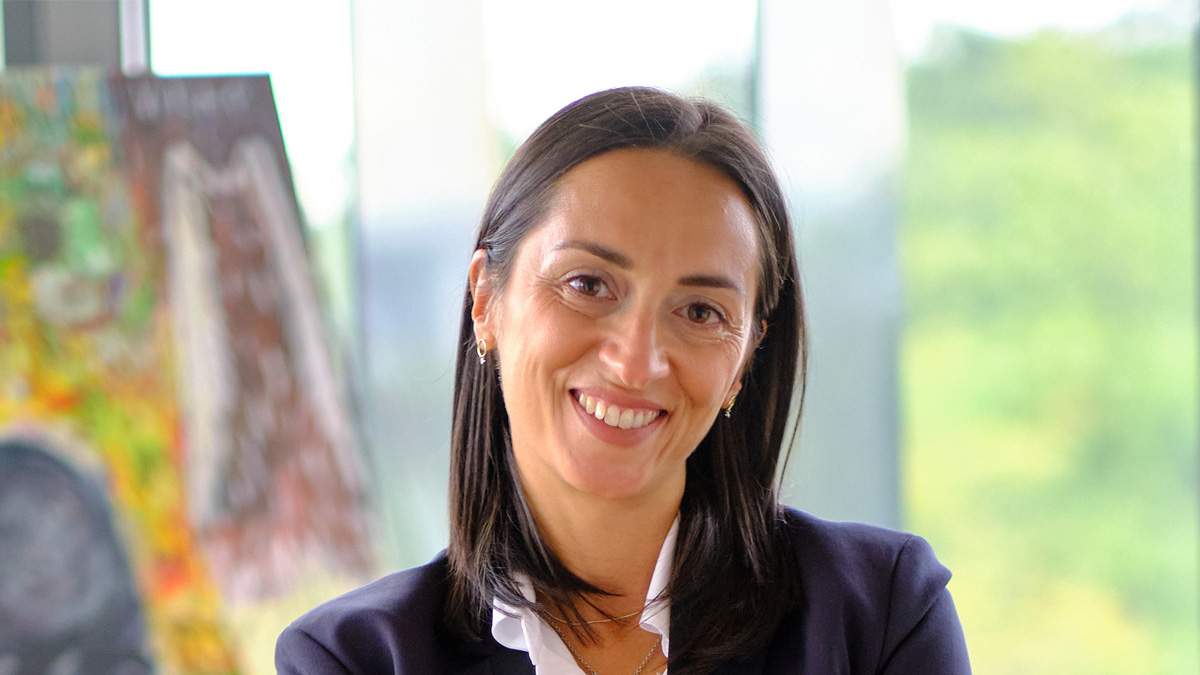
Preslava Gencheva
Strategic Sales Manager
GrECo Specialty
T +359884755145