
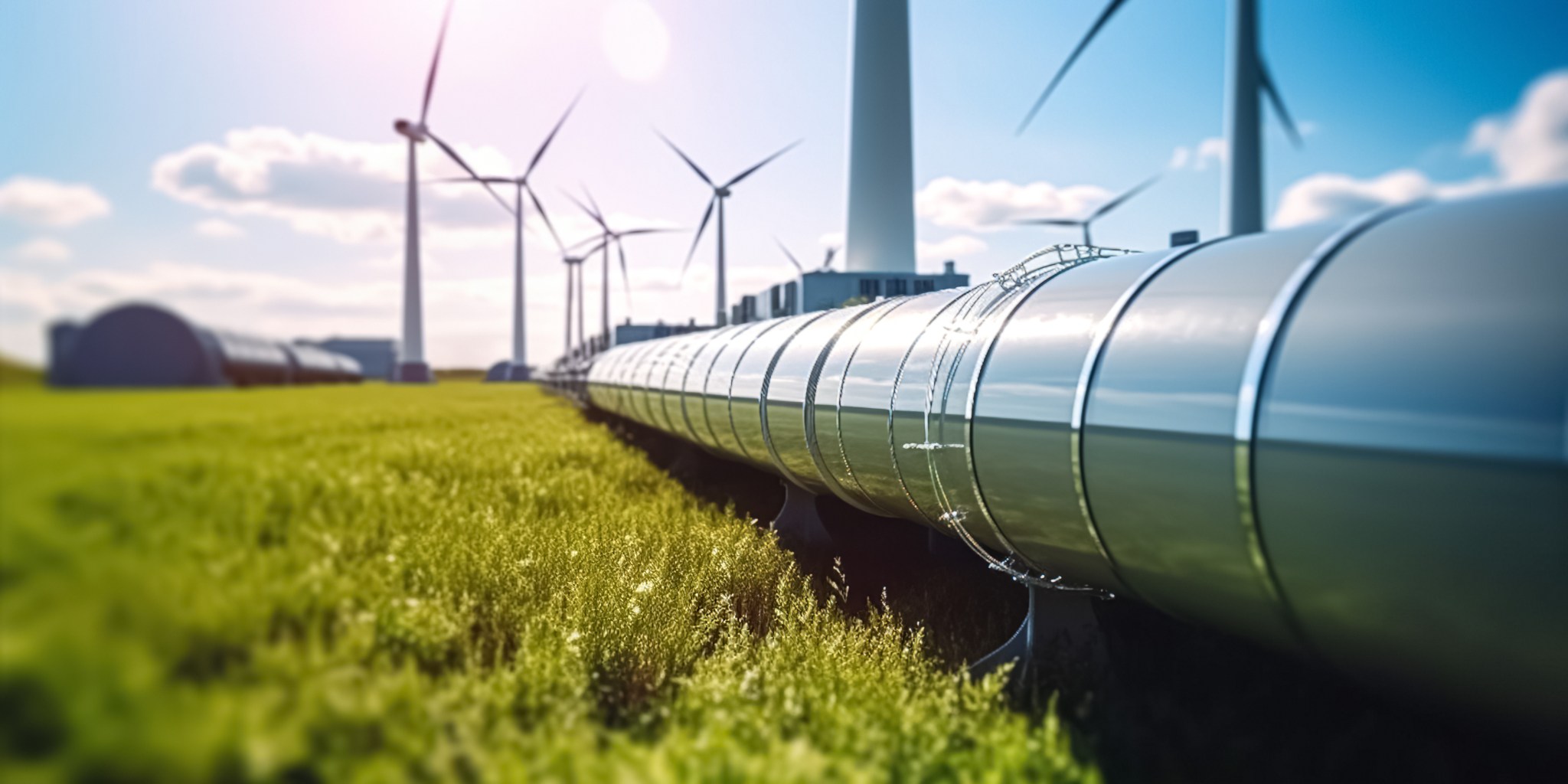
From the options available today, hydrogen is a promising alternative to fossil fuels with some companies, such as Wien Energie, already convinced of its benefits realising projects to test it as an alternative energy source.
To achieve the goals of the Paris Climate Agreement, a transformation of the energy industry is required, away from fossil fuels and towards sustainable and environmentally friendly energy sources. Is it a viable vision? We think so.
From the options available today, hydrogen is a promising alternative to fossil fuels with some companies, such as Wien Energie, already convinced of its benefits realising projects to test it as an alternative energy source.
Green production methods are key
Hydrogen is a versatile energy carrier that has the potential to play a significant role in the energy mix of the future. It’s often referred to as a “clean” energy carrier because its combustion only produces water as a by-product. However, as favourable as the CO2 balance is on the usage side, care must be taken to ensure that the production of hydrogen is also as climate friendly as possible. Only by utilising renewable energy sources such as solar energy or wind power can hydrogen be produced as climate-neutrally as possible. This “green” hydrogen can then be used in various sectors such as transport, industry, and households to significantly reduce CO2 emissions.
Nothing comes without challenges and risks
Although hydrogen harbours great potential, there are also some challenges to overcome. One of these concerns the safety of producing, storing, and transporting it. Hydrogen is a highly flammable gas that can have explosive properties under certain conditions. It is therefore of the utmost importance to take appropriate safety precautions with regards to fire and explosion protection to avoid accidents and minimise the risk to people and the environment. If hydrogen is used in existing systems as a substitute for natural gas, for example, various aspects such as the tightness of the pipe systems, changes in combustion behaviour, and their effects on the burner and process must also be subjected to a risk assessment in advance to ensure safe operation.
Innovation means new risks
Insurance aspects must also be considered when using hydrogen as an energy source – including in the context of operational trials. As hydrogen is a new and innovative element in the energy sector, the associated risks for insurance companies are difficult to assess. The insurance industry must therefore address the specific risks and possible loss scenarios to offer appropriate insurance solutions. This could include, for example, the development of customised insurance packages for hydrogen plants, transport infrastructures and operational risks. In this context, the transparent presentation of the changed risk landscape – e.g., the elimination of storage facilities for flammable substances, and the construction of a hydrogen electrolysis plant – in conjunction with sustainability requirements during a transformation project in a company becomes even more important. This will make it easier for insurance companies to assess all aspects and evaluate them.
The insurance industry should champion hydrogen technology
In addition, insurance companies can play an important role in promoting hydrogen technology by incentivising investment and innovation. Close cooperation between the energy industry and the insurance sector can help to better understand, assess, and minimise risks. This in turn will increase confidence in hydrogen as an energy carrier and promote its wider acceptance.
In summary, any future energy transformation faces exciting challenges and opportunities. Hydrogen as an energy carrier has the potential to make a significant contribution to meeting our energy needs in a sustainable manner and thus a significant contribution on the road to climate neutrality. At the same time, however, safety aspects and insurance risks must be carefully considered to ensure the safe and successful integration of hydrogen into our energy system.

Sabine Bradac
Risk Consultant
GrECo Risk Engineering
T +43 664 962 39 57
Fringe Benefits Are Reshaping the Employment Offer
Unlike core benefits such as medical care or pensions, fringe benefits are often the most visible to employees.
The Benefit Everyone Wants, But Nobody Structures the Same Way
For employers wanting to ensure their Health & Benefits strategy delivers real value over time, our Study has made it clear that those who focus on an informed approach that combines market understanding, structural comparison and local relevance will succeed.
We Say Yes to Net Zero
GrECo Austria’s Roland Litzinger sat down with the CEO of delfort. Martin Zahlbruckner, to discuss how a global specialty-paper group is driving emissions reductions.