Richard Krammer General Manager at GrECo Specialty Construction & Real Estate Management looks at the transition to green construction and how insurance just might be the answer to helping businesses secure the funding needed to smoothly transition to a greener, cleaner future.
Today’s construction industry is under pressure to become more sustainable. Europe’s goal is to be climate neutral by 2050 and industry has a major part to play in achieving this. But this transformation to a greener construction industry is not just because of EU directives. Those asking for eco-friendly buildings are soaring like never before and, as of January 2024, the demand for sustainable buildings in major cities globally surpassed supply.
Let’s look at a very rudimentary construction timeline: conceptional design, feasibility considerations, secure the finance, seek the insurance, employ the developers, and build. That seems straightforward but, with sustainability at the top of everyone’s agendas there are hurdles to overcome.
An architect might initially start their process looking at which sustainable building materials to use. Timber is often believed to be the greenest construction material. Wood has served as a fundamental building material for millennia and continues to be extensively used in modern building practices – 70% of all new houses in the world are currently timber framed. It is renewable, offers superior insulation to brick, steel, or concrete, and has low CO2 emissions. What is more, when one considers using cross-laminated timber (CLT), described by some as ‘the new concrete’, it is equally as strong as other materials, and light and flexible to boot.
However, can you build a skyscraper in the true sense from wood? I think not. Yet, there’s nothing to say buildings must be made solely of steel and glass, and that wood couldn’t also be part of the design. A hybrid of building materials is often the answer to constructing eco-friendlier structures. So, if the choice in building materials isn’t the headache, what is?
Insurance industry is still playing catch-up
The biggest question in any building project is where the funding comes from. Banks prioritise green finance favouring companies and projects with a sustainable ethos. They use concepts based on the EU taxonomy as a framework to guide their financing choices or have new KPI’s to report such as the Green Asset Ratio. Then they want to know if the construction project is insured and that all risks from conception to completion are covered. This is where the problems start to occur. No project will be financed without the relevant insurance, but the insurance industry is still playing catch-up.
Insurance agreements are traditionally calculated on loss patterns and risks that have occurred before. Yet, whenever there is systematic change, there are new risks and no scenario for the insurance company to base their calculations on. This causes underwriters a headache, as the role of the insurance company is not to take over the entire entrepreneurial R&D risk. When these difficulties arise, their response may simply be ‘no, we can’t insure this project’. At this point the bank’s funding goes out the window or substantial requirements for collateral warranties arise.
So, how can the insurance industry which outwardly supports sustainable construction overcome the risks involved in doing so? I believe the answer is in open, honest communication. For green construction to secure financing and insurance, there needs to be an open dialogue between industry, insurance, and finance. From our broad experience with clients in the renewables sector, the insurance broker is a lynchpin in this dialogue. Subjectivities and warranties – obligations of the insureds to protect against possible claims may abound with new technologies, and striking a balanced compromise between pricing and scope of coverage to still provide value with insurance is key.
A good broker will look at every scenario as unique and not readily dismiss new risks because they haven’t been seen before. They will provide bespoke solutions for their clients. It’s what we pride ourselves on at GrECo, and it’s where we’ve seen the biggest successes with our clients as they transition to a greener future.

Pascal Jaut
Insurance Specialist Construction & Real Estate
T +43 664 883 80 536
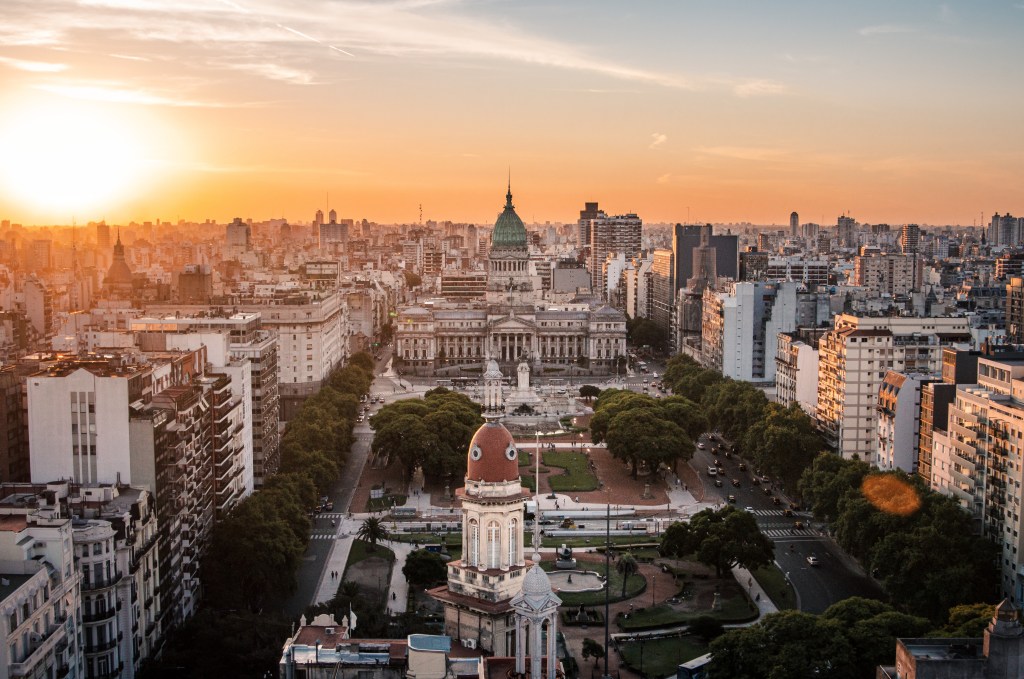
How Stability and Sectoral Growth Are Reshaping Argentina’s Corporate Risk
Argentina is experiencing economic reorientation, greater regulatory stability, and increased investment across sectors.
Jetzt vorbestellen: Health & Benefits Studie 2026
Jetzt vorbestellen: GrECo Unternehmensstudie zu Health & Benefits
Insured by Algorithms
The insurance industry is undergoing a profound transformation, driven by the rapid adoption of AI and predictive analytics.