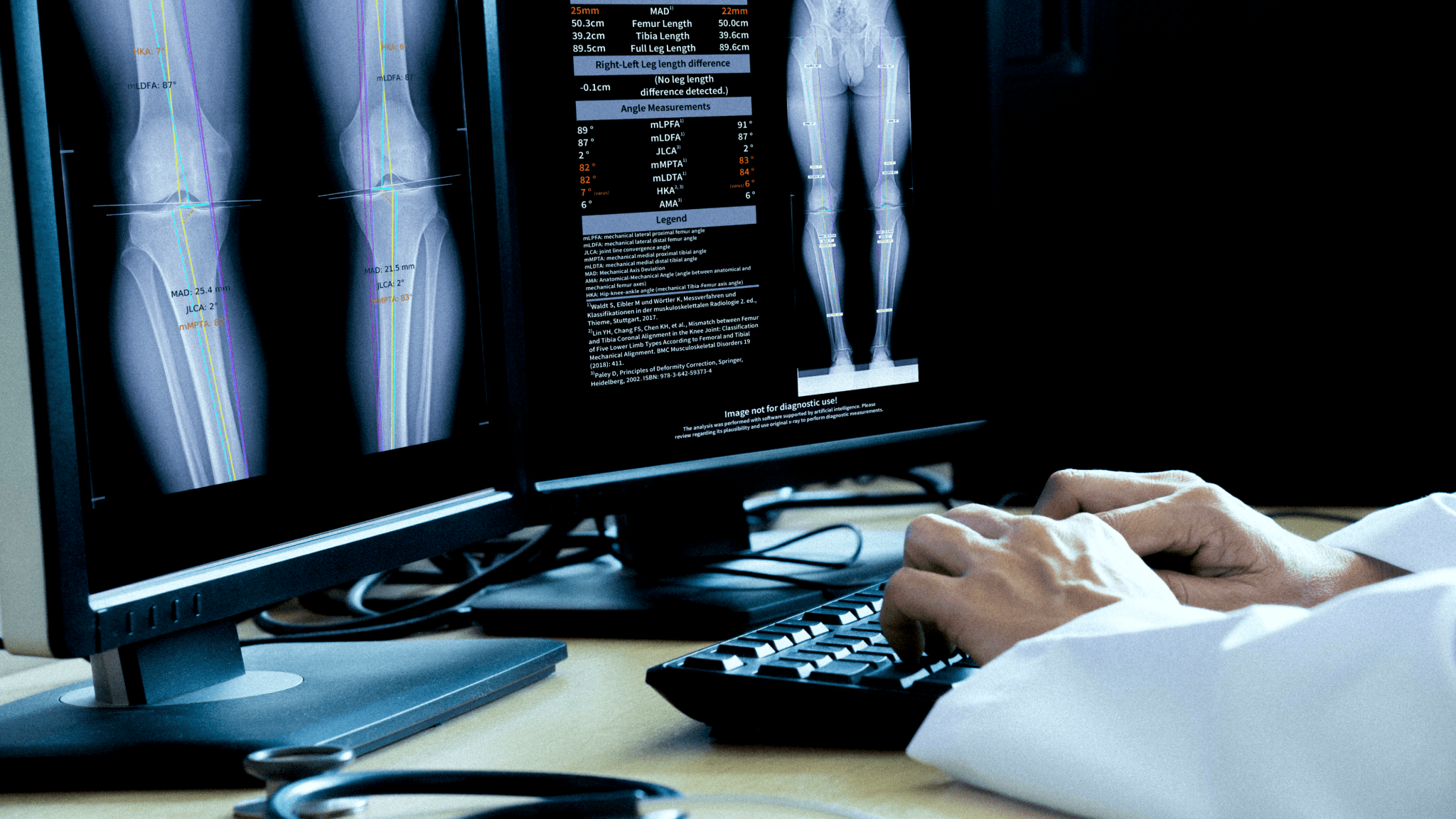
Strategic Sales Manager, Krystle Lippert, spoke to Richard Ljuhar, founder and CEO of the Austrian AI medtech firm ImageBiopsy Lab, to explore the current applications of their innovative software and the exciting opportunities AI presents for the future of medicine.
Artificial intelligence (AI) designed to simplify tasks across various fields, has sparked considerable debate, particularly since the emergence of ChatGPT. Within healthcare, many doctors and nurses see AI as a promising tool to ease their heavy administrative workload and are eagerly anticipating further advancements. GrECo’s Strategic Sales Manager, Krystle Lippert, spoke to Richard Ljuhar, founder and CEO of the Austrian AI medtech firm ImageBiopsy Lab, to explore the current applications of their innovative software and the exciting opportunities AI presents for the future of medicine.
AI’s Role in Enhancing Diagnostic Precision
AI algorithms are already being used to detect lesions, assess cancer risks, help diagnose diseases with complex appearances, and provide early warnings, among other things. The identification of disease characteristics in imaging diagnostics is a key part of their application. This is evident with the Austrian AI medtech ImageBiopsy Lab, which also operates an office in the USA.
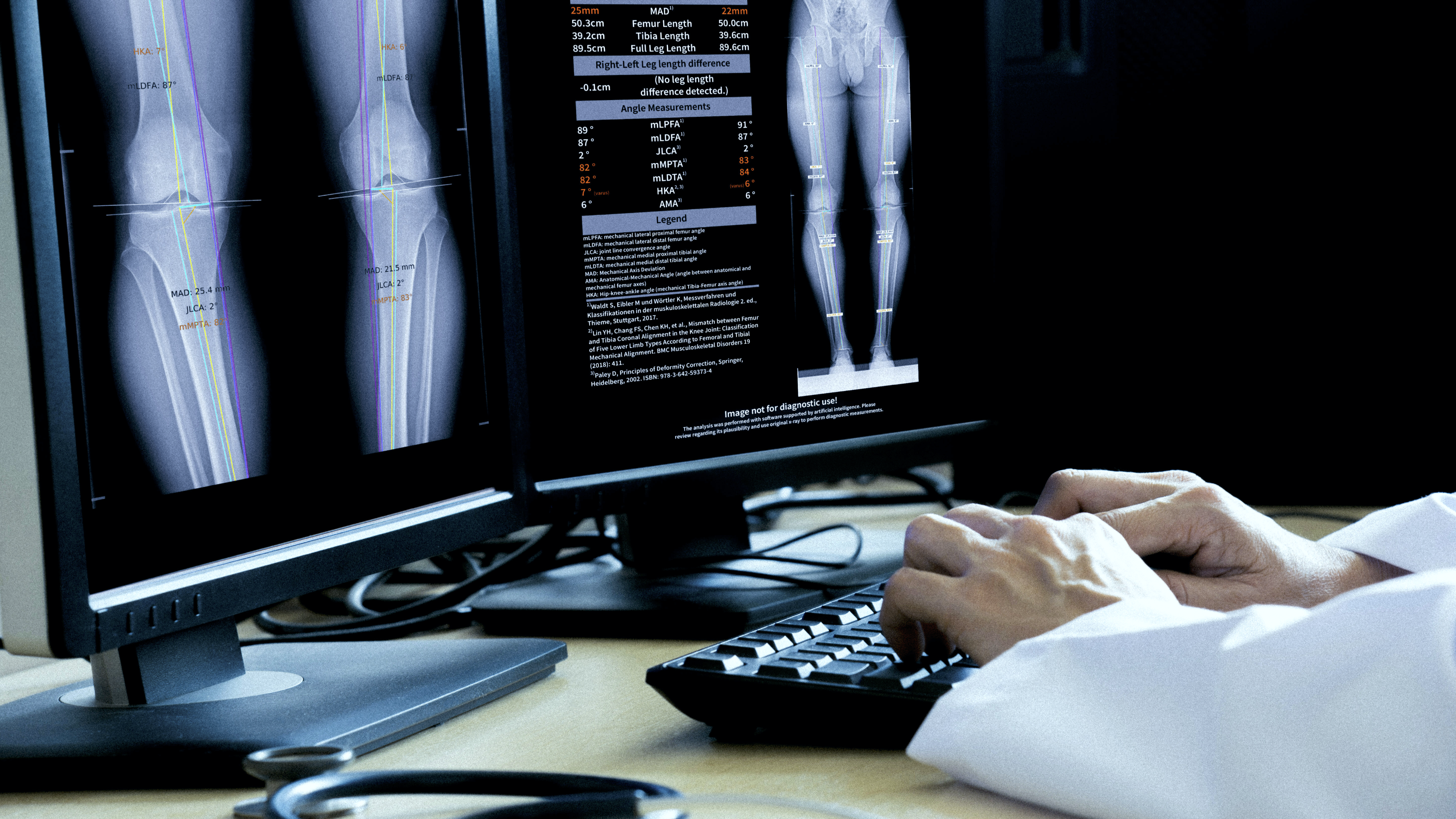
Since its founding in 2016, ImageBiopsy Lab has focused on optimising early detection and prevention of musculoskeletal diseases through AI-supported imaging. Its digital AI platform supports doctors and healthcare professionals in converting medical image data into diagnostic findings. One such example is their study which investigated the use of AI in traumatology, especially in the diagnosis of distal radius fractures (DRF). The study involved 26,121 anonymised wrist x-rays and a convolutional neural network (CNN) trained to identify fractures. When 11 doctors evaluated 200 pairs of x-rays, AI support improved diagnostic sensitivity from 80% to 87% and reduced the error rate from 14% to 9%.
“AI is not here to replace medical professionals but to assist them,” Ljuhar explains. “As a rule, doctors must verify AI results but now radiologists, for example, can focus on the anomalies and orthopedists can detect misalignments more quickly. In the USA we’ve also used it to support the identification of clinically clear cases of knee osteoarthritis. Essentially, AI helps streamline detection processes and enhance accuracy.”
Legal and Ethical Challenges
But what about the legal and ethical considerations? What implications does this have for liability and data protection? When it comes to practical applications, the responsibility remains firmly with the doctors. AI diagnostics are classified as medical devices, and much like prescribing a medication, the ultimate accountability lies with the healthcare professionals.
In terms of product liability, software bugs are reported to ImageBiopsy by users and the software itself is regularly checked to ensure that it is working correctly. However, the software cannot simply be retrained and, as with other apps, an update cannot simply be installed.
“Every update means that we have to go through the full cycle of the Medical Devices Directive and that sometimes takes six months or even longer,” says Ljuhar. “That’s thousands of pages of documentation that have to be reviewed and updated and finally approved by TÜV Süd.“
Data protection is another crucial concern, particularly when it comes to questions about where patient data is stored and the sources of image data used to train AI systems. In Europe, regulatory hurdles are generally high, but obtaining image data is relatively straightforward due to the ability to collect and process anonymised data via ethics applications. In contrast, accessing such data in the USA is significantly more challenging, owing to stricter regulations that limit its availability.
Visions for the Future
Although ImageBiopsy Lab’s software is primarily employed to reduce waiting times for results, it also presents intriguing possibilities for future applications. Ljuhar hopes that in the next few years AI will be capable of making more accurate predictions regarding the long-term health of patients by analysing specific images or symptoms. This advancement could assist patients in adjusting their physical activities accordingly. Medical imaging conducted for a specific diagnosis may allow AI to automatically detect other abnormalities in the image that are not specifically being searched for and highlight them to provide early warnings.
Ljuhar sees great potential for AI, especially in orthopedics. ImageBiopsy has already developed software to detect osteoporotic vertebral fractures. These fractures are an indicator of an increased risk of future fractures. ImageBiopsy Lab’s software supports radiologists in detecting and documenting these fractures in order to enable early therapy.
Ljuhar explains: “Our studies show that in 85% of cases within certain anonymised patient groups who met specific criteria such as age, vertebral fractures went unreported by radiologists. This raises accountability questions – could earlier detection have prevented subsequent fractures? Hospitals or insurers will need to drive doctors towards preventive measures, supported by software tools that perform background scans during unrelated exams. These tools could identify clinically relevant fractures in high-risk patients, enabling timely and effective treatments.”
Building Trust
Except for radiologists who are generally tech-savvy, there was little interest in AI two to three years ago. While this has now changed among doctors, many patients remain skeptical, and trust is still developing. However, younger generations are beginning to show interest and ask questions about it, which is a promising step forward.
To Reap the Benefits, Risk Management is Key
It is clear that the application of AI in traumatology, especially in the diagnosis of distal radius fractures, has enormous potential to improve medical diagnostics and optimise patient care.
And that the implication of integrating AI into medicine in general will revolutionise healthcare – the opportunities are endless, but so are the challenges. The medical world must delicately balance the multitude of opportunities with the legal and ethical challenges to ensure the safety and effectiveness of these technologies. Professional risk management that takes into account technological, ethical and organisational aspects is key to achieving this. It is the only way to ensure that the benefits of AI are reaped without jeopardising patient safety or trust in the healthcare system.
About Richard Ljuhar
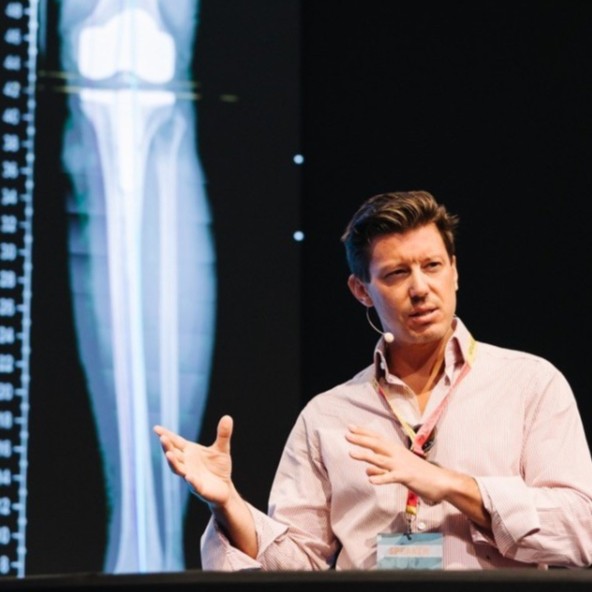
Richard Ljuhar is the CEO and co-founder of ImageBiopsy Lab, an award-winning software company specializing in AI-driven imaging intelligence for musculoskeletal diagnostics. With a background in product development and international marketing, Ljuhar has gained extensive experience working at one of the world’s leading medical device companies based in Boston, Massachusetts.
About ImageBiopsy Lab
ImageBiopsy Lab (IB Lab) is a leading digital health scale-up based in Austria, specializing in AI-driven software applications for musculoskeletal (MSK) diagnostics on radiographs. Their solutions provide radiologists and orthopedists with fast, quantitative, and standardized reports, and are installed in over 100 sites across Europe and the US.
HORIZON Risk Thought >> Fast Forward
The complexity of today´s risk environment is changing at an accelerating pace, making risk management even more challenging. We have created HORIZON, firstly as a print publication and now as a page for sharing the latest insights about ongoing transformations. Our risk specialists will continue to provide their expertise and knowledge to shine a light on the challenges of the future.

Krystle Lippert
Strategic Sales Manager
GrECo International AG
T +43 664 962 40 37
Richard Ljuhar
ImageBiopsy Lab,
CEO