
By examining data centres, artificial intelligence, and cryptocurrencies, Ketzer highlights how digital progress brings ecological and social risks that are too often ignored.
As digitization accelerates, promising unprecedented innovation and economic growth, we are compelled to ask: what is the true cost to our environment and society? Harald Ketzer, Risk Consultant and ESG expert at GrECo Risk Engineering GmbH, shines a light on the complex interplay between technological advancement and its unintended consequences. By examining data centres, artificial intelligence, and cryptocurrencies, Ketzer highlights how digital progress brings ecological and social risks that are too often ignored. This analysis, while not exhaustive, seeks to spark essential conversations and offer practical insights for steering digitization toward a more responsible and sustainable future.
Data centres form the backbone of digital infrastructure and consume vast amounts of energy and resources. The expansion of data centres is expected to accelerate considerably, driven by the adoption of AI and the growing number of digital services, which have already led to a marked increase in energy demand in recent years. Cryptocurrencies, particularly Bitcoin, also exert a significant influence on the energy balance of data centres. The primary energy consumption stems from so-called mining, where complex computational tasks must be solved continuously to generate new coins and validate transactions.
Energy consumption remains a major contributor to CO₂ emissions, largely because a significant proportion of electricity is still generated using fossil fuels such as coal and natural gas. This energy is required not only for powering servers and IT infrastructure but also, to a considerable extent, for cooling systems. Initial analyses reveal there are opportunities for optimisation; however, these are often underutilised or only partially implemented for the reasons mentioned above.
Accelerating the use of renewable energy
The simplest, though not always the most efficient solution – particularly concerning Scope 2 emissions from purchased energy – is to utilise renewable energy sources. This shift would have an immediate and significant impact in reducing CO₂ emissions. However, the availability of renewables remains limited in many regions, and many operators are reluctant to shoulder the additional costs involved. In light of this, stronger regulation or greater transparency regarding the carbon footprint of data centres is likely to become increasingly important.
Investments in energy-efficient IT infrastructure
A reduction in direct energy consumption by IT infrastructure can be achieved by adopting energy-efficient programming (green coding) and by using energy-efficient servers and storage media (Green Data Centre). Although solutions exist, their adoption frequently stalls due to high investment costs. Often, a life cycle analysis is not conducted, and in many instances, investors appear to focus solely on production costs.
Green coding, meaning resource- and energy-efficient software programming, is growing in significance. Nevertheless, there remains considerable scope for further innovation and practical implementation in this field.
Efficient use of waste heat
Rather than allowing heat to dissipate unused into the environment, it is possible to recover waste heat in a targeted manner and repurpose it – such as for heating buildings or water. However, as with other industrial applications, waste heat recovery is not always feasible. Frequently, there are no suitable customers nearby for the specific temperature level and capacity available. The potential for utilising waste heat depends greatly on the data centre’s location. For example, proximity to urban centres or educational campuses can significantly enhance the energy efficiency of data centres, as measured by Power Usage Effectiveness (PUE).
To boost environmental performance, countries such as Sweden and Germany have introduced a minimum mandatory quota of 10% for the use of waste heat from data centres under the Energy Efficiency Act (EnEfG).
There are numerous examples worldwide of data centres designed to minimise environmental impact. However, to implement such concepts on a national scale, additional pressure on operators will be necessary.
Nuclear fusion as a game changer?
Another method of meeting energy needs is to invest in forms of energy such as nuclear fusion. Sam Altman, CEO of OpenAI, is one of the main investors contributing significant financial resources to this technology. The vision is to supply commercial electricity before the end of this decade. It remains to be seen to what extent the problem of radioactive waste can be solved; ideally, future technological developments will result in new solutions.

Artificial intelligence and its undesirable side effects on the social fabric
Artificial intelligence is widely recognised for its substantial potential to enhance productivity and fundamentally reshape work processes. It is also expected to lead to the creation of new business opportunities.
What is clear, however, is that not everyone will benefit equally from this transformation, particularly if employment rates are considered. Jobs are likely to be lost, especially in areas with a high potential for automation, repetitive tasks, and routine processes. Sectors such as Industry & Manufacturing, Trade & Logistics, Banking & Insurance, and IT & Administration are considered most exposed. Yet, the question remains: could AI nonetheless become a driver of prosperity in spite of these challenges?
AI as a driver for the transformation of the labour market.
According to a recent survey by the Munich-based ifo Institute, around 27 percent of the companies surveyed expect AI to lead to job losses within the next five years. This highlights the need for us to set the (political) course now. Without a balance in the labour market – for example, through the creation of new job profiles or by ensuring adequate livelihood security for those who can no longer be employed – social tensions could escalate. It is not only financial security but also the social integration of those without gainful employment that plays a crucial role. In this context, the labour shortage affecting many industries and regions must also be considered. Experts are divided on whether the departure of the baby boomer generation will intensify this situation or whether compensatory effects of AI could arise, owing to a potentially reduced future demand for skilled workers.
The ifo Institute highlights the challenge of ensuring that the resulting productivity gains are translated into widespread prosperity, without causing major upheavals within certain occupational groups or social strata. To achieve this, it is important to intervene at several key points and implement targeted measures. Initial solutions could include:
Sam Altmann of OpenAI has proposed another solution: providing everyone with access to computing power, enabling individuals to earn income from the AI revolution. In this utopian vision, computing power could one day replace cash.
Further ideas under consideration include the regulation of working hours and the possibility of reducing them. Might society evolve towards a model where financial security is no longer primarily tied to traditional employment? Is this fiction, decline, or a possible land of plenty? The current, often heated debates around full-time versus part-time work and working hours will not be explored in depth here. What remains clear, however, is that planned job cuts at SAP, Bosch, Klarna and other companies are set to affect around 50,000 positions in Germany alone.
Job end or prosperity miracle?
The future remains uncertain, but it is particularly crucial for Europe to take an active role in shaping its course, rather than becoming a passive participant in this transformation through protectionism or clinging to established patterns. What is required are feasible visions and concrete guiding principles for a sustainable society of the future.
In relation to artificial intelligence, it is also important to involve experts to consider potential side effects or risks, while placing focus on the positive impacts of current developments and the unique opportunities they may bring.
HORIZON Risk Thought >> Fast Forward
The complexity of today´s risk environment is changing at an accelerating pace, making risk management even more challenging. We have created HORIZON, firstly as a print publication and now as a page for sharing the latest insights about ongoing transformations. Our risk specialists will continue to provide their expertise and knowledge to shine a light on the challenges of the future.
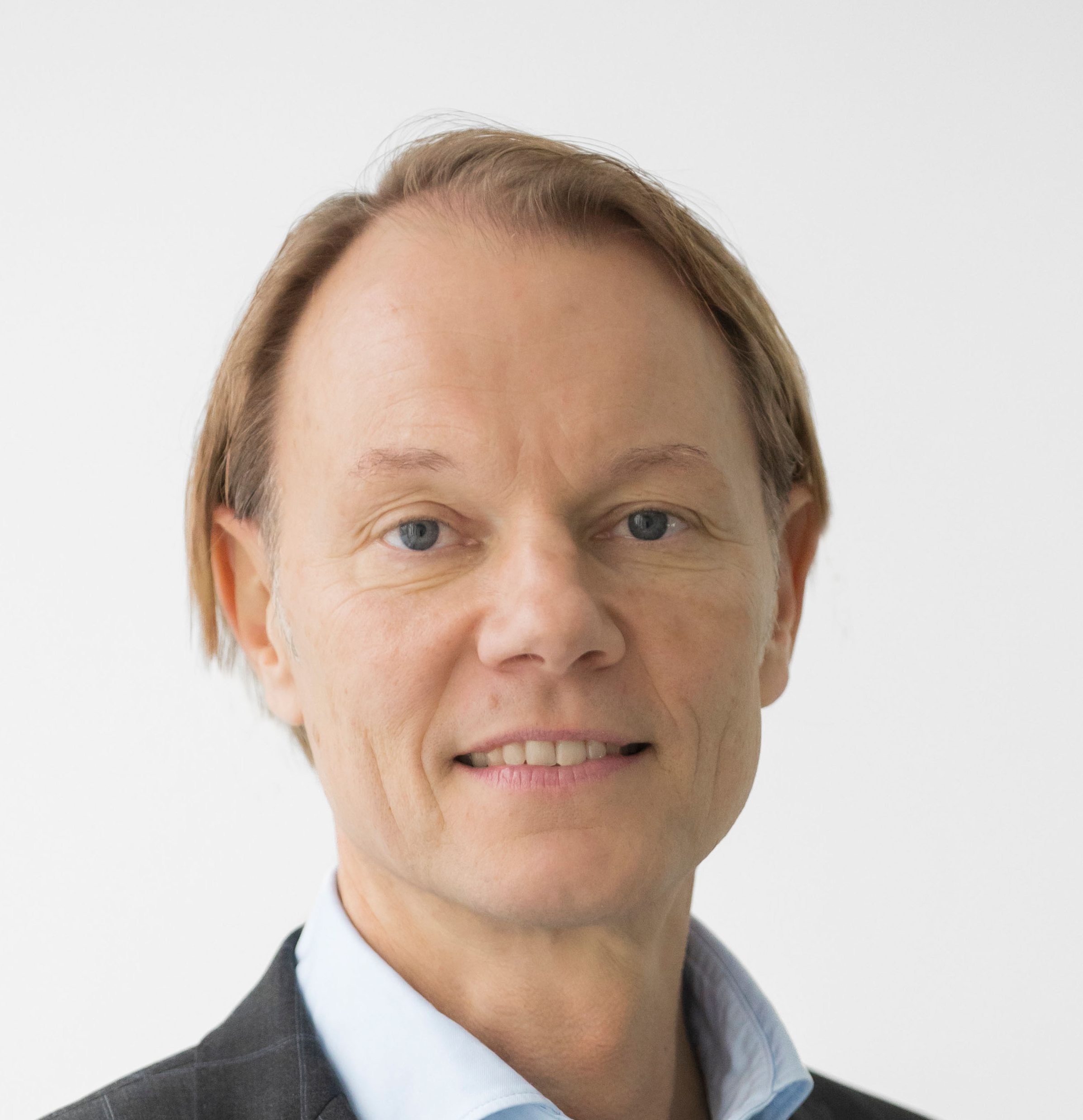
Harald Ketzer
Risk & ESG Consultant
T +43 664 888 44 707