
Peter Papp, Account Executive at GrECo Slovakia, sat down with Peter Bešina, founder of Paralla and Cryptodiggers, to discuss the evolution of cryptocurrencies, the challenges of regulation, and the ideals driving decentralised finance. Bešina, now operating from Panama, shares his candid views on why crypto remains controversial, how regulation shapes innovation, and what the future may hold for digital currencies.
An Introduction to Crypto Currency and its Ideals
Papp: Please can you start by giving us a brief description of what Cryptocurrency is?
Bešina: Cryptocurrency is a form of digital or virtual money that uses cryptography to secure transactions and control the creation of new units. Unlike traditional currencies issued by governments and central banks, cryptocurrencies operate on decentralised networks, typically using blockchain technology, which is a public, tamper-resistant ledger of all transactions. The most well-known example is Bitcoin, but there are thousands of other cryptocurrencies, each with its own features and uses.
What is Crypto-Anarchy?
Papp: There are many ideals – communism, free-market, and now crypto-anarchy. What matters is what principles we actually apply. What is crypto-anarchy?
Bešina: It’s a political and philosophical concept that envisions a society where individuals use cryptographic tools to protect their privacy, secure communications, and bypass centralised authorities. It promotes the idea that encryption can enable freedom of speech, financial autonomy, and resistance to surveillance or censorship – often outside the control of governments or institutions.
Papp: People often confuse anarchy with chaos. What does anarchy mean in the context of crypto?
Bešina: Anarchy does not mean disorder – it means the absence of central control. It’s simply a peer-to-peer agreement: two parties make a deal without someone in the middle telling them what they can and cannot do. That’s what anarchists stand for, and that’s where the idea of crypto-anarchy comes from.
Governmant’s Role in Decentralised Finance
Papp: What role do you see for governments in this new ecosystem?
Bešina: I believe the government can be a good helper, for example, in building infrastructure. But it’s a bad master. Politicians often forget they are supposed to serve, not rule. Even the word “government” itself implies power over others, and modern democracy just reinforces this idea.
Papp: Isn’t it idealistic to believe that decentralised finance automatically means a fairer world? Even in crypto, we see wealth concentration and manipulation.
Bešina: If wealth and power are concentrating in the crypto space as well, it raises questions about decentralisation’s ability to really change the system. Regulations designed to protect everyone at all costs often just kill innovation. In Europe, we’re seeing a path of “cutting off our own branch” – not just in crypto, but in AI and other fields too. Most innovation today comes from Asia and the US. Europe is lagging behind, partly because it prefers to regulate rather than support innovators.
Papp: Many young people today have almost no financial literacy. Is it the state’s job to keep protecting people from their own gullibility?
Bešina: I don’t think so, because that weakens society. People who refuse to think critically never create real value. They are exactly the kind of voters that populists and manipulators target. The best protection is financial literacy and common sense. Without those, you’re an easy target for greed, and that’s exactly what scammers exploit.
Trust & Stability in Crypto
Papp: What do you see as the main reasons for public distrust toward cryptocurrencies?
Bešina: The market was turned into a speculative playground by institutional investors and then flooded by scams that abused the original idea of crypto. Back in 2013, we started with a payment gateway that was somewhat centralised but still allowed people to receive payments directly to their Bitcoin address, without converting to euros. That was in line with the original vision: fast, direct payments. It was the big institutional players who turned cryptocurrencies into a speculative tool.
Papp: How do you reach those who mainly want stability and simplicity? Doesn’t the constant creation of new cryptocurrencies hurt trust in crypto?
Bešina: For many, the idea of digital freedom is too abstract and distant. The constant creation of new cryptocurrencies can play into the hands of sceptics who call it a digital casino. But it’s healthy because it creates competition, and the market eventually decides what works. Of course, along with this come pump-and-dump groups and scams that hurt the industry’s reputation.
Taxation, Investment and Market Risks
Papp: In Slovakia, crypto gains are taxed at 39%. Many people have left the country and moved to Central America. Was your move to Panama mainly about taxes, or did you also see business opportunities?
Bešina: Slovak taxes are a different story. 39% plus levies is nonsense. Every rational Slovak who had the chance has left – at least to the Czech Republic, if not to Portugal, Malta, or Cyprus. But honestly, I didn’t come here for tax reasons. I saw business opportunities I couldn’t find in Slovakia. Panama is roughly the size of Slovakia, but it has the Panama Canal – a global trade hub that attracts companies, money, and opportunities. Most importantly, Panama has no central bank, meaning they can’t just print money and destroy the currency like we’ve seen elsewhere. The economy runs on the US dollar, which is still the most widely used and most stable currency in the world.
Papp: Ultimately, it’s up to users to decide: rely on the big funds, or learn to use crypto directly. What are the risks of institutional investors entering the crypto space?
Bešina: Many investors will trust ETFs and let institutions hold their assets. That’s a risk, because it makes the market more vulnerable to coordinated moves by big players. Crypto markets run 24/7, there is no “off switch.” The entry of big funds will bring more attention to Bitcoin and crypto in general, but institutional investors pose the biggest threat to decentralisation. Big banks have almost unlimited capital to buy up Bitcoin and influence its price. We already see clear signs of market manipulation – things that would be illegal “pump-and-dump” schemes on the stock market. In crypto, there is still no such protection, so the big players have much freer hands.
Regulation & Market Access
Papp: Crypto regulations are so strict that smaller players often can’t comply. Does this leave the market in the hands of big players?
Bešina: Yes, but the number of crypto users is growing exponentially. Eventually, we will reach the point where transactions will happen the way the founder of Bitcoin, Satoshi Nakamoto, intended – directly between people, peer-to-peer. Maybe it will start as an underground movement, but it will become one of the legitimate ways people interact outside state control.
Ideology and the Financial System
Papp: Is the crypto vs. global financial system problem essentially an ideological conflict?
Bešina: Decentralisation means loss of power. Big banks have no reason to support cryptocurrencies if they threaten their main weapon: control over money supply and rules. But doesn’t the state have a certain responsibility to maintain currency stability, something crypto hasn’t yet proven it can do?
Cryptos Future
Papp: How do you see the future of crypto?
Bešina: I’m a cautious optimist. Regulations will get tougher, many projects will disappear, but the core idea will remain. Bitcoin and a few others will form the basis of a new financial ecosystem.
This interview is based on the personal opinions and experiences of Peter Bešina and does not necessarily reflect the position of Horizon or GrECo Holding.
About Peter Bešina
Peter Bešina is the founder of CryptoDiggers, a Slovak-based crypto company known for pioneering Bitcoin and Worldcoin ATMs in Europe. He’s an advocate for decentralised finance and crypto-friendly regulation, now active in Panama promoting global adoption.
HORIZON Risk Thought >> Fast Forward
The complexity of today´s risk environment is changing at an accelerating pace, making risk management even more challenging. We have created HORIZON, firstly as a print publication and now as a page for sharing the latest insights about ongoing transformations. Our risk specialists will continue to provide their expertise and knowledge to shine a light on the challenges of the future.
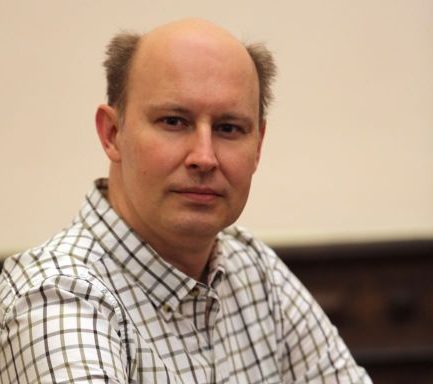
Peter Papp
Account Executive
GrECo Slovakia
T +421 9119 68492

Peter Bešina
Founder
CryptoDiggers