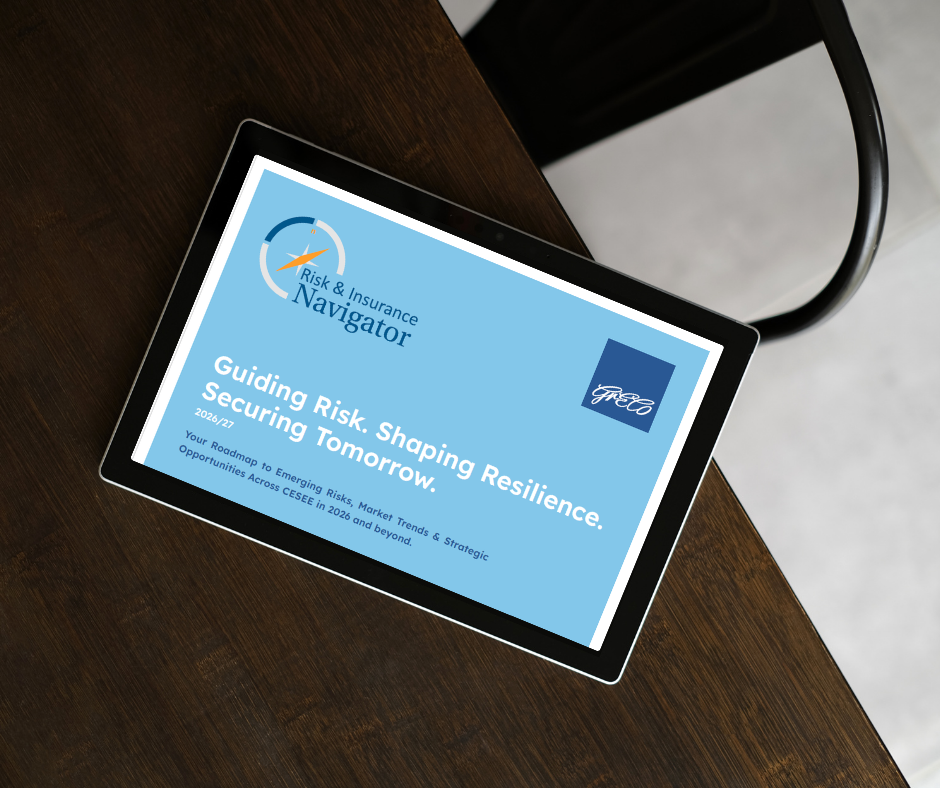

As Europe reassesses its security, supply chains, and industrial resilience, Poland is emerging as one of the countries best placed to benefit from the next wave of strategic investment. In this Navigator interview, Pawel Kowalewski, Regional Manager of GrECo Specialty explains to Paul Spittau, Head of Group Carrier Relations & Insurance Mediation at GrECo Group, why Poland’s location, economic maturity, and workforce make it central to Europe’s infrastructure rebuild and what this means for risk, insurance capacity, and specialist advisory.
Europe’s Security Shift
Spittau: Which global forces will matter most for Poland between 2026 and 2030?
Kowalewski: The most critical megatrend comes from the realisation among EU leadership and most member states that the recent geopolitical shifts brought about by events in Ukraine and the Middle East mean Europe cannot rely on other countries for its security, critical raw materials, and industry. Global supply chains might be broken at any time, which means the end of globalisation as we know it. Critical infrastructure must be built in EU countries and controlled by EU-domiciled entities. This means massive capital investment within the next five to ten years and, because of its location and economic maturity, we expect Poland to be a major beneficiary of this new situation.
Spittau: What country-specific factors make Poland particularly relevant in this context?
Kowalewski: Poland brings together a central position on the continent, direct access to major north-south and east-west trading routes, the scale of a large and intrinsically strong economy, and a highly qualified, motivated workforce capable of building and operating critical EU infrastructure. Taken together, these factors make Poland an important player on the European map and an attractive partner for potential investors.
Risk Mechanics
Spittau: How are geopolitics, macro–economic pressures, and supply–chain dependencies reshaping corporate risk in Poland?
Kowalewski: If our predictions turn out to be correct, we expect the programme aimed at rebuilding EU critical infrastructure to be exposed initially to increased geopolitical risk. But once completed, as dependence on external value and supply chains decreases, we see the potential for improved risk levels and a broader range of controls. Macro-economic pressures will include the availability and price of capital and skilled labour, which again will require mobilisation of resources both at member-state and EU-wide level.
Spittau: What does that mean for pricing, capacity, coverage conditions, and appetite in key insurance markets?
Kowalewski: We expect capacity to remain strong in Poland as well as in key EU markets. The insurance cycle remains firmly in its soft phase with no signs of short-term recovery and it is still more driven by major natural catastrophe events than by geopolitical pressure, especially in Poland. It is also worth noting that Poland in the main has a benign natural catastrophe profile, which makes it interesting for global insurance and reinsurance markets seeking portfolio diversification.
Strategic Investment and Specialist Demand
Spittau: Which sectors are seeing increased investment because of reshoring, diversification, or changes in regional economic alliances?
Kowalewski: We expect increased investment across the entire gamut of industries, but especially in strategic infrastructure considered critical by both Poland and the EU. This includes transport and logistics infrastructure, digital infrastructure, energy security, mining and metals, and key industries such as advanced defence systems manufacturing.
These projects will need to be financed with a mixture of government and private capital, which we expect will have a decisive impact on the growth and development of the finance sector across the EU.
Spittau: How is this influencing demand for specialist lines such as marine cargo, political risk, business interruption, credit risk, supply–chain insurance, and cyber?
Kowalewski: This can only lead to accelerated growth for the Polish and European insurance market, as well as the financial services industry at large. All classes of insurance business will have to be utilised to de-risk these critical projects and make them bankable. There are new insurance products being developed to support this.
Cyber will become particularly important, as it addresses loss exposures linked to the use of hardware and software across the full asset lifecycle, from design and construction through to operation and decommissioning.
Broker Market Dynamics
Spittau: How are brokers, insurers, and reinsurers responding to incresingly globalised and politicised exposure?
Kowalewski: In the main, the industry response has been good, with strong risk awareness and commitment across the value chain. Insurance markets are generally open to new products and new ways of addressing emerging risks, including borderline business risks traditionally considered uninsurable. These solutions will be important to make projects palatable for private capital and will help shape the future development of the insurance industry.
A key question is whether the London market, as the focal point of global insurance capacity, will play a role in this major EU infrastructure overhaul.
Spittau: Where do you see the main service gaps?
Kowalewski: We see a need for new capacity and product offerings in surety, especially beyond construction. A viable alternative to bank capacity is particularly important where commodity price volatility or the evolving casualty risk landscape are present.
As new risk transfer products come to market, regulators may struggle to keep pace. This is an area where the entire industry should be involved and speak with one voice.
What GrECo Does Differently
Spittau: Where does GrECo shift outcomes in this risk environment?
Kowalewski: We understand both the nature of the risk being placed and the underwriting process on the insurers’ side. We’re able to identify the key factors from the underwriter’s perspective and make sure risks are presented to the market in a way that makes them well understood and palatable. For critical assets, this also means building programmes that are resilient to adverse insurance-cycle development and political pressure, often turning these challenges into advantages through careful structuring, diversification, and market engagement.
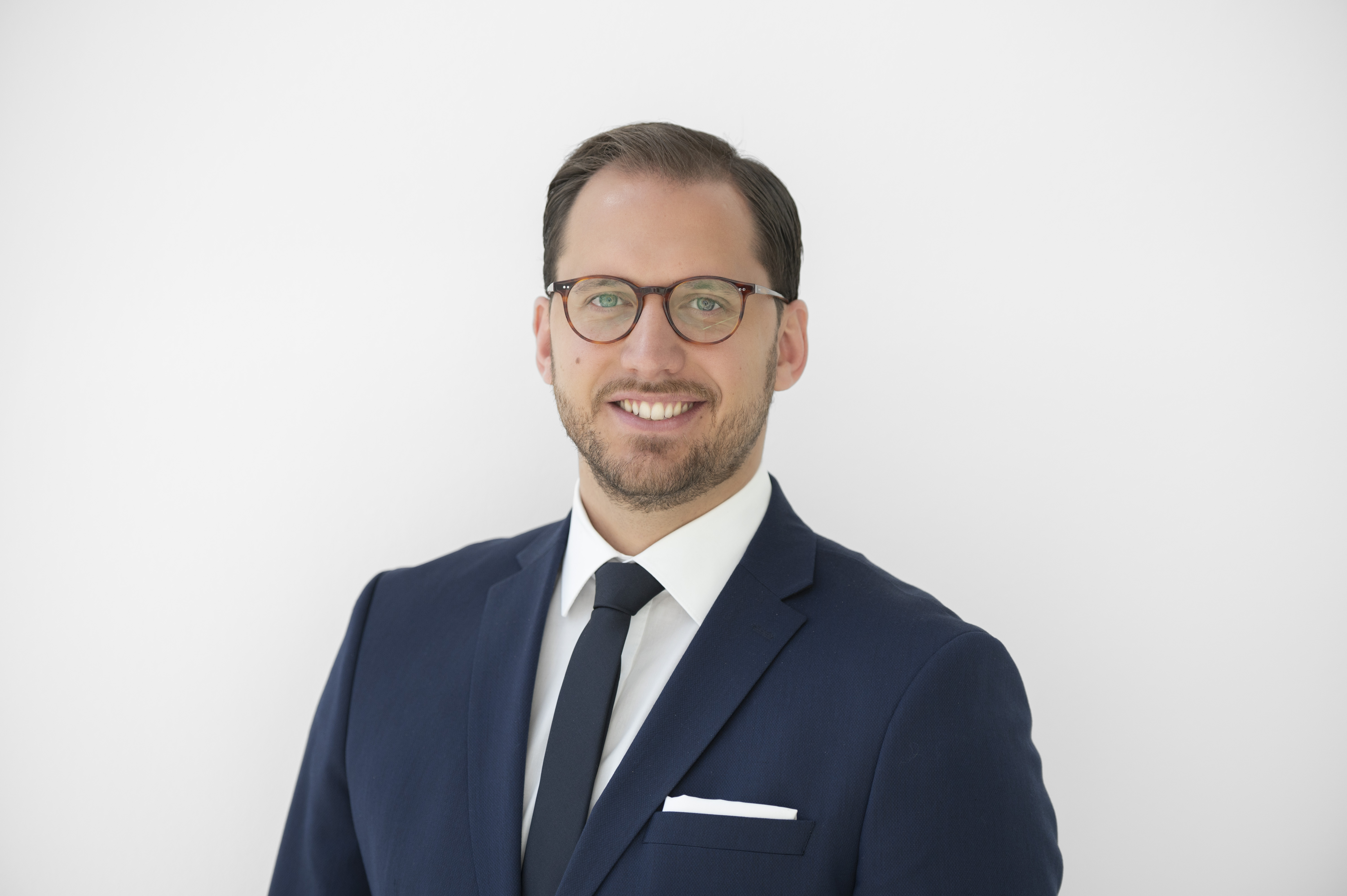
Paul Johannes Spittau
Head of Group Carrier Relations & Insurance Mediation
T +43 664 537 17 42

Pawel Kowalewski
Regional Manager
GrECo Specialty
T +48 507 085 066