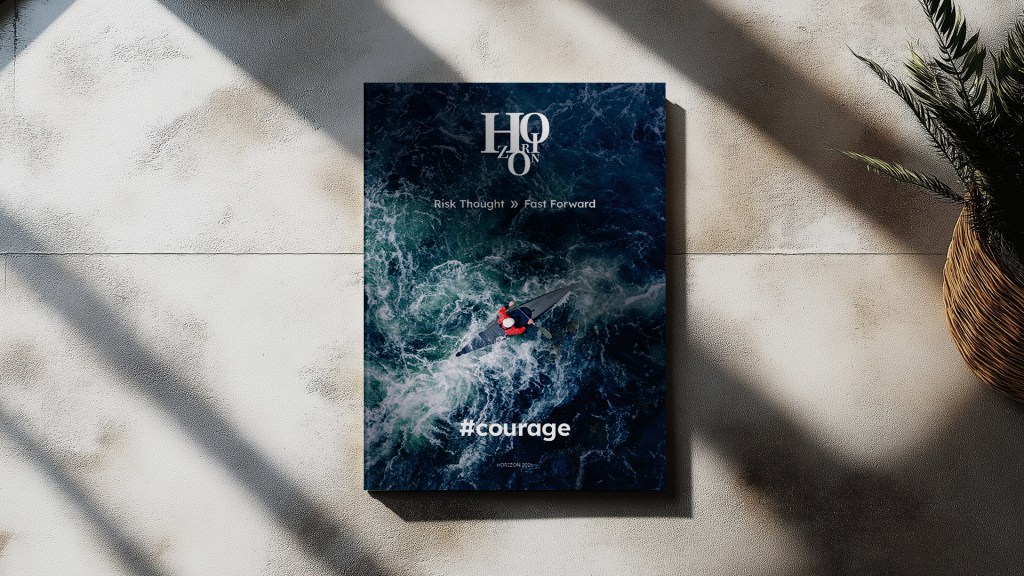

To reclaim Europe’s global competitiveness, Europe’s leaders must transition from being passive observers of risk and compliance to courageous architects of value.
It was only 10-15 years ago that boards in Europe were operating in a relatively calm/stable world – geopolitical and economic environments were predictable, strategies remained valid for decades, risks were few to govern and everyone was happy. Today, it is just a memory. A mix of these uncertainties with the addition of a widening technological gap with the USA and China, demographic challenges, and regulatory pressures have brought the companies of the European Union (EU) and their boards into an extremely testing universe. And, as if that wasn’t enough, stakeholders are demanding social responsibility and resilience, affordability, supply chain security, and credible sustainability performance.
To reclaim Europe’s global competitiveness, Europe’s leaders must transition from being passive observers of risk and compliance to courageous architects of value. The global success of EU economies is in the hands (and minds) of board members who have a duty to shape the future of each company. To make this happen, boards should challenge themselves first and take full responsibility for the successes and for the failures of their companies. Only then can they effectively lead management towards the urgent transformations that are needed.
On this challenging journey, leaders should concentrate on five key shifts in their approach:
From Compliance to Long Term Value
Boards should switch from being the guardians of compliance to strategic stewards of long-term value creation and global competitiveness. Taking into consideration regulatory pressure in the EU, it is no surprise that, historically, boards have excelled at regulatory compliance and stakeholder balancing. But it is not enough anymore. Today’s boards must act as future-shaping navigators, redesign their agendas substantially by dedicating more time to strategy, innovation and forward-thinking competitive positioning. They should be doing this by stress-testing existing business models against geopolitical and technological disruptions and by taking the necessary decisions to change and adapt. Value-creating board members should ask: “Is our current strategy fit for the current and upcoming situation and challenges; are we able to foresee and use all opportunities and do we understand relevant risks?”.
Strategic stewardship requires leadership to look beyond performance metrics and engage deeply with future scenarios. It demands much more than intellectual independence, sector expertise, the ability to synthesize macroeconomic, technological, and regulatory signals into a coherent strategic direction.
From Static Risks to Dynamic Resilience
Directors in the EU should transition from formal, periodic risk review to dynamic risk governance, improving resilience by embedding it into decision-making with the aim to improve the competitive advantage of their companies. The traditional Risk Heat Map presented quarterly is no longer fit for purpose. Today’s landscape of risks – cyber threats, AI-related liabilities, various sanction regimes, climate litigation, social expectations, etc. – evolves faster than risk management reporting cycles. Dynamic risk governance embeds risk intelligence into every decision. It’s the shift from asking “What could go wrong?” to “How does our risk appetite give us a competitive edge?”. For example, a board that understands supply chain fragility doesn’t just monitor it; they use that insight to diversify faster than their competitors, turning a systemic threat into a market-share opportunity.
From Reporting to Sustainability Driven Strategy
Companies should be led by their boards towards changes from sustainability reporting to sustainability-driven strategies that will elevate value creation. While Europe has so far been at the forefront of sustainability regulation (CSRD, CSDDD), such leadership has often resulted in reporting fatigue. Boards have spent, and still are spending, considerable time ensuring sustainability related data is full and correct. But they are forgetting to ask what the data is telling them and how it can help to make their company more competitive.
The aim of future-ready boards is to embed sustainability into the company’s strategy. This isn’t about being “green” for the sake of an ESG-rating or a glowing sustainability report, it is about recognising that resource scarcity, and social licence to operate are now fundamental drivers for making companies more successful. A future-ready board views sustainability as the ultimate tool for value creation, e.g. decarbonizing not only to meet a target but to disrupt the industry and gain competitive advantage.
From Digitalisation to True Digital Transformation
Boards should move from digitalisation of ineffective processes to digital transformation, converting the entire organisation, possibly by empowering AI and, at the same time, ensuring cyber resilience. Many boards thought that switching old internal processes from paper to digital is what would make the company more efficient. However, such digitalisation often eats up lots of human and financial resources without bringing substantial benefits. In comparison, future-ready boards understand how data, automation, and AI redefine the organisation’s competitiveness by potentially completely reshaping entire processes.
Therefore, boards should engage in digital transformation by assessing whether digital investments reshape value chains, customer interfaces, and cost structures; whether cyber resilience is treated as a board-level priority, with clear accountability, stress-testing, crisis simulation, digital talent pipelines and partnerships; and whether the company has a clear AI strategy; recognising that technological capability is a strategic asset. To be future-ready, board members need to understand technology well enough to ask the right questions, weigh the pros and cons, and avoid either falling behind or chasing every new trend.
From Supervisors to High Performance Boards
Boards have to transform from a formal supervising body to the most advanced team of professionals in the company, constantly developing their competences, acting with courage and challenging themselves first. A board can’t push the CEO to be bold if the directors themselves lack expertise, are too busy being polite, following old rules or playing it safe. The complexity of the current environment requires boards to function as high-performance teams, which entails:
- continuous competence development (particularly in technology, sustainability, geopolitics, and sector-specific innovation);
- structured board evaluation and succession planning, aligned with future strategic needs;
- courage to challenge itself by interrogating competence, biases, groupthink, and comfort with the status quo, etc.
In an era defined by disruption and strategic competition, Europe’s corporate future will depend on the quality of its boards. Future-ready boards are not those that merely oversee compliance, but those that anticipate, change, and enable transformation. By strengthening their own competence, having courage and strategic foresight, board members can become a decisive force in restoring the global competitiveness, resilience, and long-term prosperity of European companies and economies.

Rytis Ambrazevičius
President
Baltic Institute of Corporate Governance (BICG)