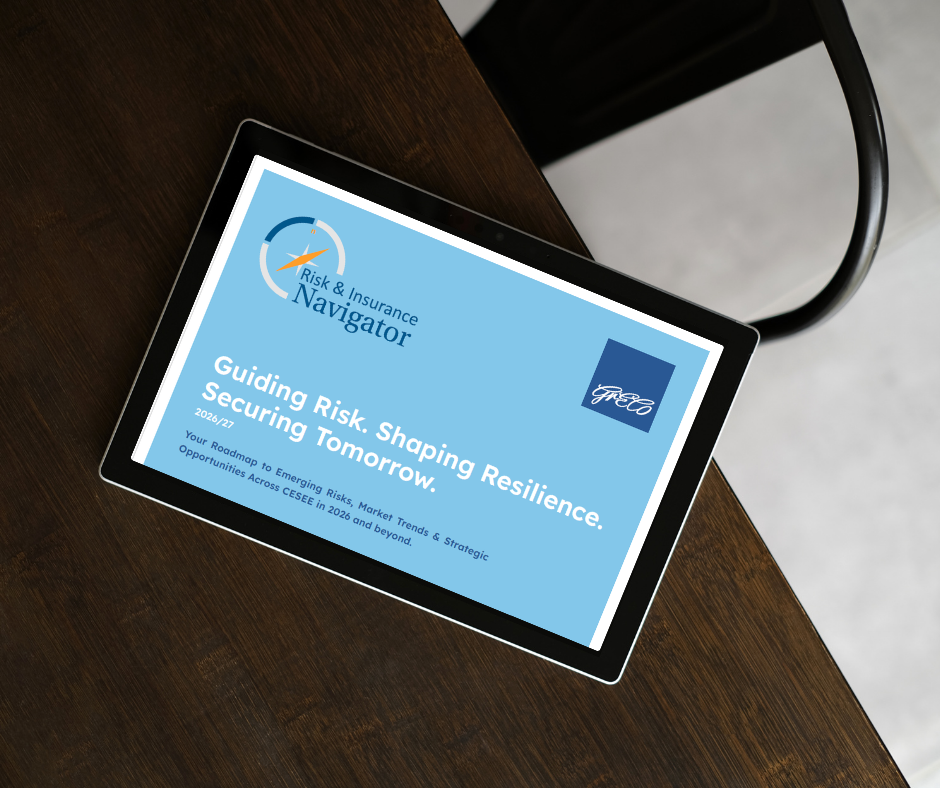

Paul Johannes Spittau, Head of Carrier Relations and Mediation at GrECo Group, speaks with Zoran Georgiev, General Manager at GrECo International AD Skopje in North Macedonia, about how geopolitical tension, trade realignment and market volatility are reshaping risk for businesses in North Macedonia. From supply chain exposure to underwriting expectations, the discussion highlights how global pressure is translating into more practical risk and insurance decisions on the ground.
The New Pressure Points
Spittau: Which geopolitical pressures will matter most for North Macedonia over the next five years?
Georgiev: Geopolitical tension, supply chain realignment and energy security are increasing cost pressure, disrupting trade flows and making continuity planning more important for businesses across North Macedonia. What used to be treated as external background noise now has a direct bearing on pricing, sourcing, investment timing and operational resilience. The challenge for many companies is no longer simply reacting to shocks but building enough flexibility into the business to absorb them.
Because the market is closely linked to European supply chains and imported energy, global disruption feeds through quickly into operations, costs and investment decisions. That makes the local risk environment particularly sensitive to changes well beyond the country’s borders.
When Geopolitics Hits the Balance Sheet
Spittau: How are these geopolitical pressures changing corporate risk on the ground?
Georgiev: Companies are facing higher cost volatility and more interruption risk, even when the trigger sits elsewhere in the value chain. That is pushing contingent business interruption, trade credit and supply chain visibility higher up the agenda. Boards are also looking more closely at how quickly a disruption can move from a procurement issue to a financial one.
This means closer attention to values, risk quality and affordability for insurers. Property remains available, but clients are having to make more deliberate choices about limits, deductibles and where specialist cover is justified. In many cases, the discussion is shifting from buying broad protection to prioritising the exposures that are most balance-sheet critical.
Spittau: How are brokers, insurers and reinsurers adapting to more politicised exposure?
Georgiev: The market is responding with more discipline. Brokers are investing more in risk presentation and structure, insurers are applying tighter scrutiny, and reinsurers are shaping terms through a sharper focus on accumulation and territorial exposure. Capacity is still there, but expectations are higher, especially where cross-border complexity or politically sensitive regions are involved. That makes preparation and clarity much more important than they were in softer market conditions.
Where Capital is Shifting
Spittau: Where do you see geopolitics reshaping investment most clearly?
Georgiev: Most clearly in industrial production, energy and renewables, and logistics. Businesses are investing where resilience, cost control and regional relevance come together. In that sense, geopolitics is not only creating pressure; it is also influencing where companies see longer-term strategic opportunity.
What Renewals Will Reward
Spittau: What will renewals reward and what should companies be doing now?
Georgiev: Underwriters will be more selective, especially where values are outdated or exposures are internationally connected. Underwriters will want better data, clearer assumptions and stronger evidence of mitigation. Businesses that approach the market late or with weak documentation are likely to face tougher questions and less flexibility. In practical terms, that means renewal strategy now needs to start earlier and be handled with more precision.
The priority is to prepare early: update values, test business interruption assumptions and review limits, deductibles and wording before going to market. In a tougher environment, the best-prepared clients will be in the strongest position. Preparation is becoming a competitive advantage in itself.
From Volatility to Action
Spittau: In this environment, where can GrECo add the most value?
Georgiev: Our role is to turn global volatility into practical programme decisions. That means helping clients review values and limits, test business interruption assumptions, strengthen underwriting information and align policy wording so protection works as intended. Just as importantly, we help clients decide which exposures matter most to the balance sheet and where insurance should be used most strategically.
In a more complex geopolitical environment, that advisory role becomes even more valuable. Clients need market access, but they also need clearer priorities, stronger preparation and a risk strategy that supports business decisions rather than reacting to them afterwards.
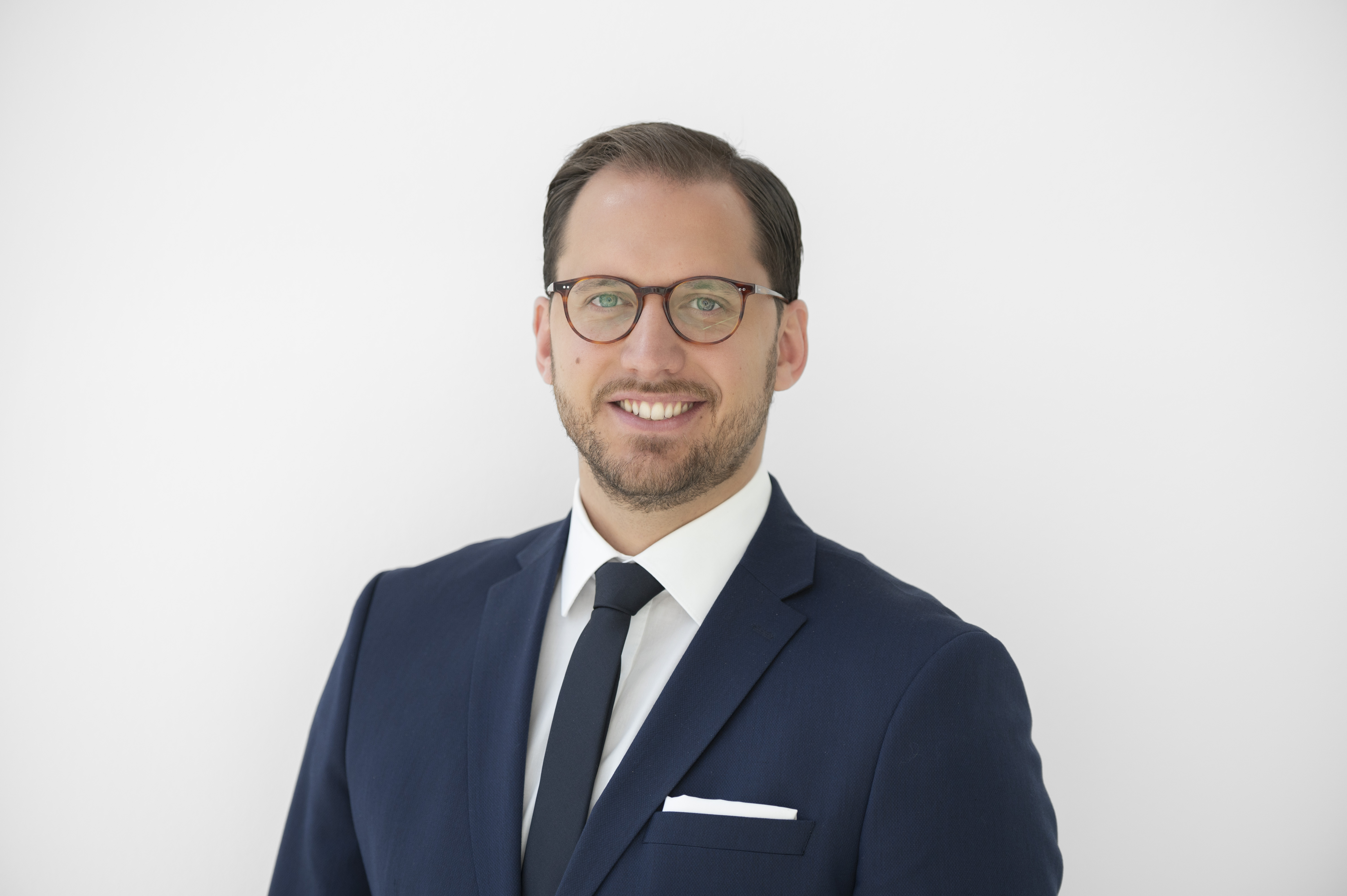
Paul Johannes Spittau
Head of Group Carrier Relations & Insurance Mediation
T +43 664 537 17 42

Zoran Georgiev
General Manager
GrECo North Macedonia
T +38977889088