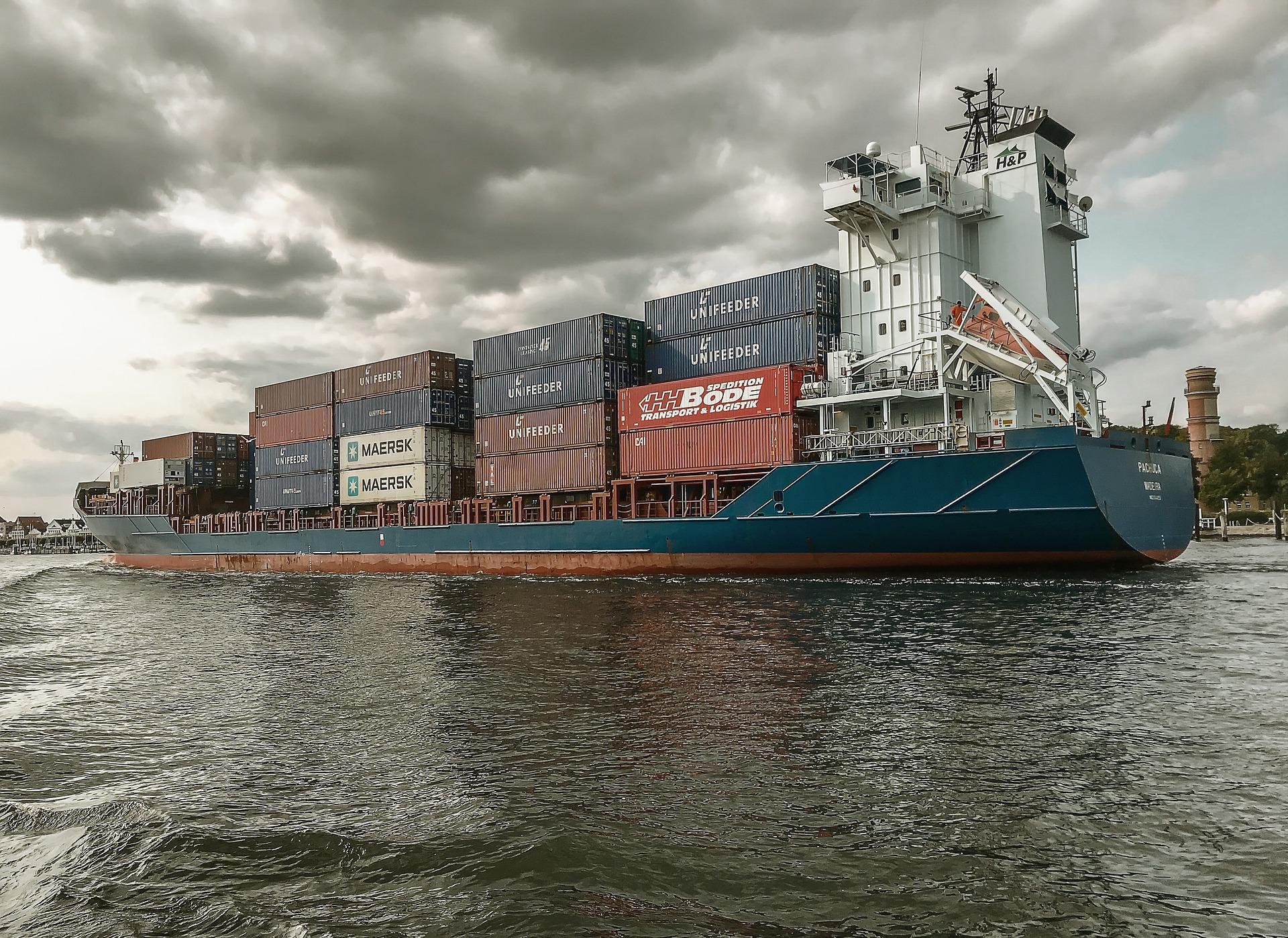
When the sabres start rattling, merchant vessels often end up caught in between. Shipowners and cargo owners – who have little to do with the reasons behind the conflict – often end up paying the price.
Read the full introduction to our series of articles on the Middle East conflict .
Recent tensions involving Iran, the United States and regional actors have once again placed the Middle East at the center of global attention. Beyond the geopolitical headlines, the situation is beginning to affect international trade routes, transport operations and the insurance environment that supports them.
For logistics companies and cargo owners, the most immediate concern is uncertainty. While the full economic impact will likely become clearer only in the coming weeks, several early developments are already shaping how goods move around the world. When the sabres start rattling, merchant vessels often end up caught in between. Shipowners and cargo owners – who have little to do with the reasons behind the conflict – often end up paying the price.
A Strategic Trade Corridor Under Pressure
One of the most sensitive areas is the Strait of Hormuz, a narrow waterway connecting the Persian Gulf to global shipping routes. Although only a small share of global container traffic passes through the strait, it remains crucial for energy shipments. Roughly a fifth of the world’s oil supply and a significant share of LNG exports transit through this corridor.
Even the possibility of disruptions can influence global logistics. Shipping companies may delay voyages, redirect vessels or temporarily suspend services in the region. When ships wait at anchorages or take longer alternative routes, cargo simply takes more time to reach its destination.
For businesses relying on predictable supply chains, that can translate into delays, higher freight costs and scheduling challenges.
Rerouting and Delays in Global Transport
When security risks increase in a region, carriers typically respond by adjusting routes or introducing additional safety procedures. In practice this may mean:
- vessels waiting in ports or safe anchorages until the situation stabilizes
- ships diverting to longer routes such as around the Cape of Good Hope
- increased congestion at major transshipment hubs
- higher fuel consumption and operational costs
These changes can add one to two weeks to some Asia–Europe routes and place additional pressure on already complex supply chains.
A particularly important issue for shippers is that cargo already destined for the Middle East may be discharged at the nearest safe port if the carrier decides it cannot safely complete the original voyage. In such cases, the cargo owner may need to arrange and pay for onward transport, storage and related handling costs. At the same time, conflict-related surcharges, war-risk premiums and deviation costs may also appear more widely across shipping networks, even on routes not directly entering the highest-risk area.
For many companies, the real consequences of the current situation may appear gradually as delayed cargo arrives in waves and port congestion builds.
What This Means for Cargo Insurance
Many logistics stakeholders naturally ask whether insurance will cover these disruptions. The reality is more nuanced.
Standard cargo insurance typically protects goods against physical loss or damage during transit. However, war-related events, political conflicts and delays are generally excluded from standard policies (see Institute Cargo Clauses (A) 2009, Clause 6 – War Exclusion and Clause 4.5 – Delay). Separate war-risk coverage exists for certain maritime exposures, but it is often subject to short notice cancellation and can change rapidly when conflicts escalate.
It is also important to understand that under standard Institute War Clauses (Cargo) 2009, Clause 1, war cover is normally linked to the waterborne or airborne leg of the transit. In practice, cover attaches once cargo is loaded on the vessel or aircraft and continues during the sea or air carriage. If cargo is discharged at an intermediate port or place for onward carriage, the cover may continue for a limited period while the goods remain there, typically up to 15 days after arrival of the carrying vessel in accordance with Clause 5.2 of the Institute War Clauses (Cargo) 2009. After that period the cover ceases unless insurers agree to extend it. As a result, cargo that remains in a port yard, warehouse or transshipment hub for longer periods, or that is stored inland outside the normal transit, would usually fall outside standard war risk cover unless broader extensions or separate insurance have been arranged.
Another practical point is what happens if the carrier ends the voyage at a safe alternative port. In that scenario, the original cargo insurance transit may also come to an end there unless insurers are notified promptly and continuation of cover is agreed (see Institute Cargo Clauses (A) 2009, Clause 9 – Termination of Contract of Carriage). This is why early communication with insurers and brokers becomes especially important when voyages are interrupted or rerouted.
As a result, the current environment may lead to:
- increased war-risk premiums in affected regions
- temporary withdrawal or restriction of certain covers
- additional surcharges passed through by shipping carriers
- questions around coverage for rerouting, detention or forwarding costs
In many cases, the main financial impact for cargo owners will come not from insured damage, but from delays, disrupted schedules, rerouting expenses and rising transport costs. These additional commercial costs would not normally be recoverable under standard cargo insurance or freight liability insurance.
Preparing for Uncertainty
While the situation remains fluid, experience from previous geopolitical disruptions suggests that resilience in supply chains matters more than ever. Companies that already diversified routes, suppliers or transport modes are often better positioned to adapt when trade corridors become unstable.
For logistics providers and cargo owners, practical steps may include:
- reviewing contractual terms related to routing, force majeure and war risk
- maintaining clear communication with carriers and logistics partners
- monitoring insurance coverage for shipments passing through higher-risk regions
- preparing contingency routing options where possible
Looking Ahead
At this stage, the long-term consequences for global trade are still unfolding. Supply chains rarely react instantly; instead, disruptions often appear gradually through congestion, delayed cargo flows and rising transport costs.

Gediminas Dauksa
Group Practice Leader Transportation & Logistics
T +370 616 08451