

Procurement law expert and thought leader Martin Schiefer helps companies to implement sustainable procurement in practice, among other things. He is driving this topic forward on various platforms, including keynote speeches and workshops for Climate Lab, a climate protection initiative of BMK, Impact Hub, and numerous companies or organisations. In an interview with Laura Hochegger, Executive Assistant for Strategy, Sustainability, Innovation at GrECo Group, Martin Schiefer explains why public clients have the strongest leverage for a sustainable future.
Public sector tenders provide the greatest opportunity for sustainable change
Hochegger: With a share of approximately 18% of GDP in Austria, public contracts provide one of the strongest levers for a sustainable future. What opportunities are there when tendering to take ESG criteria into account and which areas/sectors are particularly affected?
Schiefer: There is a quick answer to the last part of the question: all sectors are affected. Regarding the 18%: that doesn’t sound like a lot at first, but it is the equivalent of more than 62 billion euros that the state pumps into the economy every year via public contracts. An enormous sum that must be seen as an investment in Austria’s future. Investing means rethinking public procurement law and focusing on sustainability, regionality and innovation. In procurement practice, there are many opportunities to take ESG criteria into account in tenders, such as weighting the award criteria in favour of ESG compliance.
In addition to the sustainability aspect, this approach has another important benefit for the client: It positions them advantageously with banks and insurance companies. Large and costly infrastructure projects in particular need to be financed. Even if compliance with ESG criteria is not yet required by law for the public sector (apart from compliance with the principle of “environmental performance”), banks and insurance companies must be guided by them. Banks want to have as green a portfolio as possible so that they can refinance themselves well. We have the same procedure with insurance companies. In a positive sense, this is already putting pressure on the public sector – and therefore also on the supplier who must be suitably qualified to meet the new criteria.
Driving change through the law
Hochegger: What developments can be expected when the EU Supply Chain Act comes into force?
Schiefer: On December 14, 2023, the European Parliament and the European Council reached a provisional agreement on the content of the European Supply Chain Act. After the directive finally enters into force, the EU member states will have two years to implement it. The Supply Chain Act obliges large companies with 500 or more employees and an annual turnover of at least 150 million euros to respect human rights and environmental standards throughout their entire supply chain. Companies can also be held liable in civil court if they violate their duty of care. There is a threat of severe penalties of up to 5% of net turnover. A gradual expansion of the law is planned so that small and medium-sized companies will also be affected in future. Implementation will certainly not be easy for them.
Nevertheless, I see this law as a great opportunity: the supply chain issue concerns each and every one of us. We must all be concerned that, for example, a clothing manufacturer does not source its goods from suppliers that use child labour. Or that no illegal deforestation or other environmental sins occur in the supply chain. The Supply Chain Act should not be seen as another act of formalism and bureaucracy. It is in fact a seal of quality that will work in Europe and across borders.
Regionality is key to sustainably managing the procurement process
Hochegger: The argument often put forward against sustainable procurement is that it is more expensive and is therefore not economically efficient. In construction, for example, one must consider more than just the construction costs. The entire building cycle is under the spotlight from planning the construction through to its operation and dismantling post completion. In public procurement, this means not only thinking economically, expediently, and economically within the legislative period, but also thinking about the longer term. And that’s where the sustainable approach usually comes out on top. However, higher demands on contractors also mean a greater effort required to monitor them and their processes. How can clients manage many suppliers and their data?
Schiefer: This may come as a surprise, but in my opinion, the effort involved for procurement is manageable: you define which benchmarks you need and which specific certificates you want from contractors. The latter in particular – the certificates – can also be a substitute for verification. A certificate can be checked just as quickly as a criminal record extract. I therefore see the bidder having to make the most effort because they must invest time and money in attaining these certificates.
Hochegger: To what extent is the idea of sustainable procurement already anchored in the minds of clients? Can you tell us about examples of best practice where ESG criteria has already been applied in tenders?
Schiefer: There are many examples of best practice, particularly at a local authority level. Municipalities are keen to keep value creation in the region through regional procurement. Focusing on regionality is one of the most important pillars of sustainable procurement. If there is now an even stronger focus on compliance with ESG criteria in this area, it will help sustainable procurement achieve a breakthrough.
Challenging the ‘cheapest is best’ mentality
Hochegger: Despite a sense of upheaval there is a feeling that sustainable action is not being mobilized at the necessary speed and scale. What do you think is needed for us to achieve a sustainable transformation?
Schiefer: I keep saying that public procurement must be seen as a reward system. Companies that operate and act in an exemplary manner in their sector must be given preference in tenders. How can this be achieved? By adapting the criteria accordingly and finally moving away from the principle of the cheapest bidder, which is still being pushed far too often. After all, sustainable procurement means rewarding the best in ecological, social, and economic terms – for the best long-term result.
About Martin Schiefer
Martin Schiefer is Austria’s top expert in public procurement law and a partner in the law firm Schiefer Rechtsanwälte. He studied law at the University of Graz and started his career as a research assistant at the European Parliament in Brussels. Martin Schiefer has been a leading expert in public tenders for over 20 years and is one of the thought leaders in the field of public procurement law.
About Schiefer Rechtsanwälte
Schiefer Rechtsanwälte is the top public procurement law firm in Austria with headquarters in Vienna and further offices in Salzburg, Graz, Klagenfurt, and St. Pölten. The 50-strong team of experts led by partner Martin Schiefer has set itself the task of rethinking public procurement law: strategically, innovatively, and regionally. The firm’s customers include prominent clients as well as decision-makers from politics, administration, and the private sector. Schiefer Rechtsanwälte advises and assists on tenders with high reputational risk in the areas of digitalisation & innovation, information & communication technology, health & social affairs, construction & infrastructure projects, mobility, energy supply, and compliance. In April 2023, Schiefer Rechtsanwälte was once again voted the top law firm in the field of public procurement in Austria in the renowned “Legal 500” ranking.
More information at: https://www.schiefer.at
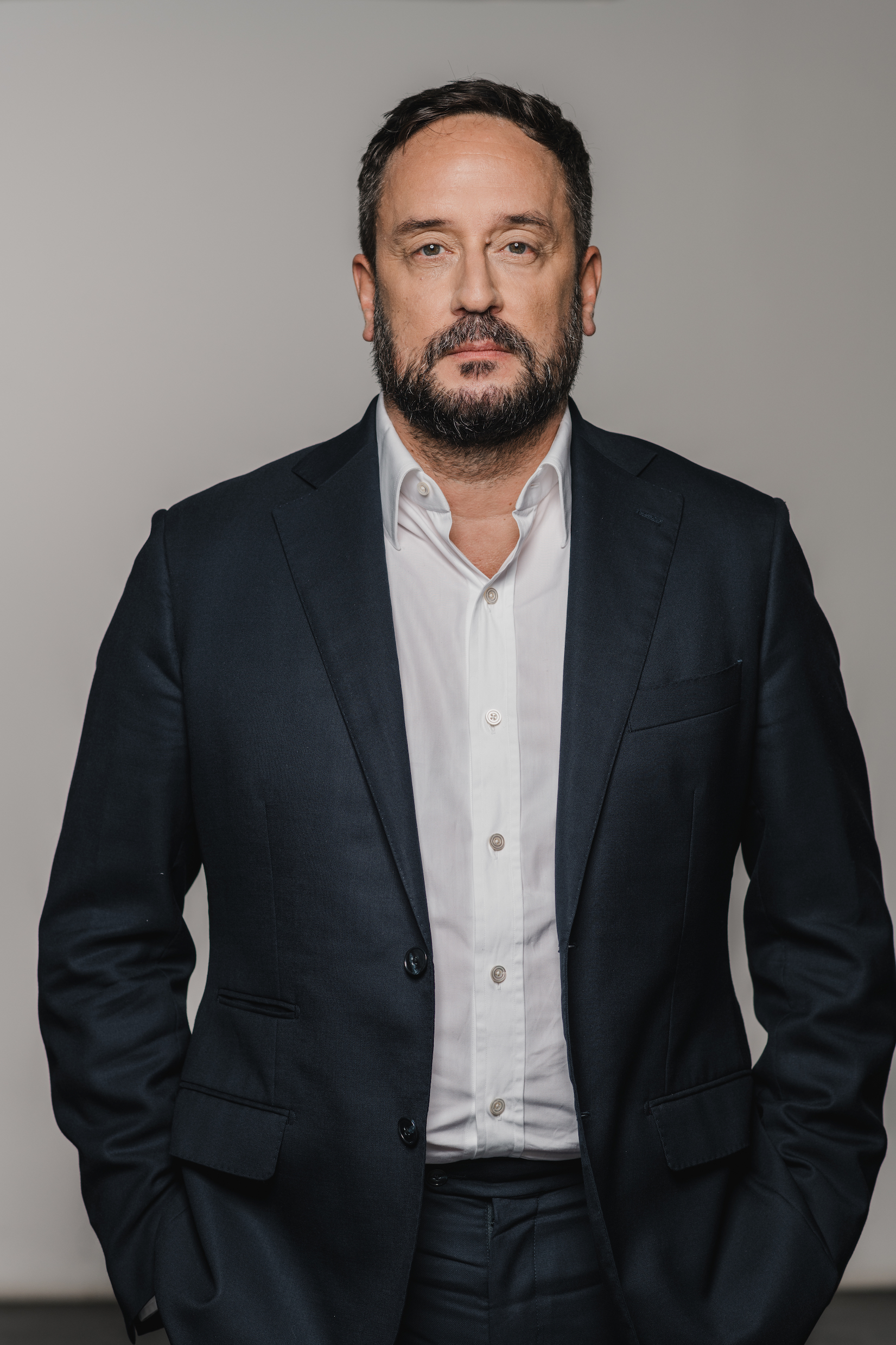
Martin Schiefer
Procurement Law Expert

Laura Hochegger
Deputy Head of Sustainability & Innovation
GrECo Group
T +43 664 822 18 66
Related articles
Fringe Benefits Are Reshaping the Employment Offer
Unlike core benefits such as medical care or pensions, fringe benefits are often the most visible to employees.
The Benefit Everyone Wants, But Nobody Structures the Same Way
For employers wanting to ensure their Health & Benefits strategy delivers real value over time, our Study has made it clear that those who focus on an informed approach that combines market understanding, structural comparison and local relevance will succeed.
We Say Yes to Net Zero
GrECo Austria’s Roland Litzinger sat down with the CEO of delfort. Martin Zahlbruckner, to discuss how a global specialty-paper group is driving emissions reductions.