HORIZON Risk Thought >> Fast Forward

Our HORIZON initiative has always stood as a beacon for those who dare to strive forward in business. HORIZON is a platform where boundaries are pushed and the future is envisioned with clarity and determination.

This year, we embrace a renewed spirit of courage – a quality that is not simply admirable in business, but essential. This campaign brings together thinkers and innovators who are challenging the status quo across key areas – risk, sustainability, social change, technology, and governance. Their reflections invite you to consider what courage means personally: how it shapes your ambitions, fuels your imagination, and helps transform the ordinary into the extraordinary.

In the risk management context of these systemic transformations, we classified these “risk changers” that directly affect a company and use the terms:

  • “Environment in danger” for ecological,
  • “Beyond globalisation” for geopolitical,
  • “Digital transition” for technological and
  • “Social disruption” for social transformation.

We have created Horizon, firstly as a print publication and now as a platform for sharing the latest insights about ongoing transformations. Our risk specialists will continue to provide their expertise and knowledge to shine a light on the challenges of the future.
We have created HORIZON to share the latest insights about ongoing transformations.
Our risk specialists provide their expertise and knowledge to shine a light on the challenges of the future.

Discover all their latest insights, thoughts and viewpoints, or choose from our systemic risk categories to find out more.

On average, premium rates are expected to increase between 5% to 10%, even for policies with a no-claim history.
At the same time and with increasing urbanisation, infrastructure and smart city developments, a stronger focus will be put on making infrastructure and transport more efficient and sustainable.
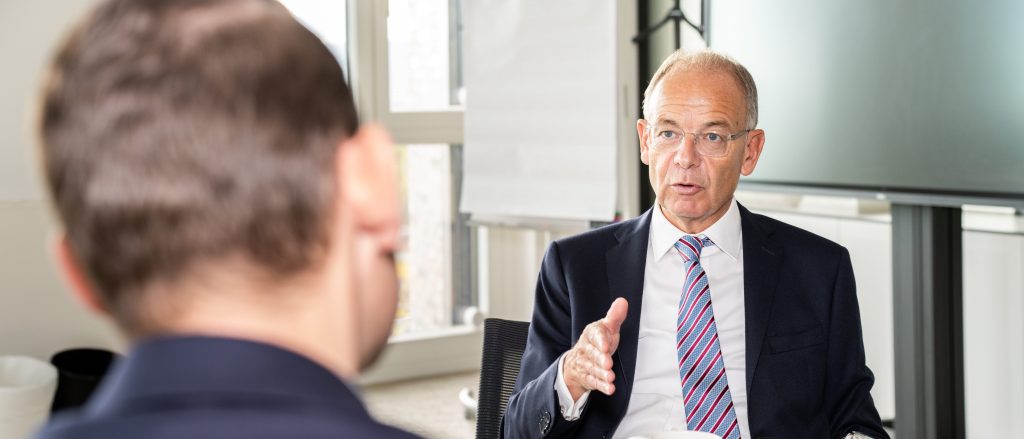
An interview with Martin Cerny and Jörg Schönenborn, Telecommunication Executives, and Andreas Schmitt, Insurance Professional.
Traditional B2B and B2C companies are increasingly working together and are increasingly building a new B2B2C business (Business to Business to Customer). “Affinity” is the buzzword of the hour.
In the last two years, supply chains were exposed to unforeseen risks. The impact of the pandemic, Evergiven’s blockade of the Suez Canal, or the recent disruptions as a result of Russia’s attack on Ukraine, to name a few. What else must we prepare for?
The continuous digital transforma­ tion of workplaces and the accel­ eration of mobility bring about hybrid work models and new values that shape work environments.
For industries to remain properly insured, we must be able to quantify the severity of a drought.
With the ESG spotlight upon us all, company’s need to meticulously craft their future communications strategies, making sure they truly understand the sustainable profile of their products, services, or activities.
“The important thing here is that managers not only need continuity, but also openness to innovation and change. At the same time, they must stand on a foundation of values and principles that is stable.” – interview with Heimo Scheuch, CEO at wienerberger.
From one of the leading hotels in Innsbruck we learn how the world’s focus on ESG is affecting the hospitality industry and what businesses can do about the increased pressure to change.
Michael Groiss, CFO at F/LIST, talked with Norbert Bucher, Account Manager of F/LIST at GrECo Austria, about how they balance their vision of handcrafting the future of interiors with the growing demand for sustainable production.
HR alone cannot promote the openness to this learning journey; it needs ambassadors to help anchor the green mindset in the corporate culture.
With many countries across the world looking at coal and oil substitutes, renewable energy sources are becoming an increasing part of insurers’ and brokers’ portfolios.
In the face of growing environmental challenges and climate change, insurance companies like UNIQA Group are taking significant steps to embrace sustainability.
“At Erste Group, we have an ESG Office, a dedicated unit focused on sustainability. We are situated within the strategy department, and our main responsibility is to implement the entire regulatory framework of the EU Green Deal within the bank. ”
Procredit Bank, compared to its competitors in Georgia, is leading the charge when it comes to reducing the Georgia’s environmental footprint.
If carefully designed and managed, a captive is a tool in the risk manager’s toolbox for large companies that can help build resilience to future transformation risks as a result of climate change, amongst other things.
Emerging risks and new threats that are hard to grasp and estimate are a much-discussed topic. Add to that today’s increasing number of Black Swan events. These are unprecedented and unexpected events which nobody could have imagined, making them almost impossible to predict.
According to the International Monetary Fund food and energy are the main drivers of today’s inflation. That is obvious to each of us as we pay more for both food and energy these days.
Max Pernsteiner, Vice President Global Purchasing & Supply Chain at ENGEL Austria GmbH, spoke with Johannes Vogl, General Manager at GrECo Risk Engineering GmbH, about supply chains and their risks.
In the last two years, supply chains were exposed to unforeseen risks. The impact of the pandemic, Evergiven’s blockade of the Suez Canal, or the recent disruptions as a result of Russia’s attack on Ukraine, to name a few. What else must we prepare for?
Krystle Lippert, Strategic Sales Manager at GrECo in Austria, has spoken with Dr. Gerald Dums, Head of Purchase of Technical Equipment & Logistics at Donau Chemie AG about supply chain problems and procurement and logistics resilience.
Our multipolar world and its myriad of geopolitical forces presents us and our clients with a vast, multidimensional array of risks. As bleak as this may sound, geopolitics and its impact on energy also offers a number of opportunities.
With the aftershocks of the pandemic, the ripple effects of the Ukraine war, and more frequent and severe natural catastrophes that affect our climate and today’s population, we are at a crossroads, and the construction sector is no exception.
For the past years and certainly since 24 February 2022, we have had many opportunities to witness the power of geopolitics, its decisive impact on domestic and international politics and the supply of energy throughout the world.
All over the world, uncertainty prevails. Action must be taken in the face of these turbulences while exploiting every possibility provided by available instruments.
Finding the right speed and assessing the market correctly is the biggest challenge. Transformation must take place, but at what speed?
DECCI is a Czech energy group founded in 2007, focused on modern and renewable energy sources. DECCI pioneered renewables with one of the first solar power plants in the Czech Republic.
Nearly one in four companies in Romania (23%) has already experienced a cyberattack, yet many still treat the risk as moderate until disruption becomes real.
Daniel’s message to companies is simple: give people with disabilities the chance to do an apprenticeship, show appreciation, and make work assistance available. 
The courageous move is not the grand statement. It is the willingness to be inconvenienced, today, for fairness, and to take responsibility for impact, not just intent. 
Fragmentation is usually discussed as a weakness. However, I believe that for the Georgian insurance market, it can also be an advantage.  
Through directives and requirements, we try to improve cybersecurity in general. But in cybersecurity, the courage to transform does not lie only in adopting new technologies.
What the world faces currently is not a single crisis. Some will define it as a “reset” – not a conspiratorial event, but a fundamental restructuring of economic rules, valuations, and mechanisms.
Lukáš Vodička, Group Practice Leader Trade Credit Specialties at GrECo Holding speaks with Gejza Trgiňa, Senior Underwriter at Atradius about what Czech exporters need to watch today and what it takes to build resilience when geopolitical unrest becomes a business issue, not background noise. 
We are excited to announce the release of the 5th Horizon Risk Thought » Fast Forward publication!
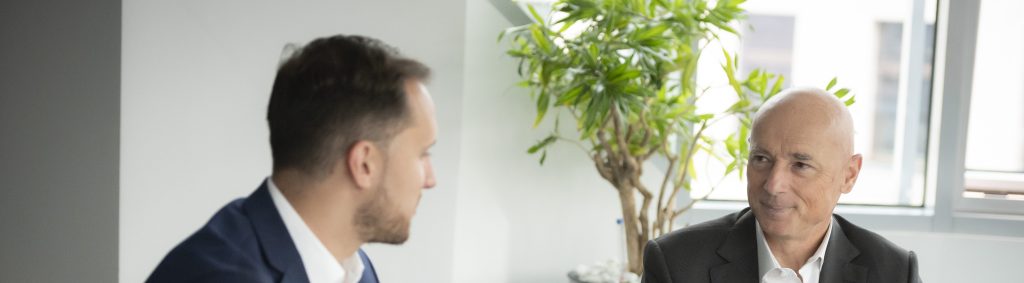
In this exclusive interview, we bring together two leading voices on digital transformation in Central and Eastern Europe: Ursula Deschka, CEO of ERGO Baltics and Georg Winter, CEO of GrECo Group.
Peter Papp, sat down with Peter Bešina, founder of Paralla and Cryptodiggers, to discuss the evolution of cryptocurrencies.
Fear appeal is a common tactic to highlight the dangers of unsafe cyber behaviour in many cybersecurity awareness campaigns.
One practical application of AI is in the digitalization of HR processes. Tasks such as document management and onboarding can be streamlined, reducing errors and saving time.
Excessive reliance on devices is leading to “digital dementia,” a rise in memory lapses, diminished focus, and cognitive fatigue – even among youth and the workforce.
Digital transformation is reshaping higher education, but what does that really look like for universities on the ground?
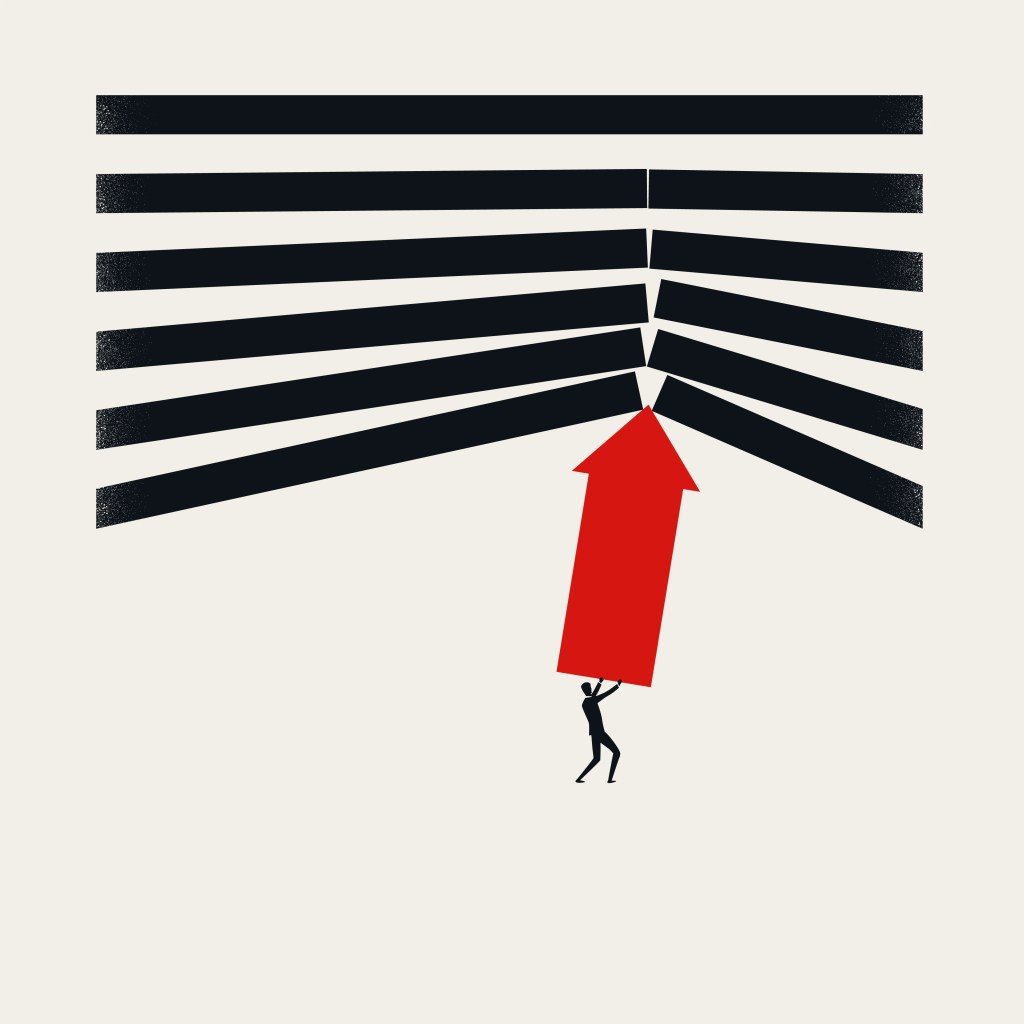
The new rules mean senior executives face increased scrutiny, greater personal liability, and must pay close attention to the role of D&O insurance in this new era of digital risk.
IT employees are under constant pressure. The threat landscape is dynamic, complex and often unpredictable

Dive deep into our HORIZON print edition which focuses on various transformations and looks at all the challenges they pose from different angles.

Georg Winter

CEO GrECo Group

T +43 664 962 39 06