HORIZON Risk Thought >> Fast Forward

The complexity of today´s risk environment is changing at an accelerating pace, making risk management even more challenging. We address these challenges by highlighting underlying systemic transformations and their implications for future risk and insurance management in various sectors.

In the risk management context of these systemic transformations, we classified these “risk changers” that directly affect a company and use the terms:

  • “Environment in danger” for ecological,
  • “Beyond globalisation” for geopolitical,
  • “Digital transition” for technological and
  • “Social disruption” for social transformation

In the risk management context of these systemic transformations, we classified these “risk changers” that directly affect a company and use the terms:

  • “Environment in danger” for ecological,
  • “Beyond globalisation” for geopolitical,
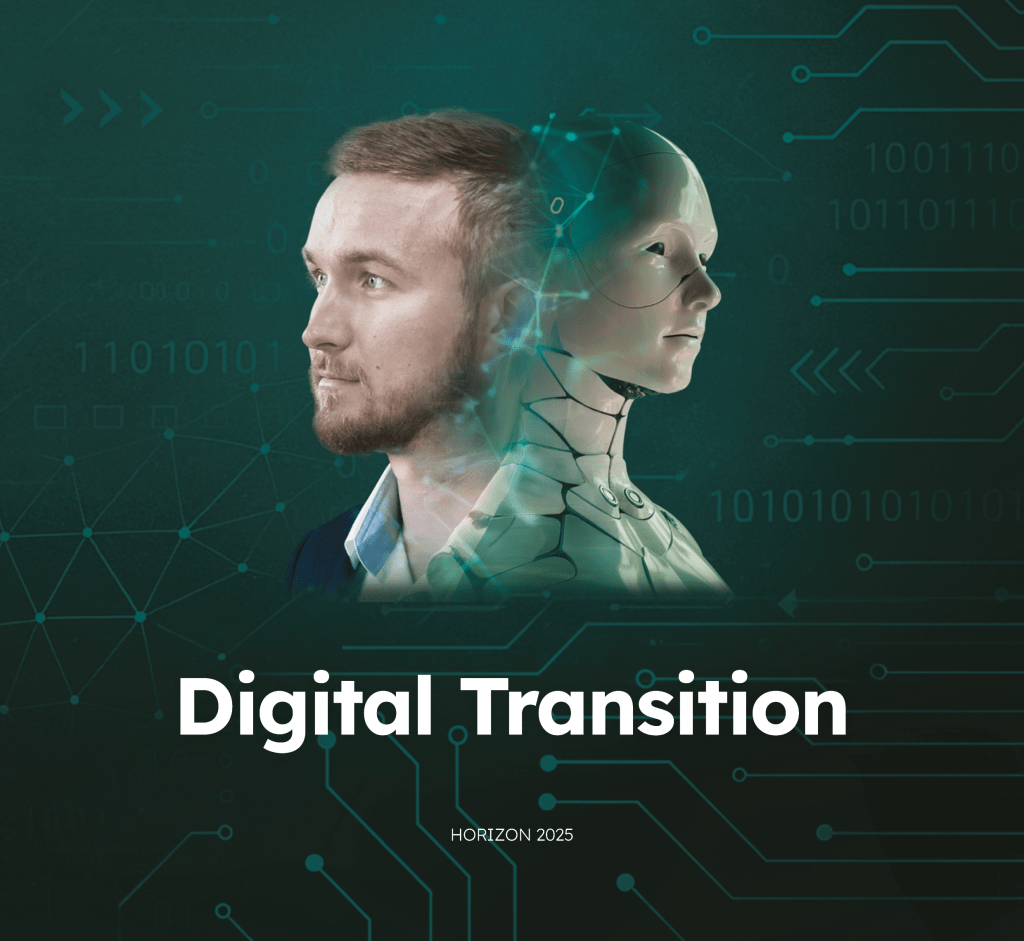
  • “Digital transition” for technological and
  • “Social disruption” for social transformation.

We have created Horizon, firstly as a print publication and now as a platform for sharing the latest insights about ongoing transformations. Our risk specialists will continue to provide their expertise and knowledge to shine a light on the challenges of the future.
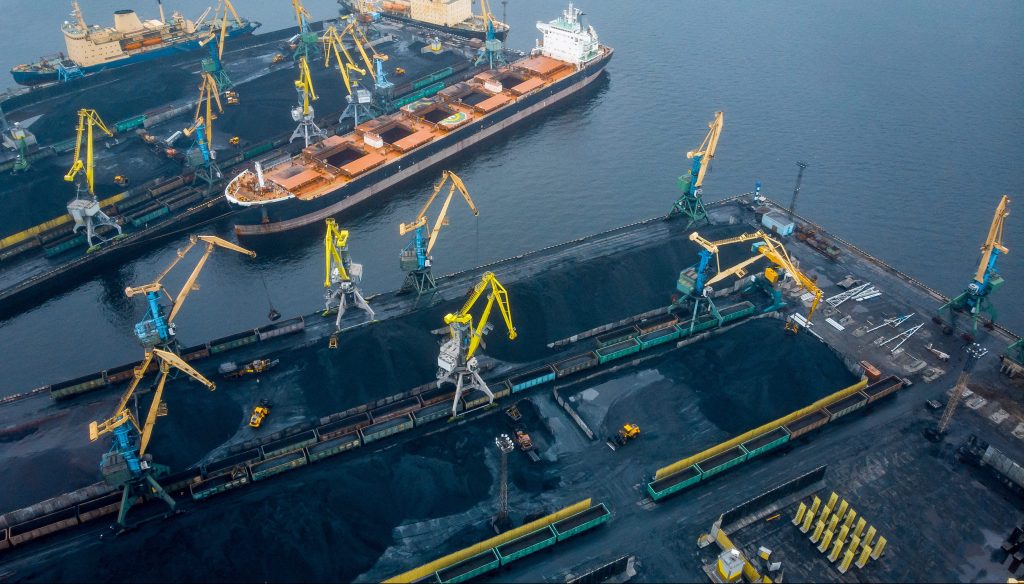
We have created HORIZON to share the latest insights about ongoing transformations.
Our risk specialists provide their expertise and knowledge to shine a light on the challenges of the future.

Discover all their latest insights, thoughts and viewpoints, or choose from our systemic risk categories to find out more.

When geopolitical shockwaves hit, PRI doesn’t flinch. And that stability is often exactly what lenders, investors, and boards need to see.
The priority right now for Financial Institutions and Property related industries must be to make sure their KYC and other anti-money laundering controls are as tight as possible
This article summarises the key insurance‑relevant developments and outlines what aviation customers must consider immediately.
Robust crisis protocols are not just a protective measure, they are essential for operational continuity in today’s unpredictable landscape.
In times of geopolitical uncertainty, attempting to predict events is less important than preparing for rapid change.
We are excited to announce the release of the 5th Horizon Risk Thought » Fast Forward publication!
In this exclusive interview, we bring together two leading voices on digital transformation in Central and Eastern Europe: Ursula Deschka, CEO of ERGO Baltics and Georg Winter, CEO of GrECo Group.
Peter Papp, sat down with Peter Bešina, founder of Paralla and Cryptodiggers, to discuss the evolution of cryptocurrencies.
Fear appeal is a common tactic to highlight the dangers of unsafe cyber behaviour in many cybersecurity awareness campaigns.
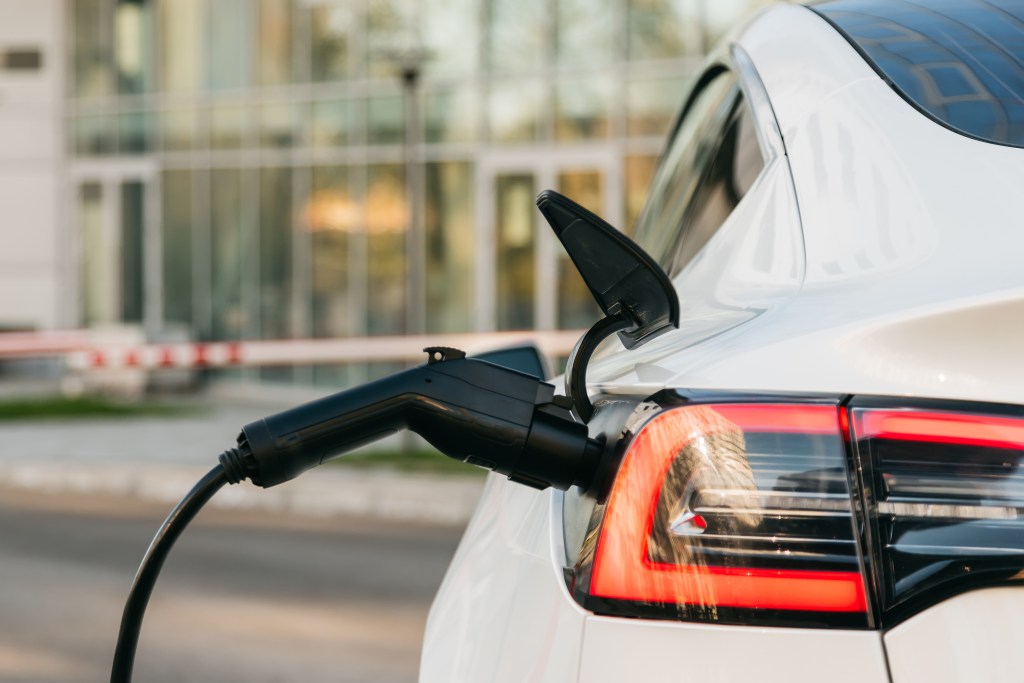

Steffen Robbi tells Laura Hochegger about how digitalization can contribute to a sustainable transformation and risk minimization in the construction and real estate industry, especially in the circular economy and in the refurbishment of existing buildings.
In the light of impending annual ESG reporting, the challenges in the dimensions of sustainability cannot be fully met by the existing certificates. The requirements of the EU taxonomy and the growing demand on the real estate market for climate-friendly buildings require uniform assessment criteria and thus indirectly a harmonization of assessment systems.
Concrete is one of the most influential building materials of our time. It is durable, versatile and has outstanding structural and physical properties. Nevertheless, this building material has one major disadvantage: it is responsible for eight percent of global CO2 emissions. 
Rosenbauer Group is a thought leader and technology and innovation front-runner in the firefighting industry. Sebastian Wolf, CEO at Rosenbauer International, discusses with Argun Zia-Dam, Account Manager at GrECo, how Rosenbauer Group is blazing a trail in this industry and why cities in the future will rely on electrically powered firefighting vehicles.
The risk of water scarcity is one of the key considerations in the risk management and ESG policies of food and agriculture companies.  But where there’s acute risks, there are huge opportunities for change: Water scarcity concerns are driving innovation in the food industry and with members of the public.
In an interview with Laura Hochegger, Martin Schiefer explains why public clients have the strongest leverage for a sustainable future.
According to Michael Porter’s and Mark Kramer’s shared value concept, the solution lies precisely in resolving this conflict of objectives: The aim is to create economic value in such a way that it simultaneously benefits society.
The challenges facing Austrian agriculture are diverse and complex. Prok. Dr Mario Winkler, Head of Communications at Österreichische Hagelversicherung, talks with Laura Hochegger, Executive Assistant Strategy, Sustainability, Innovation at GrECo Group
An effective risk management process is a basic requirement for tackling transformation risks.
Mariana Kühnel, Deputy General Secretary of the Austrian Chamber of Commerce spoke about staying calm in these unpredictable times and how Europe can gain comparative advantages.
Economic sanctions used for foreign policy purposes are economic penalties – such as prohibiting trade, stopping financial transactions or barring economic and military assistance – used to influence a nation and provide incentives for obedience with the rule of law or other governing rules and regulations.
This article will provoke thoughts and create awareness about the new political world order, the changing influence of Western and Eastern powers as well as the emergence and formation of a new centre of gravity in the global economy. It takes a close look at an emerging geopolitical dominance and focuses on the new crossroads between the West and the East – the New Silk Roads.
Plans are underway to construct a new power plant fuelled by waste material on the premises of Rondo Ganahl AG as part of the Initiative “Energy Autonomy Frastanz”. The new plant in Austria’s most western province will cover the future thermal energy demand of the Rondo paper mill and corrugated board plant and will also supply other businesses and private households.
Emerging risks and new threats that are hard to grasp and estimate are a much-discussed topic. Add to that today’s increasing number of Black Swan events. These are unprecedented and unexpected events which nobody could have imagined, making them almost impossible to predict.
According to the International Monetary Fund food and energy are the main drivers of today’s inflation. That is obvious to each of us as we pay more for both food and energy these days.
Max Pernsteiner, Vice President Global Purchasing & Supply Chain at ENGEL Austria GmbH, spoke with Johannes Vogl, General Manager at GrECo Risk Engineering GmbH, about supply chains and their risks.
In the last two years, supply chains were exposed to unforeseen risks. The impact of the pandemic, Evergiven’s blockade of the Suez Canal, or the recent disruptions as a result of Russia’s attack on Ukraine, to name a few. What else must we prepare for?
Gabriele Andratschke, Head of HR at GrECo Group, recently shared her expertise on multigeneration workforces with Lisbeth Lorenz
Strategic acquisition strengthens GrECo’s market position and enhances service offerings in Southeastern Europe.
Ewelina Jaworska-Bein delves into this transformative trend and highlights the myriad of benefits these healthcare apps are bring to organisations and their employees.
This article explores how a health and organisational psychologist played a pivotal role in easing the merger transition at GrECo Hungary.
Ewelina Jaworska-Bien, Group Practice Leader for Health & Benefit at GrECo Specialty, shares her insights on the hot topic of the gender pay gap.
In recent years, Europe has been grappling with a serious labour shortage which is impacting nearly all economic sectors due to an ageing population, low birth rates, and migration.
Generation Alpha is the first generation to be born entirely in the digital age. This digital fluency presents both opportunities and challenges for organisations.
An air gap is the physical separation between critical systems and public networks theoretically minimising the risk of cyberattacks. 
The recruitment landscape in real estate is becoming increasingly competitive, and companies need to differentiate themselves to attract top talent.
In a world rapidly advancing toward quantum computing, have we underestimated the risks and will our reluctance to act now leave our digital world exposed and vulnerable?
How technology will contribute to increasing resilience and why personal responsibility is an important part of risk management.
In an era where artificial intelligence is woven into every aspect of business, the hidden dangers of unsanctioned AI tools are increasingly coming to light.
During a recent panel discussion organised by GrECo Czech Republic, experts in insurance and cyber security examined the most critical cybersecurity challenges and strategies.
The insurance industry is undergoing a profound transformation, driven by the rapid adoption of AI and predictive analytics.
Within healthcare, many doctors and nurses see AI as a promising tool to ease their heavy administrative workload and are eagerly anticipating further advancements.
In an era where artificial intelligence is woven into every aspect of business, the hidden dangers of unsanctioned AI tools are increasingly coming to light.
José Luis Abad Garcia, Competence Center Manager Motor, at GrECo Austria shares GrECo’s groundbreaking journey in integrating AI to transform motor insurance claims processing.
In an unpredictable global landscape, the resilience of food supply chains is no longer a luxury but a necessity.

Dive deep into our HORIZON print edition which focuses on various transformations and looks at all the challenges they pose from different angles.

Georg Winter

CEO GrECo Group

T +43 664 962 39 06