HORIZON Risk Thought >> Fast Forward

Die Komplexität der heutigen Risikolandschaft verändert sich immer schneller, was das Risikomanagement noch schwieriger macht. Wir gehen diese Herausforderungen an, indem wir grundlegende systemische Transformationen und ihre Auswirkungen auf das zukünftige Risiko- und Versicherungsmanagement in verschiedenen Sektoren beleuchten.

Im Kontext des Risikomanagements dieser systemischen Transformationen haben wir „Risk Changer“ klassifiziert, die sich direkt auf Unternehmen auswirken. Wir verwenden dafür folgende Begriffe:

  • „Environment in Danger“ für ökologische,
  • „Beyond Globalisation“ für geopolitische,
  • „Digital Transition“ für technologische und
  • „Social Disruption“ für soziale Transformationen.
Unter dem Titel „Social Disruption“ konzentriert sich HORIZON dieses Mal auf den sozialen Wandel und beleuchtet alle damit verbundenen Herausforderungen für die Geschäftswelt. In dieser Ausgabe erkunden wir das Zeitalter des Menschen und seinen Einfluss auf unsere zukünftigen Arbeitsumgebungen. Wir untersuchen, wie unser Verhalten die Risikolandschaft prägt.

In the risk management context of these systemic transformations, we classified these “risk changers” that directly affect a company and use the terms:

  • “Environment in danger” for ecological,
  • “Beyond globalisation” for geopolitical,
  • “Digital transition” for technological and
  • “Social disruption” for social transformation.

We have created Horizon, firstly as a print publication and now as a platform for sharing the latest insights about ongoing transformations. Our risk specialists will continue to provide their expertise and knowledge to shine a light on the challenges of the future.

Wir haben HORIZON ins Leben gerufen, um die neuesten Erkenntnisse über aktuelle Veränderungen zu teilen.
Unsere Risikospezialist:innen stellen ihr Fachwissen und ihre Kenntnisse zur Verfügung, um die Herausforderungen der Zukunft zu beleuchten.

Entdecken Sie ihre neuesten Erkenntnisse, Gedanken und Standpunkte oder wählen Sie aus unseren systemischen Risikokategorien, um mehr zu erfahren. Die Inhalte basieren auf dem gebündelten Wissen unseres internationalen GrECo Netzwerks. Aus diesem Grund sind einzelne Beiträge in englischer Sprache verfasst; ergänzend stehen weitere Artikel in deutscher Sprache zur Verfügung.

MGAs operate within authority granted by insurers, with responsibility for underwriting, policy issuance, portfolio management and, depending on the model, claims support or coordination.
Closing the volatility gap means moving beyond reactive risk transfer.
For both infrastructure and real estate to survive, the corporate risk manual needs to be rewritten.
AI can generate information for us, but we still need the intelligence and judgement to understand and interpret it for a particular client.  
Real cyber resilience begins when leaders stop chasing certainty and ask what they can still influence when control ends. 
Cyber property damage refers to physical damage caused by a cyber incident, including damage to machinery, infrastructure or stock. 
Finding the right speed and assessing the market correctly is the biggest challenge. Transformation must take place, but at what speed?
An effective risk management process is a basic requirement for tackling transformation risks.
Companies are exposed to various kinds of risks. At the same time, systemic transformation exacerbates existing risks and causes new risks to emerge.
Insurers are faced with a challenge during the energy transition. The past loss experience can no longer be used for predictive scenarios. New risks will emerge.
Comprehensive risk analyses combined with a presentation of the risks will be necessary for a successful renewal.
Amongst those most affected by decarbonisation efforts is the financial services industry, such as equity investors, lenders and insurers.
New modelling and technical tools are being utilised more than ever as insurers want to understand the complex technicalities of cargo risks.
 The insurance sector has adopted the ESG targets with every company developing an ESG strategy. The sector is particularly affected by climate change,
The prevention of damage from severe weather events will play an important role in future risk management.
The international shipping industry produced just over one billion tons of greenhouse gases (GHG) in 2018, almost 10% more than in 2012.
Europe needs to cover gas demand with alternative sources. The EU energy security is compromised if there is no diversification to cover Russian gas imports.
Since the outbreak of the Corona pandemic two years ago, disrupted supply chains have threatened the existence of many companies.
The value of intangible relative to tangible cor­porate assets has steadily increased. Emerging risks threaten the value of both tangible and intangible assets.
With new insurers having entered the market in the past few months, we should see a dampening of the price increases we experienced in the previous two years.
On average, premium rates are expected to increase between 5% to 10%, even for policies with a no-claim history.
An interview with Martin Cerny and Jörg Schönenborn, Telecommunication Executives, and Andreas Schmitt, Insurance Professional.
In the last two years, supply chains were exposed to unforeseen risks. The impact of the pandemic, Evergiven’s blockade of the Suez Canal, or the recent disruptions as a result of Russia’s attack on Ukraine, to name a few. What else must we prepare for?
MGAs operate within authority granted by insurers, with responsibility for underwriting, policy issuance, portfolio management and, depending on the model, claims support or coordination.
Closing the volatility gap means moving beyond reactive risk transfer.
For both infrastructure and real estate to survive, the corporate risk manual needs to be rewritten.
AI can generate information for us, but we still need the intelligence and judgement to understand and interpret it for a particular client.  
Real cyber resilience begins when leaders stop chasing certainty and ask what they can still influence when control ends. 
Cyber property damage refers to physical damage caused by a cyber incident, including damage to machinery, infrastructure or stock. 
Finding the right speed and assessing the market correctly is the biggest challenge. Transformation must take place, but at what speed?
José Luis Abad Garcia, Competence Center Manager Motor, at GrECo Austria shares GrECo’s groundbreaking journey in integrating AI to transform motor insurance claims processing.
In an unpredictable global landscape, the resilience of food supply chains is no longer a luxury but a necessity.
A Conversation with Fintech Visionary Magda Milas
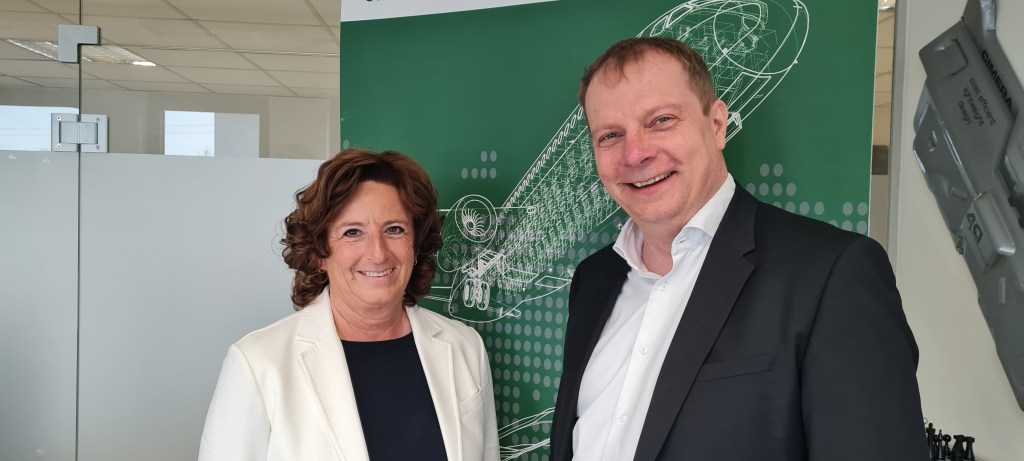
Jurgen Spari, and Christa Zengerer, Managing Director of ACstyria Mobilitätscluster, the future challenges and opportunities in the automotive, aerospace, and rail systems sectors.
Laura Hochegger sits down with Janice Goodenough from HYDROGRID to discuss the untapped potential of hydropower.
How Robotics, Automation, and Artificial Intelligence Are Changing the Labour Market
We are in a time where advancements are once again having a profound impact on civilization but with one crucial difference.
Under the title “Environment in danger”, our upcoming HORIZON series concentrates on the ecological transformation and therefore looks at all its challenges from various angles.
Other crises, the climate crisis being a prominent example, are more likely to emerge as developments that gradually manifest themselves.

Tauchen Sie tief in unsere HORIZON-Printausgabe ein, die sich auf verschiedene Transformationen konzentriert und alle damit verbundenen Herausforderungen aus unterschiedlichen Blickwinkeln betrachtet.