HORIZON Risk Thought >> Fast Forward

Our HORIZON initiative has always stood as a beacon for those who dare to strive forward in business. HORIZON is a platform where boundaries are pushed and the future is envisioned with clarity and determination.

This year, we embrace a renewed spirit of courage – a quality that is not simply admirable in business, but essential. This campaign brings together thinkers and innovators who are challenging the status quo across key areas – risk, sustainability, social change, technology, and governance. Their reflections invite you to consider what courage means personally: how it shapes your ambitions, fuels your imagination, and helps transform the ordinary into the extraordinary.

In the risk management context of these systemic transformations, we classified these “risk changers” that directly affect a company and use the terms:

  • “Environment in danger” for ecological,
  • “Beyond globalisation” for geopolitical,
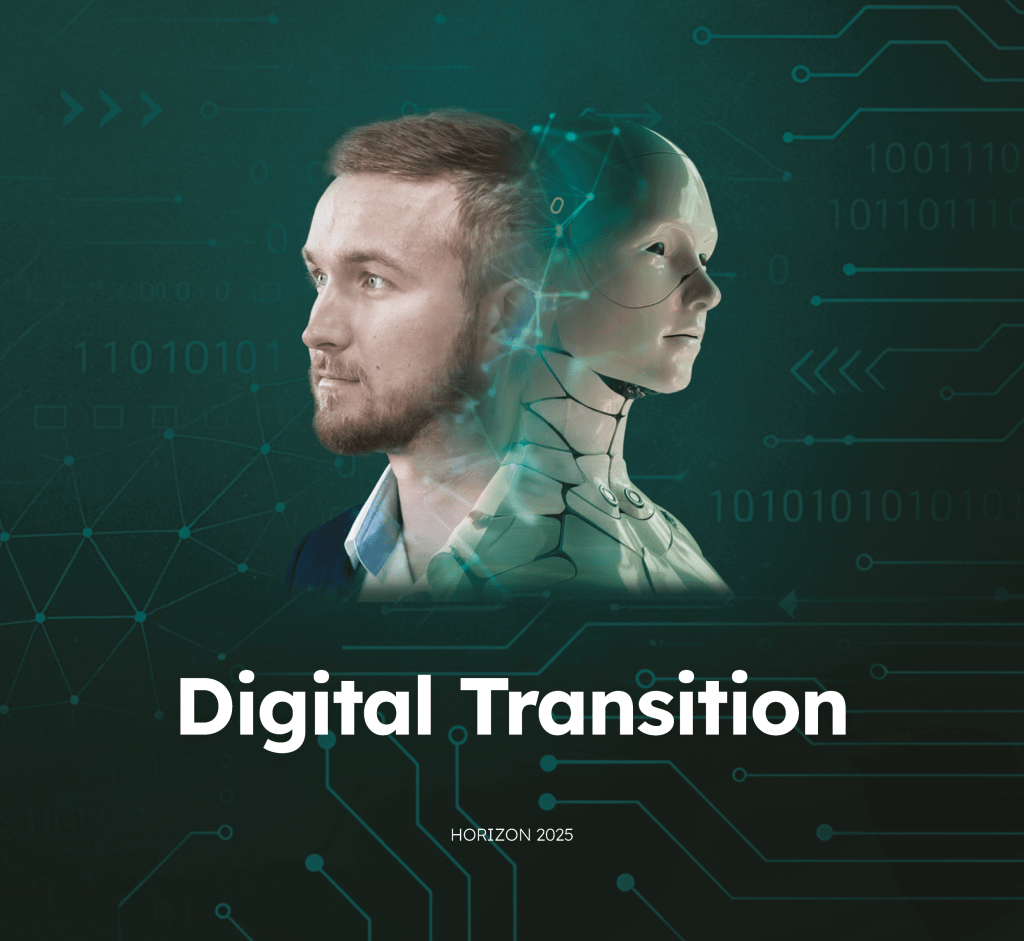
  • “Digital transition” for technological and
  • “Social disruption” for social transformation.

We have created Horizon, firstly as a print publication and now as a platform for sharing the latest insights about ongoing transformations. Our risk specialists will continue to provide their expertise and knowledge to shine a light on the challenges of the future.

We have created HORIZON to share the latest insights about ongoing transformations.
Our risk specialists provide their expertise and knowledge to shine a light on the challenges of the future.

Discover all their latest insights, thoughts and viewpoints, or choose from our systemic risk categories to find out more.

The most significant failures may not arise from technical problems alone, but from adopting AI without clear responsibilities, controls and decision boundaries.
For Vienna Airport, the value of AI lies less in individual flagship projects. Its real impact comes from the cumulative effect of many operational improvements.  
One of the greatest climate hazards for industry caused by heat and drought is the decreasing availability of water.
Many hidden vulnerabilities can be unearthed if you are a bit creative. The key question is: can we live with the outcome? And then you need to give an honest answer.
Where does AI fit into the current policies as it stands, and what could the likely issues be?
We spoke with three leaders from different industries about energy independence in Europe.
 Paul Johannes Spittau explores transformation with Olivera Böhm-Rybak, Chief Corporate Business Officer International and CEO of UNIQA Sustainable Business Solutions.

MGAs operate within authority granted by insurers, with responsibility for underwriting, policy issuance, portfolio management and, depending on the model, claims support or coordination.
Closing the volatility gap means moving beyond reactive risk transfer.
If carefully designed and managed, a captive is a tool in the risk manager’s toolbox for large companies that can help build resilience to future transformation risks as a result of climate change, amongst other things.
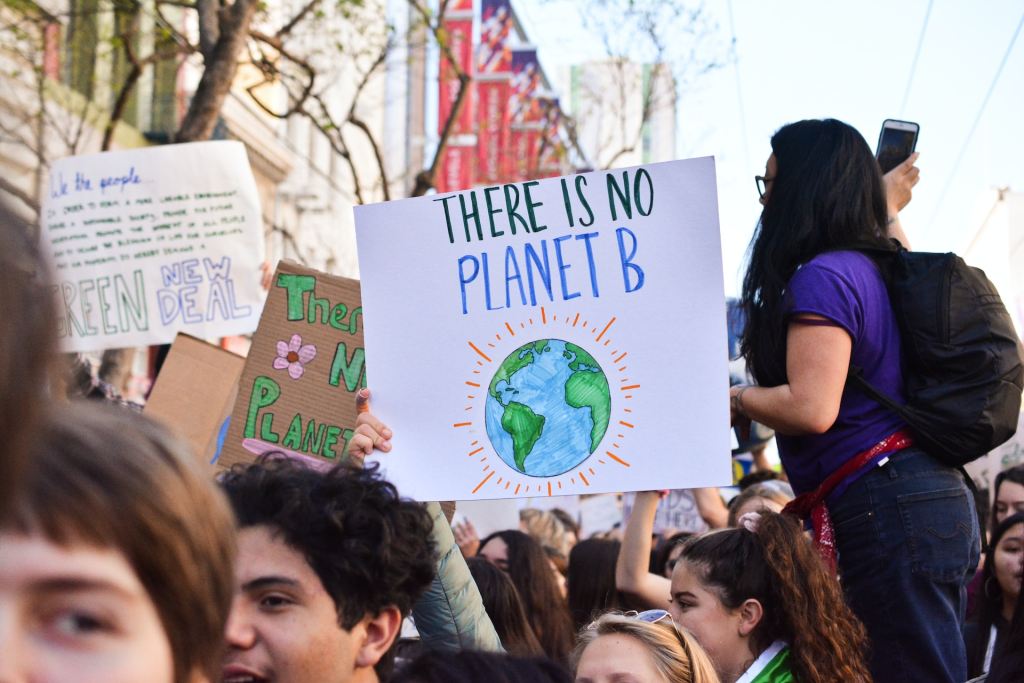
If you have followed the media recently, you are probably aware that the younger generation cares about the environment and their future, and that they are willing to go to the extreme to prove their point.  
A third of the younger generations believe climate change is the biggest threat of our time, and over half believe they don’t have the power to do anything about it.
The United Nations has recently indicated that the youth of today have the most positive outlook on Artificial Intelligence (AI) with an astonishing 93.2% stating they feel positive about it
82% of Gen Z will buy a car with a combustion engine. 
62% of the younger generation believe being vegetarian is a good way to help save the environment.
Companies need to think through these topics on time and think them through strategically, so they can build up strategic competitive advantages
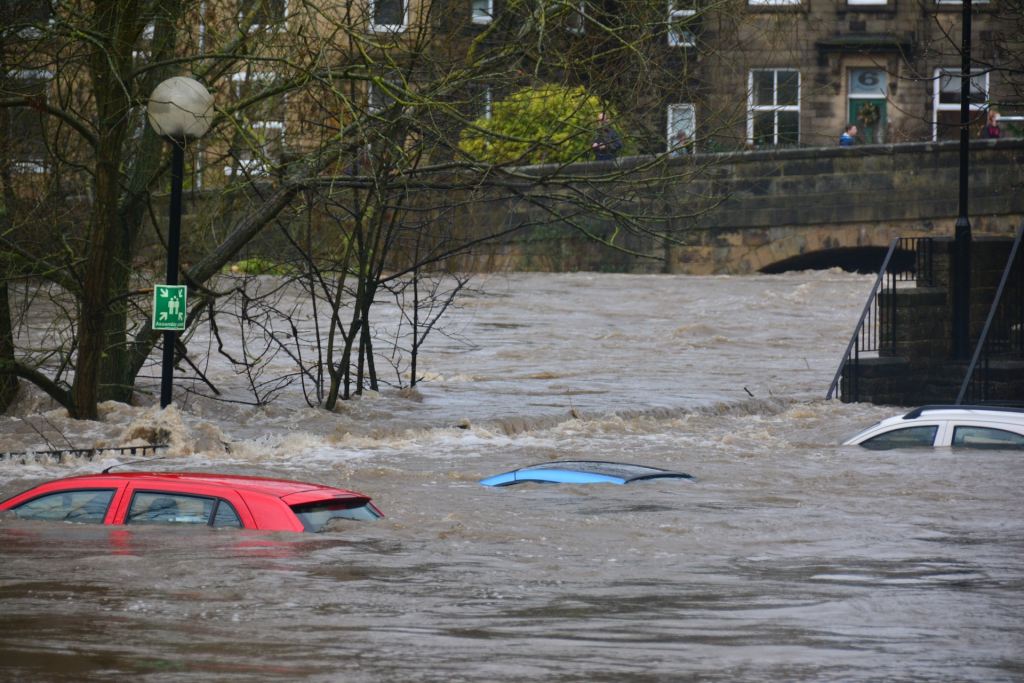
August 2023 saw horrific flooding in Slovenia as a month´s worth of rain fell in just 24 hours. We ask: How can politics help in such a crisis?
Small steps by every business and every individual today will make a huge impact on our environmental footprint in the long run. We should all be thinking of cleantech living and doing whatever we can to help reduce our environmental footprint.
All over the world, uncertainty prevails. Action must be taken in the face of these turbulences while exploiting every possibility provided by available instruments.
Huge change is happening in all sectors of the marine insurance sector and cargo risks and associated insurances.
State-sponsored cyber-attacks usually exploit infrastructure weaknesses, gather information or skim off money to recover losses from sanctions.
Nowadays, risk management is more in demand than ever. By working in tandem with clients the insurance partner can help to shape the future.
Companies are exposed to various kinds of risks. At the same time, systemic transformation exacerbates existing risks and causes new risks to emerge.
Michael Kolb, Board Member at Acredia, talks about the political effects of the energy crisis and situation of the former Yugoslavian countries.
For Erne Fittings, the world’s leading supplier of butt-weld fittings, every safe connection is a strong pillar of success in risk and supply chain management
How can we increase flexibility and financial resilience in an ever-changing economical and geopolitical environment
The international insurance industry is no longer willing to agree on coverage for Russia and Belarus. The options for coverage in Ukraine are very limited.
Many hidden vulnerabilities can be unearthed if you are a bit creative. The key question is: can we live with the outcome? And then you need to give an honest answer.
Where does AI fit into the current policies as it stands, and what could the likely issues be?
We spoke with three leaders from different industries about energy independence in Europe.
 Paul Johannes Spittau explores transformation with Olivera Böhm-Rybak, Chief Corporate Business Officer International and CEO of UNIQA Sustainable Business Solutions.
MGAs operate within authority granted by insurers, with responsibility for underwriting, policy issuance, portfolio management and, depending on the model, claims support or coordination.
Closing the volatility gap means moving beyond reactive risk transfer.
For both infrastructure and real estate to survive, the corporate risk manual needs to be rewritten.
AI can generate information for us, but we still need the intelligence and judgement to understand and interpret it for a particular client.  
An effective risk management process is a basic requirement for tackling transformation risks.
Companies are exposed to various kinds of risks. At the same time, systemic transformation exacerbates existing risks and causes new risks to emerge.
How will global insurance and reinsurance adapt to new challenges and navigate the stormy waters of the 21st century?
Driverless transport systems, packaging, loading and reloading are already typical robotic examples which will gain in importance.
The Covid-19 pandemic has accelerated existing trends which will continue to shape the real estate sector in the years to come.
Motor insurance used to be a pretty standardised product. This will change.
There are three megatrends which will affect the entire healthcare system in the near future: an increasing and aging population, lack of medical staff as well as a rising dependency on new technologies
At the same time and with increasing urbanisation, infrastructure and smart city developments, a stronger focus will be put on making infrastructure and transport more efficient and sustainable.
Traditional B2B and B2C companies are increasingly working together and are increasingly building a new B2B2C business (Business to Business to Customer). “Affinity” is the buzzword of the hour.

Georg Winter

CEO GrECo Group

T +43 664 962 39 06