HORIZON Risk Thought >> Fast Forward

The complexity of today´s risk environment is changing at an accelerating pace, making risk management even more challenging. We address these challenges by highlighting underlying systemic transformations and their implications for future risk and insurance management in various sectors.

In the risk management context of these systemic transformations, we classified these “risk changers” that directly affect a company and use the terms:

  • “Environment in danger” for ecological,
  • “Beyond globalisation” for geopolitical,
  • “Digital transition” for technological and
  • “Social disruption” for social transformation

In the risk management context of these systemic transformations, we classified these “risk changers” that directly affect a company and use the terms:

  • “Environment in danger” for ecological,
  • “Beyond globalisation” for geopolitical,
  • “Digital transition” for technological and
  • “Social disruption” for social transformation.

We have created Horizon, firstly as a print publication and now as a platform for sharing the latest insights about ongoing transformations. Our risk specialists will continue to provide their expertise and knowledge to shine a light on the challenges of the future.

We have created HORIZON to share the latest insights about ongoing transformations.
Our risk specialists provide their expertise and knowledge to shine a light on the challenges of the future.

Discover all their latest insights, thoughts and viewpoints, or choose from our systemic risk categories to find out more.

This article provides a concise overview of the critical areas finance leaders should review to ensure that emerging risks are properly understood, documented, and, where possible, transferred.
When geopolitical shockwaves hit, PRI doesn’t flinch. And that stability is often exactly what lenders, investors, and boards need to see.
The priority right now for Financial Institutions and Property related industries must be to make sure their KYC and other anti-money laundering controls are as tight as possible
This article summarises the key insurance‑relevant developments and outlines what aviation customers must consider immediately.
Robust crisis protocols are not just a protective measure, they are essential for operational continuity in today’s unpredictable landscape.
In times of geopolitical uncertainty, attempting to predict events is less important than preparing for rapid change.
We are excited to announce the release of the 5th Horizon Risk Thought » Fast Forward publication!
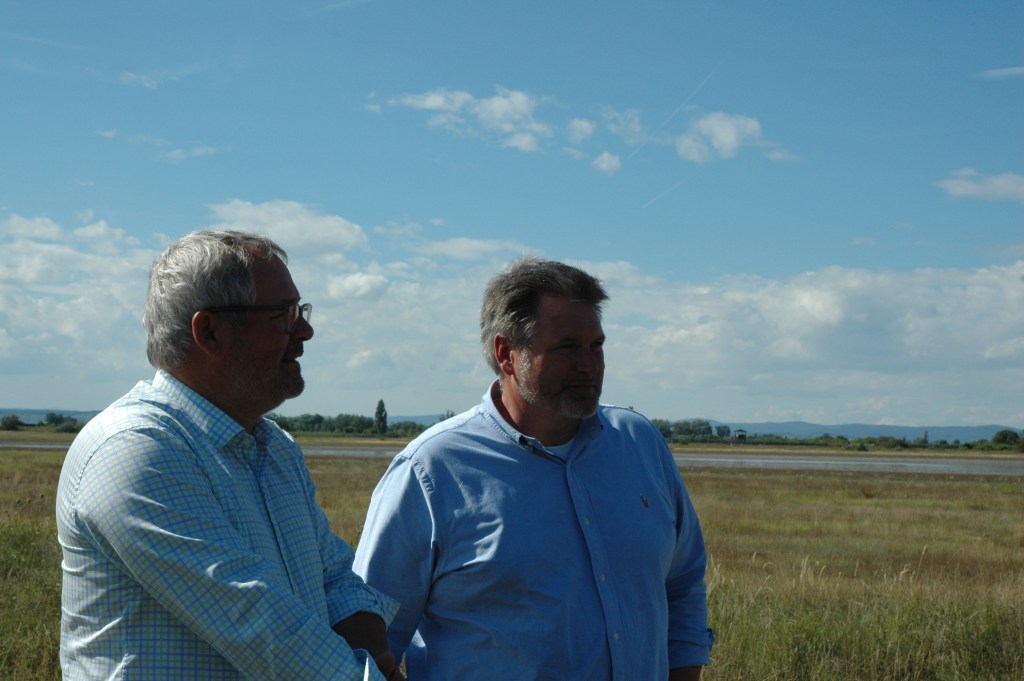
In this exclusive interview, we bring together two leading voices on digital transformation in Central and Eastern Europe: Ursula Deschka, CEO of ERGO Baltics and Georg Winter, CEO of GrECo Group.

Peter Papp, sat down with Peter Bešina, founder of Paralla and Cryptodiggers, to discuss the evolution of cryptocurrencies.
Organic farming is not only about healthy food, but also about using practices that make our agriculture sustainable and resistant to climate change for many generations to come.
Despite Austrians receiving more and more parcels every year, by converting its fleet, Austrian Post AG is still managing to reduce its emissions.  Daniel-Sebastian Mühlbach, Head of CSR & Environmental Management, and Paul Janacek, Head of Group Vehicle Fleet at Austrian Post tell us how.
Ralf Mittermayr, CEO at Saubermacher AG, the most sustainable waste disposal company in the world (GRESB rating), discussed with Jürgen Spari, Regional Manager of GrECo Steiermark their zero-waste vision and what zero waste will mean for the insurance industry.

Times of climate change call for Johannes Ehrenfeldner, Director of Lake Neusiedl National Park, to address the restoration of biodiversity and ecosystems even more intensively.
Sabine Schellander, Co-Head of Sustainability at GREINER, describes why Greiner is sticking to a sustainable transformation process to create a circular company.
The analysis of natural disasters and climate risks is a new challenge for many companies.
Under the title “Environment in danger”, our upcoming HORIZON series concentrates on the ecological transformation and therefore looks at all its challenges from various angles.
Other crises, the climate crisis being a prominent example, are more likely to emerge as developments that gradually manifest themselves.
An effective risk management process is a basic requirement for tackling transformation risks.
This article provides a concise overview of the critical areas finance leaders should review to ensure that emerging risks are properly understood, documented, and, where possible, transferred.
When geopolitical shockwaves hit, PRI doesn’t flinch. And that stability is often exactly what lenders, investors, and boards need to see.
The priority right now for Financial Institutions and Property related industries must be to make sure their KYC and other anti-money laundering controls are as tight as possible
This article summarises the key insurance‑relevant developments and outlines what aviation customers must consider immediately.
Robust crisis protocols are not just a protective measure, they are essential for operational continuity in today’s unpredictable landscape.
In times of geopolitical uncertainty, attempting to predict events is less important than preparing for rapid change.
In einer Zeit, die von geopolitischen Umbrüchen, wirtschaftlicher Volatilität und zunehmendem ökologischen Druck geprägt ist, sehen sich österreichische Unternehmen mit einem immer komplexer werdenden Risikoumfeld konfrontiert.
Ist es ein Klischee zu glauben, dass Frauen härter arbeiten müssen, um in männerdominierten Branchen erfolgreich zu sein?
Under the title “Environment in danger”, our upcoming HORIZON series concentrates on the ecological transformation and therefore looks at all its challenges from various angles.
62% of the younger generation believe being vegetarian is a good way to help save the environment.
Nowadays, more and more companies are starting to realise the accepted traditional benefits offering is no longer relevant or appropriate, and the one-size-fits-all approach is a thing of the past.
We are in the fast-paced age of technology and Health & Benefits is having to transform and evolve at an alarming pace to keep up. 
Under the title “Environment in danger”, our upcoming HORIZON series concentrates on the ecological transformation and therefore looks at all its challenges from various angles.
Other crises, the climate crisis being a prominent example, are more likely to emerge as developments that gradually manifest themselves.
An effective risk management process is a basic requirement for tackling transformation risks.
From an HR perspective, the past three years were predominantly shaped by the challenges and crises that have influenced our activities since the beginning of the pandemic. The impact of volatility, uncertainty, complexity, and ambiguity – the VUCA world – has become more pronounced with each crisis that has hit both the economic environment of organisations and people`s personal lives.
The biggest problem of the insurance industry today is the fact that the sales of an insurance product are separated from the sales of the core product or service that the insurance is associated with.
Companies are exposed to various kinds of risks. At the same time, systemic transformation exacerbates existing risks and causes new risks to emerge.
Helen Evert, Account Manager for Financial Lines at IIZI Estonia highlights how even advanced IT organisations remain vulnerable, urging a rethink of trust in today’s digital landscape.
By focusing on behaviour rather than just content, organisations can drive meaningful change and boost employee engagement in today’s rapidly evolving landscape.
At a time when digital intelligence is shaping the sustainability agenda, the intersection of logistics innovation and European vision has never been more critical.
Investments in BESS are not merely technical upgrades; they are strategic moves to enhance a country’s energy resilience in an increasingly interconnected and data-driven world.
As digital technologies reshape modern life in Central and Eastern Europe, balancing connectivity and mental well-being has become vital.
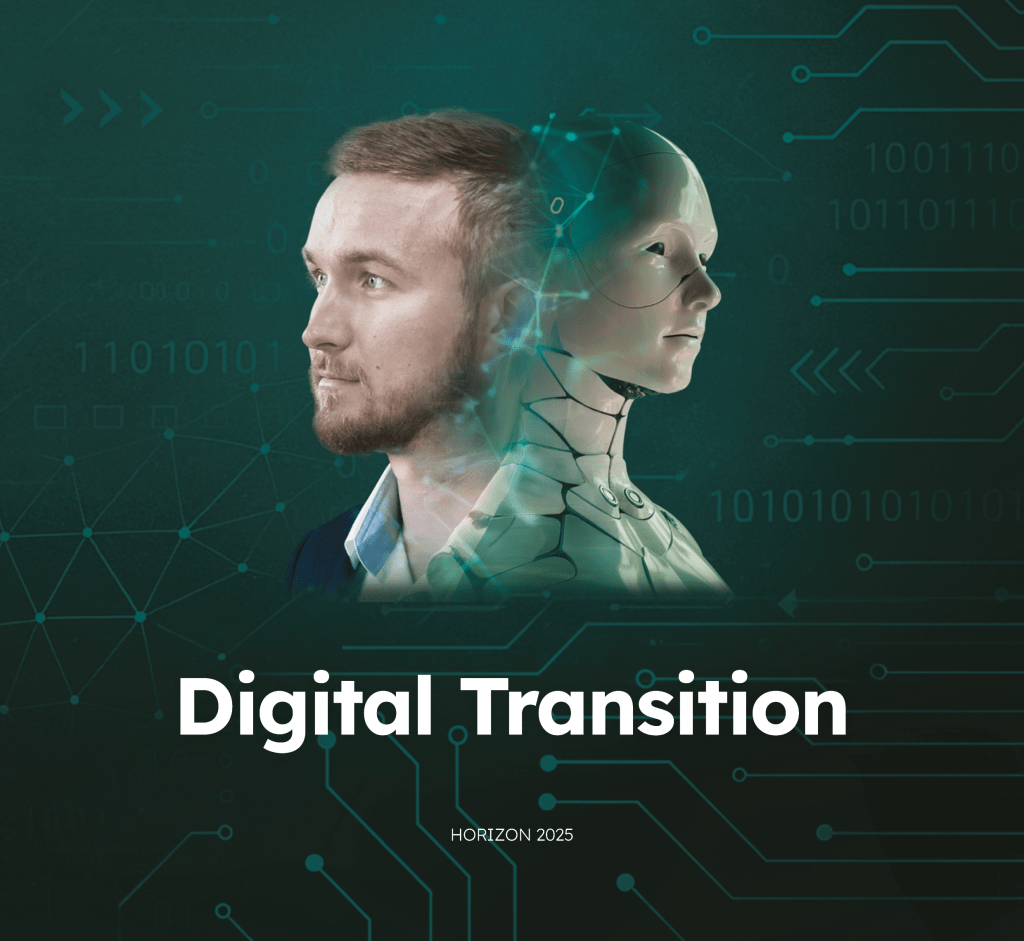
Digital humans – Digi Humans – are AI-powered personalities who can have conversations, express emotions, and convey information in a way that feels natural and human.
The company’s influence is such that its proprietary filament brand, “Prusament,” has entered common parlance among retailers and users alike.
By examining data centres, artificial intelligence, and cryptocurrencies, Ketzer highlights how digital progress brings ecological and social risks that are too often ignored.
Georg Winter, CEO of GrECo Group, and Siemens Austria’s CEO Patricia Neumann discussed how AI is transforming industry, work, and governance

Dive deep into our HORIZON print edition which focuses on various transformations and looks at all the challenges they pose from different angles.

Georg Winter

CEO GrECo Group

T +43 664 962 39 06