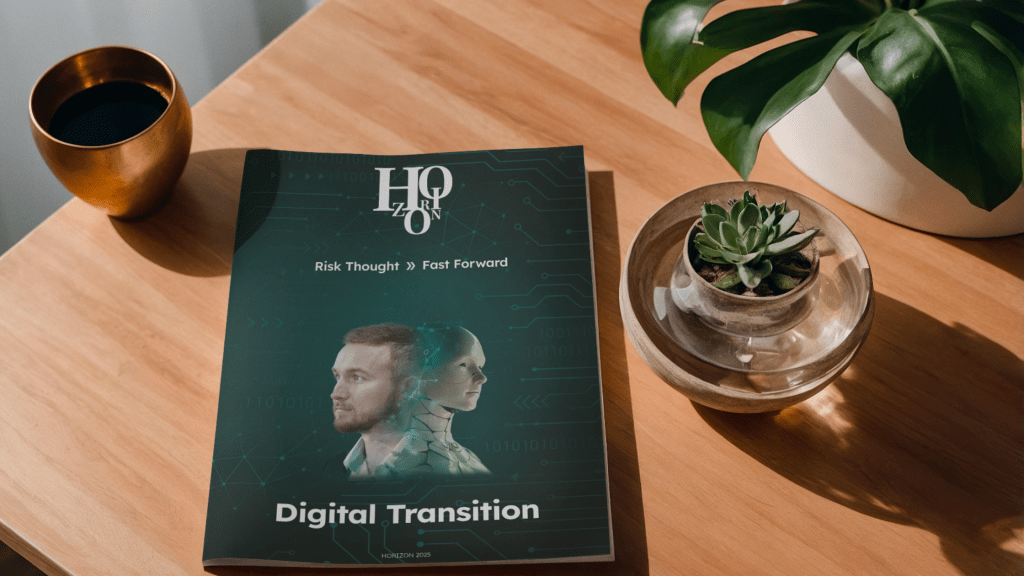
HORIZON Risk Thought >> Fast Forward

Unsere HORIZON-Initiative war schon immer ein Wegweiser für alle, die es wagen, im Geschäftsleben neue Wege zu beschreiten. HORIZON ist eine Plattform, auf der Grenzen verschoben werden und die Zukunft mit Klarheit und Entschlossenheit angegangen wird.

HORIZON Risk Talks

Die Welt verändert sich. Wie reagieren Unternehmen darauf? In HORIZON Risk Talks teilen Expert:innen und Führungskräfte ihre Perspektiven auf Transformation und die daraus entstehenden Risiken und Chancen.

Wir haben HORIZON ins Leben gerufen, um die neuesten Erkenntnisse über aktuelle Veränderungen zu teilen.
Unsere Risikospezialist:innen stellen ihr Fachwissen und ihre Kenntnisse zur Verfügung, um die Herausforderungen der Zukunft zu beleuchten.

Entdecken Sie ihre neuesten Erkenntnisse, Gedanken und Standpunkte oder wählen Sie aus unseren systemischen Risikokategorien, um mehr zu erfahren. Die Inhalte basieren auf dem gebündelten Wissen unseres internationalen GrECo Netzwerks. Aus diesem Grund sind einzelne Beiträge in englischer Sprache verfasst; ergänzend stehen weitere Artikel in deutscher Sprache zur Verfügung.

Investments in BESS are not merely technical upgrades; they are strategic moves to enhance a country’s energy resilience in an increasingly interconnected and data-driven world.
As digital technologies reshape modern life in Central and Eastern Europe, balancing connectivity and mental well-being has become vital.
Digital humans – Digi Humans – are AI-powered personalities who can have conversations, express emotions, and convey information in a way that feels natural and human.
The company’s influence is such that its proprietary filament brand, “Prusament,” has entered common parlance among retailers and users alike.
By examining data centres, artificial intelligence, and cryptocurrencies, Ketzer highlights how digital progress brings ecological and social risks that are too often ignored.
Georg Winter, CEO of GrECo Group, and Siemens Austria’s CEO Patricia Neumann discussed how AI is transforming industry, work, and governance
In a world rapidly advancing toward quantum computing, have we underestimated the risks and will our reluctance to act now leave our digital world exposed and vulnerable?
Wie Technologie zur Steigerung der Resilienz beitragen wird und warum persönliche Verantwortung ein wichtiger Bestandteil des Risikomanagements ist.
Während das Social-Credit-System (SCS) in China ein charakteristisches Merkmal ist, würde seine Anwendung in Europa mit erheblichen Herausforderungen und Bedenken verbunden sein.
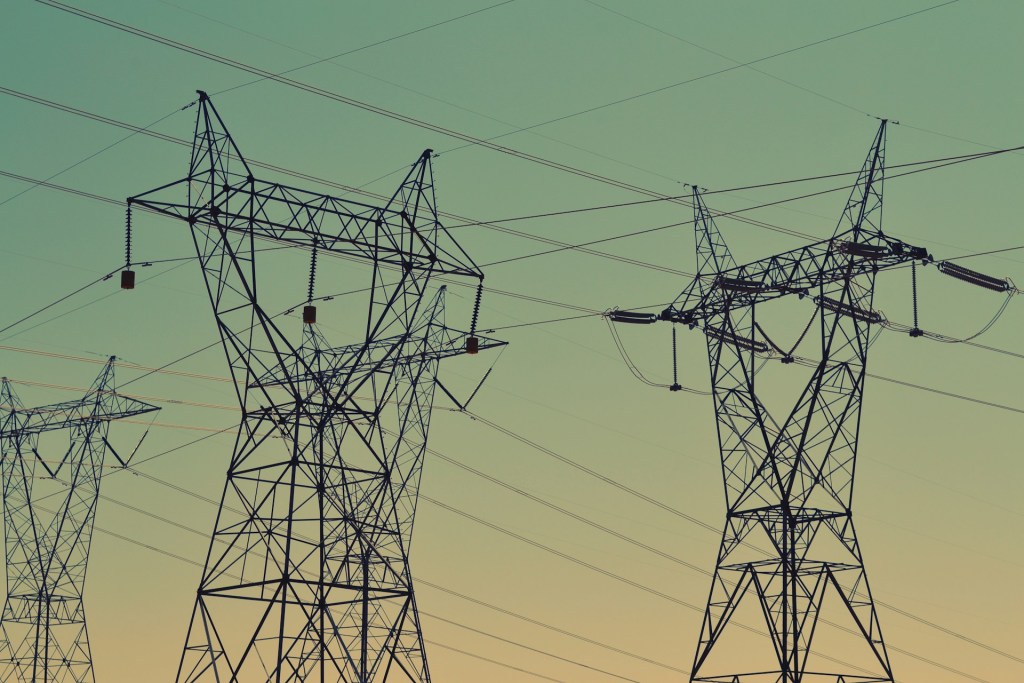
The success of the global grid overhaul effort is instrumental to the success of green energy transition and indeed to the improvement of living conditions for the global population in this century and beyond. 
Erwin Soravia, CEO of SORAVIA, talks to Fritz Neubrand, Chairman of the Supervisory Board of the GrECo Group, about the property developer’s responsibility in terms of sustainability, and how innovation and technology can strengthen the industry’s climate resilience.
Steffen Robbi tells Laura Hochegger about how digitalization can contribute to a sustainable transformation and risk minimization in the construction and real estate industry, especially in the circular economy and in the refurbishment of existing buildings.
In the light of impending annual ESG reporting, the challenges in the dimensions of sustainability cannot be fully met by the existing certificates. The requirements of the EU taxonomy and the growing demand on the real estate market for climate-friendly buildings require uniform assessment criteria and thus indirectly a harmonization of assessment systems.
Concrete is one of the most influential building materials of our time. It is durable, versatile and has outstanding structural and physical properties. Nevertheless, this building material has one major disadvantage: it is responsible for eight percent of global CO2 emissions. 
Rosenbauer Group is a thought leader and technology and innovation front-runner in the firefighting industry. Sebastian Wolf, CEO at Rosenbauer International, discusses with Argun Zia-Dam, Account Manager at GrECo, how Rosenbauer Group is blazing a trail in this industry and why cities in the future will rely on electrically powered firefighting vehicles.
The risk of water scarcity is one of the key considerations in the risk management and ESG policies of food and agriculture companies.  But where there’s acute risks, there are huge opportunities for change: Water scarcity concerns are driving innovation in the food industry and with members of the public.
In an interview with Laura Hochegger, Martin Schiefer explains why public clients have the strongest leverage for a sustainable future.
According to Michael Porter’s and Mark Kramer’s shared value concept, the solution lies precisely in resolving this conflict of objectives: The aim is to create economic value in such a way that it simultaneously benefits society.
Plans are underway to construct a new power plant fuelled by waste material on the premises of Rondo Ganahl AG as part of the Initiative “Energy Autonomy Frastanz”. The new plant in Austria’s most western province will cover the future thermal energy demand of the Rondo paper mill and corrugated board plant and will also supply other businesses and private households.
Emerging risks and new threats that are hard to grasp and estimate are a much-discussed topic. Add to that today’s increasing number of Black Swan events. These are unprecedented and unexpected events which nobody could have imagined, making them almost impossible to predict.
According to the International Monetary Fund food and energy are the main drivers of today’s inflation. That is obvious to each of us as we pay more for both food and energy these days.
Max Pernsteiner, Vice President Global Purchasing & Supply Chain at ENGEL Austria GmbH, spoke with Johannes Vogl, General Manager at GrECo Risk Engineering GmbH, about supply chains and their risks.
In the last two years, supply chains were exposed to unforeseen risks. The impact of the pandemic, Evergiven’s blockade of the Suez Canal, or the recent disruptions as a result of Russia’s attack on Ukraine, to name a few. What else must we prepare for?
Krystle Lippert, Strategic Sales Manager at GrECo in Austria, has spoken with Dr. Gerald Dums, Head of Purchase of Technical Equipment & Logistics at Donau Chemie AG about supply chain problems and procurement and logistics resilience.
Our multipolar world and its myriad of geopolitical forces presents us and our clients with a vast, multidimensional array of risks. As bleak as this may sound, geopolitics and its impact on energy also offers a number of opportunities.
With the aftershocks of the pandemic, the ripple effects of the Ukraine war, and more frequent and severe natural catastrophes that affect our climate and today’s population, we are at a crossroads, and the construction sector is no exception.
For the past years and certainly since 24 February 2022, we have had many opportunities to witness the power of geopolitics, its decisive impact on domestic and international politics and the supply of energy throughout the world.
In HORIZON Risk Talks teilen Expert:innen und Führungskräfte ihre Perspektiven auf Transformation und die daraus entstehenden Risiken und Chancen.
Many hidden vulnerabilities can be unearthed if you are a bit creative. The key question is: can we live with the outcome? And then you need to give an honest answer.
Where does AI fit into the current policies as it stands, and what could the likely issues be?
We spoke with three leaders from different industries about energy independence in Europe.
 Paul Johannes Spittau explores transformation with Olivera Böhm-Rybak, Chief Corporate Business Officer International and CEO of UNIQA Sustainable Business Solutions.
The most significant failures may not arise from technical problems alone, but from adopting AI without clear responsibilities, controls and decision boundaries.
For Vienna Airport, the value of AI lies less in individual flagship projects. Its real impact comes from the cumulative effect of many operational improvements.  
We are excited to announce the release of the 5th Horizon Risk Thought » Fast Forward publication!
In this exclusive interview, we bring together two leading voices on digital transformation in Central and Eastern Europe: Ursula Deschka, CEO of ERGO Baltics and Georg Winter, CEO of GrECo Group.
Peter Papp, sat down with Peter Bešina, founder of Paralla and Cryptodiggers, to discuss the evolution of cryptocurrencies.
Fear appeal is a common tactic to highlight the dangers of unsafe cyber behaviour in many cybersecurity awareness campaigns.
One practical application of AI is in the digitalization of HR processes. Tasks such as document management and onboarding can be streamlined, reducing errors and saving time.
Excessive reliance on devices is leading to “digital dementia,” a rise in memory lapses, diminished focus, and cognitive fatigue – even among youth and the workforce.
Digital transformation is reshaping higher education, but what does that really look like for universities on the ground?

Tauchen Sie tief in unsere HORIZON-Printausgabe ein, die sich auf verschiedene Transformationen konzentriert und alle damit verbundenen Herausforderungen aus unterschiedlichen Blickwinkeln betrachtet.