HORIZON Risk Thought >> Fast Forward

Our HORIZON initiative has always stood as a beacon for those who dare to strive forward in business. HORIZON is a platform where boundaries are pushed and the future is envisioned with clarity and determination.

This year, we embrace a renewed spirit of courage – a quality that is not simply admirable in business, but essential. This campaign brings together thinkers and innovators who are challenging the status quo across key areas – risk, sustainability, social change, technology, and governance. Their reflections invite you to consider what courage means personally: how it shapes your ambitions, fuels your imagination, and helps transform the ordinary into the extraordinary.

In the risk management context of these systemic transformations, we classified these “risk changers” that directly affect a company and use the terms:

  • “Environment in danger” for ecological,
  • “Beyond globalisation” for geopolitical,
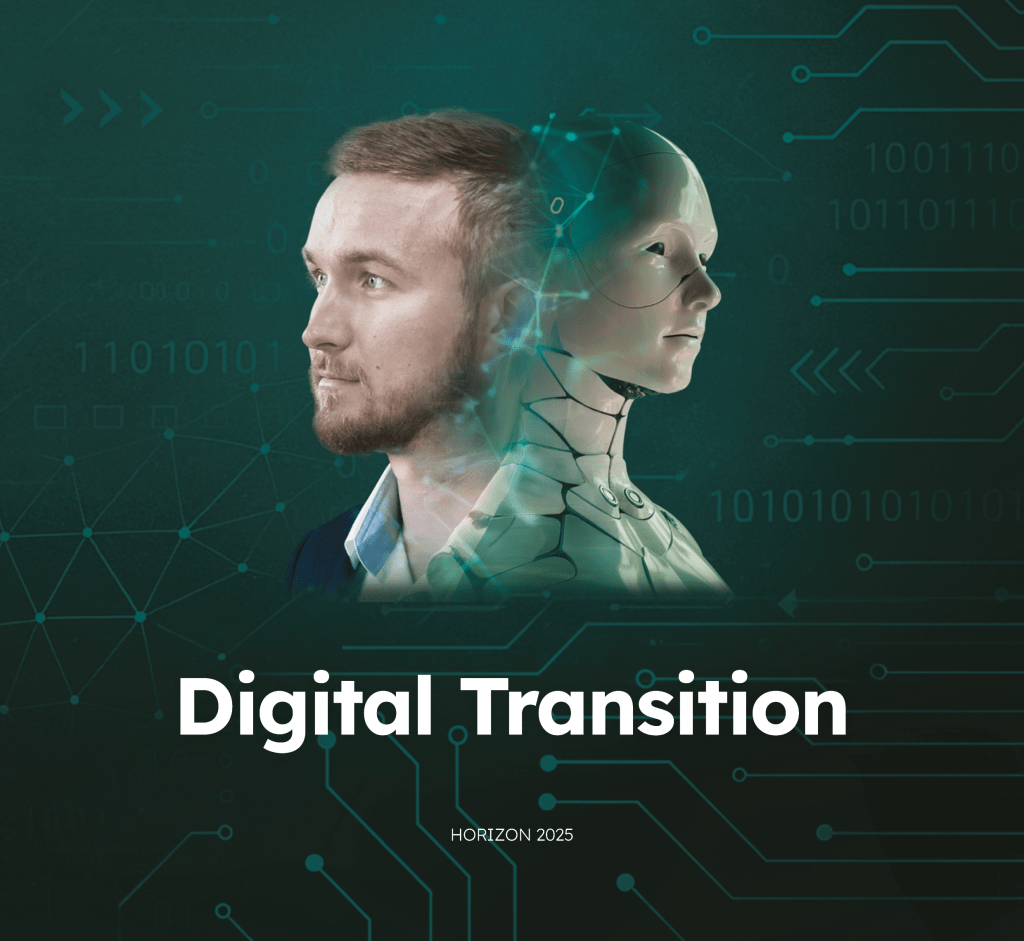
  • “Digital transition” for technological and
  • “Social disruption” for social transformation.

We have created Horizon, firstly as a print publication and now as a platform for sharing the latest insights about ongoing transformations. Our risk specialists will continue to provide their expertise and knowledge to shine a light on the challenges of the future.

We have created HORIZON to share the latest insights about ongoing transformations.
Our risk specialists provide their expertise and knowledge to shine a light on the challenges of the future.

Discover all their latest insights, thoughts and viewpoints, or choose from our systemic risk categories to find out more.

We operate in a world where many risks – climate stress, new technologies, geopolitical dynamics – do not come with solid historical data. Waiting for certainty is not an option. 
Insurance should be viewed through the same lens as any other capital decision. Every Euro spent on premium competes directly with investment, growth, and operational priorities.
Vigilance, determination and seeing the world as it really is – as opposed to how we imagine it to be – are more  important than ever for today’s executives if Europe is to remain relevant in the world. 

In a time of overlapping crises, organisations are being asked to do more than adapt: they must stay human, fair, and effective under pressure
GrECo Austria’s Roland Litzinger sat down with the CEO of delfort. Martin Zahlbruckner, to discuss how a global specialty-paper group is driving emissions reductions.
Politically and strategically, hydrogen is clearly set. With its hydrogen strategy, the European Union is pursuing the goal of becoming climate-neutral by 2050.
What sets leading companies apart is not a broader sustainability agenda, but a more strategic one.
This isn’t just about buying more coverage. It’s time to admit the industry has been doing this wrong – and having an honest conversation about what protection we actually need. 

If disruption only becomes real once it hits the core, you’re already too late. 
Organic farming is not only about healthy food, but also about using practices that make our agriculture sustainable and resistant to climate change for many generations to come.
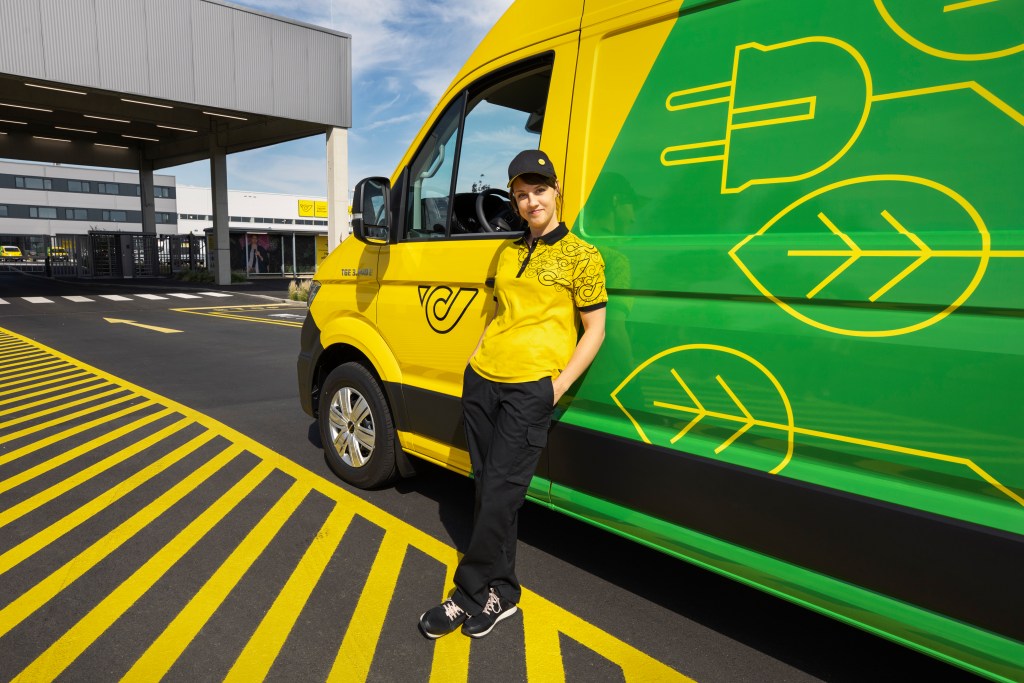
Despite Austrians receiving more and more parcels every year, by converting its fleet, Austrian Post AG is still managing to reduce its emissions.  Daniel-Sebastian Mühlbach, Head of CSR & Environmental Management, and Paul Janacek, Head of Group Vehicle Fleet at Austrian Post tell us how.
Ralf Mittermayr, CEO at Saubermacher AG, the most sustainable waste disposal company in the world (GRESB rating), discussed with Jürgen Spari, Regional Manager of GrECo Steiermark their zero-waste vision and what zero waste will mean for the insurance industry.
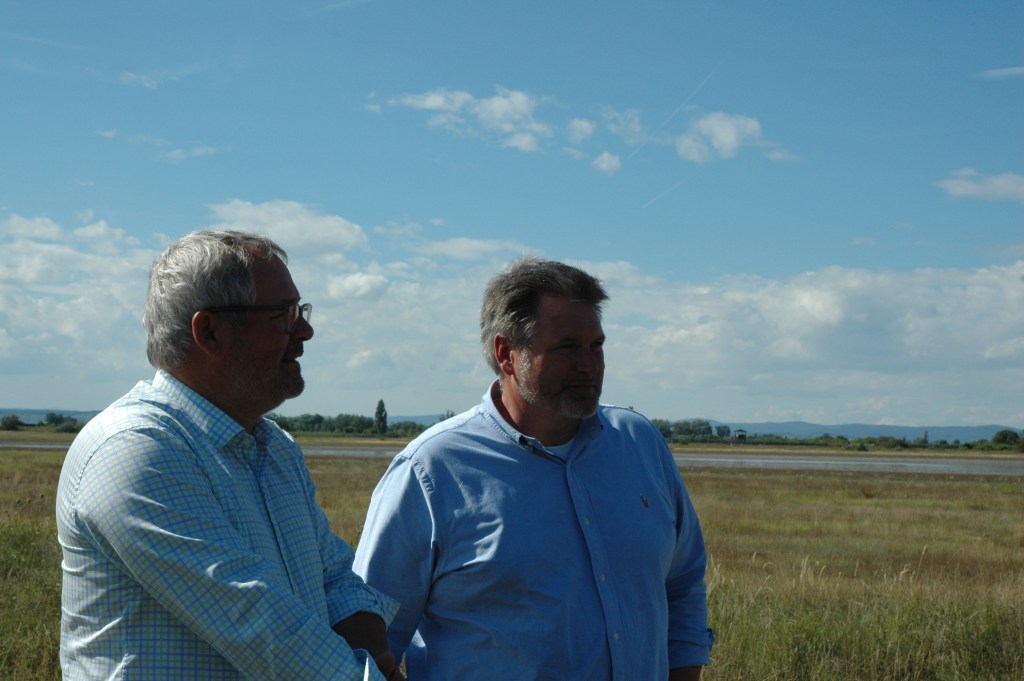
Times of climate change call for Johannes Ehrenfeldner, Director of Lake Neusiedl National Park, to address the restoration of biodiversity and ecosystems even more intensively.
Sabine Schellander, Co-Head of Sustainability at GREINER, describes why Greiner is sticking to a sustainable transformation process to create a circular company.
The analysis of natural disasters and climate risks is a new challenge for many companies.
Under the title “Environment in danger”, our upcoming HORIZON series concentrates on the ecological transformation and therefore looks at all its challenges from various angles.
Other crises, the climate crisis being a prominent example, are more likely to emerge as developments that gradually manifest themselves.
An effective risk management process is a basic requirement for tackling transformation risks.
In einer Zeit, die von geopolitischen Umbrüchen, wirtschaftlicher Volatilität und zunehmendem ökologischen Druck geprägt ist, sehen sich österreichische Unternehmen mit einem immer komplexer werdenden Risikoumfeld konfrontiert.
Ist es ein Klischee zu glauben, dass Frauen härter arbeiten müssen, um in männerdominierten Branchen erfolgreich zu sein?
Under the title “Environment in danger”, our upcoming HORIZON series concentrates on the ecological transformation and therefore looks at all its challenges from various angles.
Other crises, the climate crisis being a prominent example, are more likely to emerge as developments that gradually manifest themselves.
An effective risk management process is a basic requirement for tackling transformation risks.
Mariana Kühnel, Deputy General Secretary of the Austrian Chamber of Commerce spoke about staying calm in these unpredictable times and how Europe can gain comparative advantages.
Economic sanctions used for foreign policy purposes are economic penalties – such as prohibiting trade, stopping financial transactions or barring economic and military assistance – used to influence a nation and provide incentives for obedience with the rule of law or other governing rules and regulations.
This article will provoke thoughts and create awareness about the new political world order, the changing influence of Western and Eastern powers as well as the emergence and formation of a new centre of gravity in the global economy. It takes a close look at an emerging geopolitical dominance and focuses on the new crossroads between the West and the East – the New Silk Roads.
Plans are underway to construct a new power plant fuelled by waste material on the premises of Rondo Ganahl AG as part of the Initiative “Energy Autonomy Frastanz”. The new plant in Austria’s most western province will cover the future thermal energy demand of the Rondo paper mill and corrugated board plant and will also supply other businesses and private households.
Finding the right speed and assessing the market correctly is the biggest challenge. Transformation must take place, but at what speed?
DECCI is a Czech energy group founded in 2007, focused on modern and renewable energy sources. DECCI pioneered renewables with one of the first solar power plants in the Czech Republic.
Nearly one in four companies in Romania (23%) has already experienced a cyberattack, yet many still treat the risk as moderate until disruption becomes real.
Daniel’s message to companies is simple: give people with disabilities the chance to do an apprenticeship, show appreciation, and make work assistance available. 
The courageous move is not the grand statement. It is the willingness to be inconvenienced, today, for fairness, and to take responsibility for impact, not just intent. 
Fragmentation is usually discussed as a weakness. However, I believe that for the Georgian insurance market, it can also be an advantage.  
Through directives and requirements, we try to improve cybersecurity in general. But in cybersecurity, the courage to transform does not lie only in adopting new technologies.
What the world faces currently is not a single crisis. Some will define it as a “reset” – not a conspiratorial event, but a fundamental restructuring of economic rules, valuations, and mechanisms.
Lukáš Vodička, Group Practice Leader Trade Credit Specialties at GrECo Holding speaks with Gejza Trgiňa, Senior Underwriter at Atradius about what Czech exporters need to watch today and what it takes to build resilience when geopolitical unrest becomes a business issue, not background noise. 
How will global insurance and reinsurance adapt to new challenges and navigate the stormy waters of the 21st century?
Driverless transport systems, packaging, loading and reloading are already typical robotic examples which will gain in importance.
The Covid-19 pandemic has accelerated existing trends which will continue to shape the real estate sector in the years to come.
Motor insurance used to be a pretty standardised product. This will change.
There are three megatrends which will affect the entire healthcare system in the near future: an increasing and aging population, lack of medical staff as well as a rising dependency on new technologies
At the same time and with increasing urbanisation, infrastructure and smart city developments, a stronger focus will be put on making infrastructure and transport more efficient and sustainable.
Traditional B2B and B2C companies are increasingly working together and are increasingly building a new B2B2C business (Business to Business to Customer). “Affinity” is the buzzword of the hour.
For industries to remain properly insured, we must be able to quantify the severity of a drought.

Dive deep into our HORIZON print edition which focuses on various transformations and looks at all the challenges they pose from different angles.

Georg Winter

CEO GrECo Group

T +43 664 962 39 06