HORIZON Risk Thought >> Fast Forward

The complexity of today´s risk environment is changing at an accelerating pace, making risk management even more challenging. We address these challenges by highlighting underlying systemic transformations and their implications for future risk and insurance management in various sectors.

In the risk management context of these systemic transformations, we classified these “risk changers” that directly affect a company and use the terms:

  • “Environment in danger” for ecological,
  • “Beyond globalisation” for geopolitical,
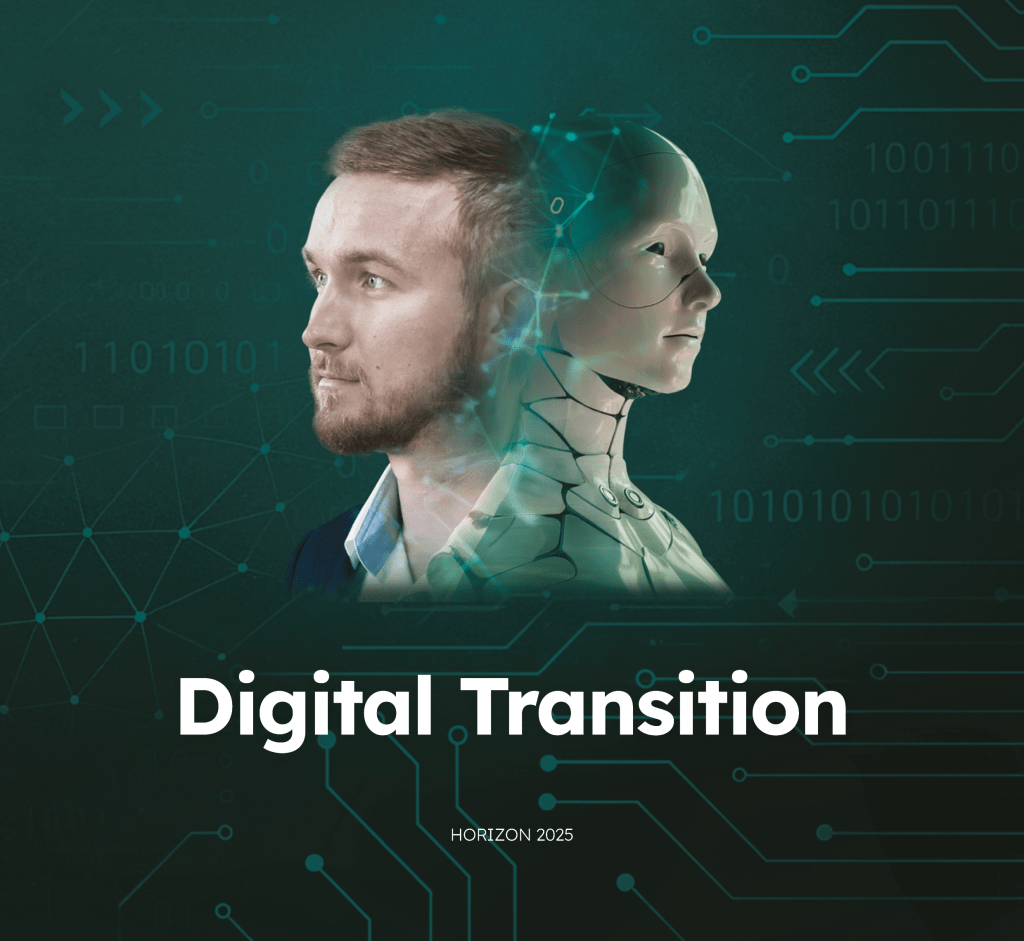
  • “Digital transition” for technological and
  • “Social disruption” for social transformation

In the risk management context of these systemic transformations, we classified these “risk changers” that directly affect a company and use the terms:

  • “Environment in danger” for ecological,
  • “Beyond globalisation” for geopolitical,
  • “Digital transition” for technological and
  • “Social disruption” for social transformation.

We have created Horizon, firstly as a print publication and now as a platform for sharing the latest insights about ongoing transformations. Our risk specialists will continue to provide their expertise and knowledge to shine a light on the challenges of the future.

We have created HORIZON to share the latest insights about ongoing transformations.
Our risk specialists provide their expertise and knowledge to shine a light on the challenges of the future.

Discover all their latest insights, thoughts and viewpoints, or choose from our systemic risk categories to find out more.

Michael Groiss, CFO at F/LIST, talked with Norbert Bucher, Account Manager of F/LIST at GrECo Austria, about how they balance their vision of handcrafting the future of interiors with the growing demand for sustainable production.
HR alone cannot promote the openness to this learning journey; it needs ambassadors to help anchor the green mindset in the corporate culture.
With many countries across the world looking at coal and oil substitutes, renewable energy sources are becoming an increasing part of insurers’ and brokers’ portfolios.
In the face of growing environmental challenges and climate change, insurance companies like UNIQA Group are taking significant steps to embrace sustainability.
“At Erste Group, we have an ESG Office, a dedicated unit focused on sustainability. We are situated within the strategy department, and our main responsibility is to implement the entire regulatory framework of the EU Green Deal within the bank. ”
Procredit Bank, compared to its competitors in Georgia, is leading the charge when it comes to reducing the Georgia’s environmental footprint.
If carefully designed and managed, a captive is a tool in the risk manager’s toolbox for large companies that can help build resilience to future transformation risks as a result of climate change, amongst other things.
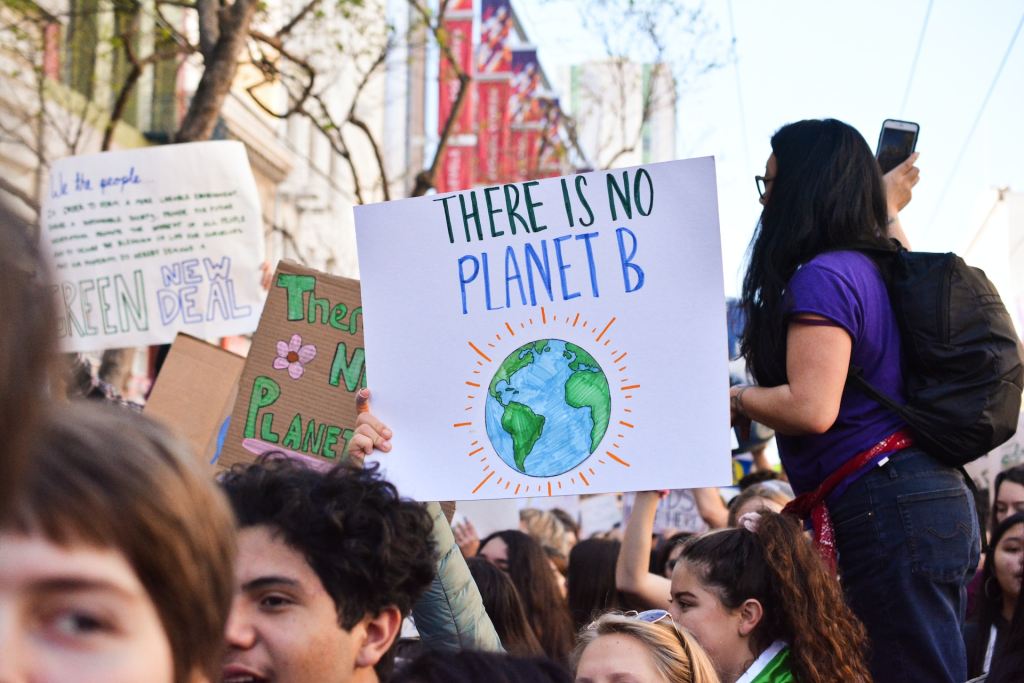
If you have followed the media recently, you are probably aware that the younger generation cares about the environment and their future, and that they are willing to go to the extreme to prove their point.  

A third of the younger generations believe climate change is the biggest threat of our time, and over half believe they don’t have the power to do anything about it.
Steffen Robbi tells Laura Hochegger about how digitalization can contribute to a sustainable transformation and risk minimization in the construction and real estate industry, especially in the circular economy and in the refurbishment of existing buildings.

In the light of impending annual ESG reporting, the challenges in the dimensions of sustainability cannot be fully met by the existing certificates. The requirements of the EU taxonomy and the growing demand on the real estate market for climate-friendly buildings require uniform assessment criteria and thus indirectly a harmonization of assessment systems.
Concrete is one of the most influential building materials of our time. It is durable, versatile and has outstanding structural and physical properties. Nevertheless, this building material has one major disadvantage: it is responsible for eight percent of global CO2 emissions. 
Rosenbauer Group is a thought leader and technology and innovation front-runner in the firefighting industry. Sebastian Wolf, CEO at Rosenbauer International, discusses with Argun Zia-Dam, Account Manager at GrECo, how Rosenbauer Group is blazing a trail in this industry and why cities in the future will rely on electrically powered firefighting vehicles.
The risk of water scarcity is one of the key considerations in the risk management and ESG policies of food and agriculture companies.  But where there’s acute risks, there are huge opportunities for change: Water scarcity concerns are driving innovation in the food industry and with members of the public.
In an interview with Laura Hochegger, Martin Schiefer explains why public clients have the strongest leverage for a sustainable future.
According to Michael Porter’s and Mark Kramer’s shared value concept, the solution lies precisely in resolving this conflict of objectives: The aim is to create economic value in such a way that it simultaneously benefits society.
The challenges facing Austrian agriculture are diverse and complex. Prok. Dr Mario Winkler, Head of Communications at Österreichische Hagelversicherung, talks with Laura Hochegger, Executive Assistant Strategy, Sustainability, Innovation at GrECo Group
In einer Zeit, die von geopolitischen Umbrüchen, wirtschaftlicher Volatilität und zunehmendem ökologischen Druck geprägt ist, sehen sich österreichische Unternehmen mit einem immer komplexer werdenden Risikoumfeld konfrontiert.
Ist es ein Klischee zu glauben, dass Frauen härter arbeiten müssen, um in männerdominierten Branchen erfolgreich zu sein?
Under the title “Environment in danger”, our upcoming HORIZON series concentrates on the ecological transformation and therefore looks at all its challenges from various angles.
Other crises, the climate crisis being a prominent example, are more likely to emerge as developments that gradually manifest themselves.
An effective risk management process is a basic requirement for tackling transformation risks.
Mariana Kühnel, Deputy General Secretary of the Austrian Chamber of Commerce spoke about staying calm in these unpredictable times and how Europe can gain comparative advantages.
Economic sanctions used for foreign policy purposes are economic penalties – such as prohibiting trade, stopping financial transactions or barring economic and military assistance – used to influence a nation and provide incentives for obedience with the rule of law or other governing rules and regulations.
This article will provoke thoughts and create awareness about the new political world order, the changing influence of Western and Eastern powers as well as the emergence and formation of a new centre of gravity in the global economy. It takes a close look at an emerging geopolitical dominance and focuses on the new crossroads between the West and the East – the New Silk Roads.
Plans are underway to construct a new power plant fuelled by waste material on the premises of Rondo Ganahl AG as part of the Initiative “Energy Autonomy Frastanz”. The new plant in Austria’s most western province will cover the future thermal energy demand of the Rondo paper mill and corrugated board plant and will also supply other businesses and private households.
Gabriele Andratschke, Head of HR at GrECo Group, recently shared her expertise on multigeneration workforces with Lisbeth Lorenz
Strategic acquisition strengthens GrECo’s market position and enhances service offerings in Southeastern Europe.
Ewelina Jaworska-Bein delves into this transformative trend and highlights the myriad of benefits these healthcare apps are bring to organisations and their employees.
This article explores how a health and organisational psychologist played a pivotal role in easing the merger transition at GrECo Hungary.
Ewelina Jaworska-Bien, Group Practice Leader for Health & Benefit at GrECo Specialty, shares her insights on the hot topic of the gender pay gap.
In recent years, Europe has been grappling with a serious labour shortage which is impacting nearly all economic sectors due to an ageing population, low birth rates, and migration.
Generation Alpha is the first generation to be born entirely in the digital age. This digital fluency presents both opportunities and challenges for organisations.
An air gap is the physical separation between critical systems and public networks theoretically minimising the risk of cyberattacks. 
The recruitment landscape in real estate is becoming increasingly competitive, and companies need to differentiate themselves to attract top talent.
How will global insurance and reinsurance adapt to new challenges and navigate the stormy waters of the 21st century?
Driverless transport systems, packaging, loading and reloading are already typical robotic examples which will gain in importance.
The Covid-19 pandemic has accelerated existing trends which will continue to shape the real estate sector in the years to come.
Motor insurance used to be a pretty standardised product. This will change.
There are three megatrends which will affect the entire healthcare system in the near future: an increasing and aging population, lack of medical staff as well as a rising dependency on new technologies
At the same time and with increasing urbanisation, infrastructure and smart city developments, a stronger focus will be put on making infrastructure and transport more efficient and sustainable.
Traditional B2B and B2C companies are increasingly working together and are increasingly building a new B2B2C business (Business to Business to Customer). “Affinity” is the buzzword of the hour.
For industries to remain properly insured, we must be able to quantify the severity of a drought.

Dive deep into our HORIZON print edition which focuses on various transformations and looks at all the challenges they pose from different angles.

Georg Winter

CEO GrECo Group

T +43 664 962 39 06